
In short
Family snorkeling in Maui works best when the experience is chosen for the least-confident person, not the strongest swimmer. Check the tour’s minimum age, swimming requirement, flotation, shallow-water practice, group size, entry method, supervision plan and weather policy, then keep a shore-based backup if a child is tired, anxious or uncomfortable.
Key takeaways
- A tour’s minimum age is an eligibility rule, not proof that every child at that age is ready.
- Hawaii’s June 2026 snorkeling guidance advises snorkelers to be experienced ocean swimmers, so any non-swimmer option deserves direct questions about depth, flotation and hands-on support. (oceansafety.hawaii.gov)
- The best choice usually fits the least-confident family member, even when older children or adults are strong swimmers.
- Shore entry can simplify early exits, while a boat may provide offshore access and onboard facilities; neither format is automatically better for every child.
- Wildlife sightings cannot be guaranteed, and NOAA recommends remaining at least 10 feet from sea turtles in Hawaii. (fisheries.noaa.gov)
Table of contents
- Is your child ready to snorkel in Maui?
- Should your family choose a shore snorkel or a boat trip?
- What support should a kid-friendly snorkel tour provide?
- What should you ask before booking?
- How do you plan for the day?
- What would a good choice look like?
- What else do parents ask?
- What should you do before booking?
Parents often start with a famous reef or the promise of seeing turtles. Start with the child instead. A manageable Maui experience is one where the child understands the equipment, can communicate discomfort, receives the right support and can stop without pressure.
Is your child ready to snorkel in Maui?
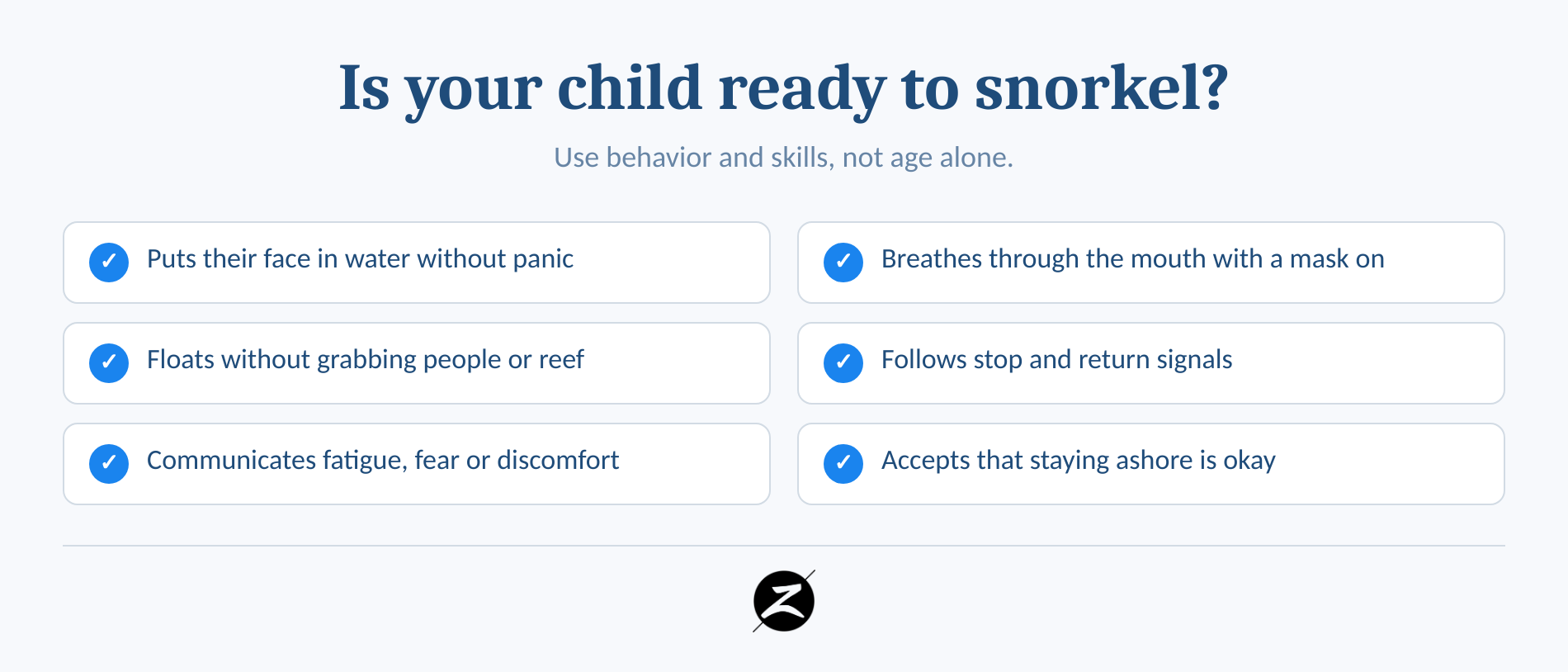
Readiness is a combination of water behavior, communication and tour rules. A child who meets the age minimum but panics when a mask leaks is not ready for the same experience as a child who calmly follows instructions and can stop on cue.
Before booking, consider whether the child can:
- Put their face in the water without becoming distressed.
- Breathe through the mouth while the nose is covered by a mask.
- Float without immediately trying to stand on coral or grab another person.
- Follow a stop, return or look-at-me signal.
- Tell an adult when they are cold, tired, dizzy or frightened.
- Accept that staying in shallow water or returning to the beach is a valid outcome.
Use age as a gate, then evaluate the person behind the number. A child below the operator’s minimum cannot participate. A newly eligible child may still need a beginner format with a short practice period, while an older child or teenager who swims well in a pool still needs an ocean briefing because currents, waves and entries are different.
The Hawaii Department of Health’s June 2026 snorkeling guidance takes a strict position and advises snorkelers to be experienced ocean swimmers. Zephyr Maui’s beginner experience is designed for first-timers and non-swimmers using flotation, standing-depth practice and guide support, but those measures do not remove ocean risk or override the state’s advice. Parents should ask what a non-swimmer may do beyond the shallow practice area and what happens if the guest cannot progress comfortably. (oceansafety.hawaii.gov)
A child is ready for a particular snorkel only when the tour rules, water skills and emotional comfort all align.
Should your family choose a shore snorkel or a boat trip?
Choose the access method by considering how the child will enter, pause and leave, not simply which reef sounds most exciting. Shore and boat experiences can both work for families, but they create different transitions and stopping options.
| Factor | Shore-entry experience | Boat-based experience | Parent question |
|---|---|---|---|
| Entry | Walk-in entry, sometimes with standing-depth practice | Entry may use a platform, stairs or ladder | Which entry can the child manage calmly? |
| Stopping | An early return may be simpler when the group remains near shore | Timing follows the vessel and its itinerary | What happens if the child stops after ten minutes? |
| Transit | No ocean crossing before snorkeling | A boat ride adds time and motion | Is anyone prone to seasickness? |
| Facilities | Restrooms, shade and storage vary by beach | Some vessels provide onboard facilities | What is actually available on this trip? |
| Conditions | Shorebreak, rocks and currents affect the entry | Wind and swell affect the ride and offshore site | When will the operator cancel or change plans? |
A shore experience often suits a first-timer who benefits from standing-depth practice and a visible beach. That does not make every shore entry easy. Rocks, waves and shallow reef can create problems, so families still need a guide or a carefully assessed site.
A boat trip can suit families who want offshore access or onboard amenities and whose children tolerate the ride and vessel entry. Parents should confirm the total trip duration, entry method, restroom availability, shade and whether a child may remain aboard with a supervising adult.
Do not let the strongest swimmer make this decision for everyone. A confident teenager may enjoy either format, while a younger or anxious sibling may need a shorter shore-based session with a clear route back to the beach.
Choose the access method that gives the least-confident family member the simplest safe way to begin, pause and stop.
What support should a kid-friendly snorkel tour provide?
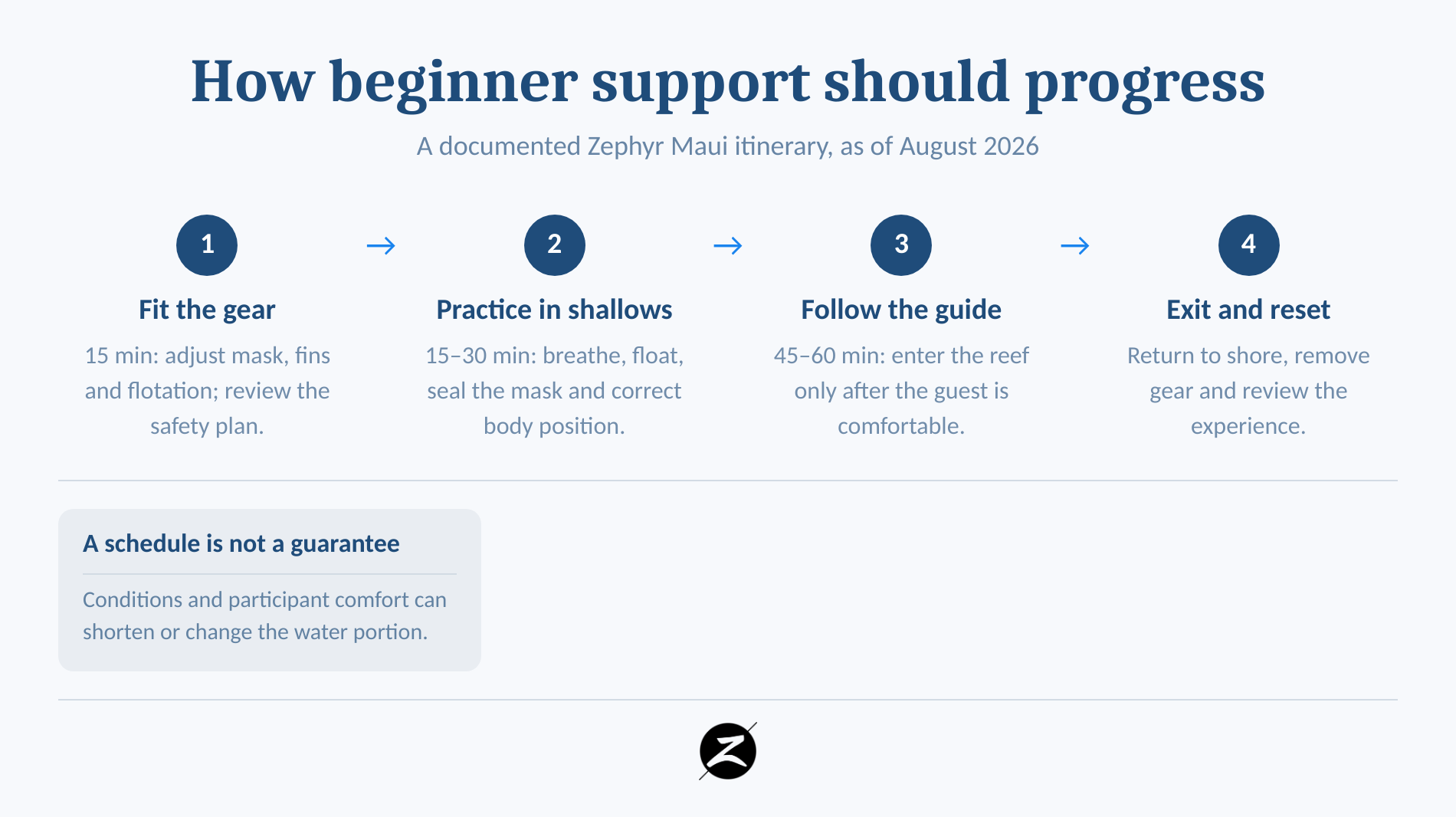
A kid-friendly tour should explain how guests progress from dry instruction to shallow practice and then to the reef. Flotation and a small group are useful, but parents also need to know who watches each child, how discomfort is communicated and how the activity ends early.
Zephyr Maui’s published beginner itinerary allocates about 15 minutes to check-in, equipment and the safety briefing, 15 to 30 minutes to shallow-water confidence building, and 45 to 60 minutes to the guided reef portion. As of August 2026, the tour page lists a minimum age of 7 and a maximum group size of 10. (zephyrmaui.com)
That sequence is useful because it shows where learning happens. A vague promise that beginners are welcome does not tell a parent whether the child will practice breathing while standing, learn how to clear or reseat a mask, or have time to decide not to continue.
Look for these forms of support:
- Correctly fitted equipment: A leaking mask can turn a willing child into an anxious one within minutes. The child should be able to practice breathing and removing the equipment before entering deeper water.
- Appropriate snorkeling flotation: Hawaii Ocean Safety notes that a snorkeling vest or belt may help a participant float. Pool toys and beach inflatables are not substitutes and can be carried or overturned by waves. (oceansafety.hawaii.gov)
- Active adult supervision: Hawaii’s beach safety guidance for families says a responsible adult should supervise children near the water at all times and should not treat a lifeguard as a babysitter. A guide adds support, but the parent’s role remains important. (oceansafety.hawaii.gov)
- A clear communication system: The child should know how to signal stop, return, mask trouble, fatigue or fear without needing a long explanation in the water.
- Permission to shorten the experience: A family tour should have a plan for the child who finishes early, including who returns with the child and what happens to siblings still snorkeling.
A maximum group size is not the same as a guide-to-guest ratio. Ask how many guides will be present, whether one guide can return with a child, and whether the rest of the family can continue safely.
The best family tour makes the practice, supervision and exit plan as clear as the reef destination.
What should you ask before booking family snorkeling in Maui?
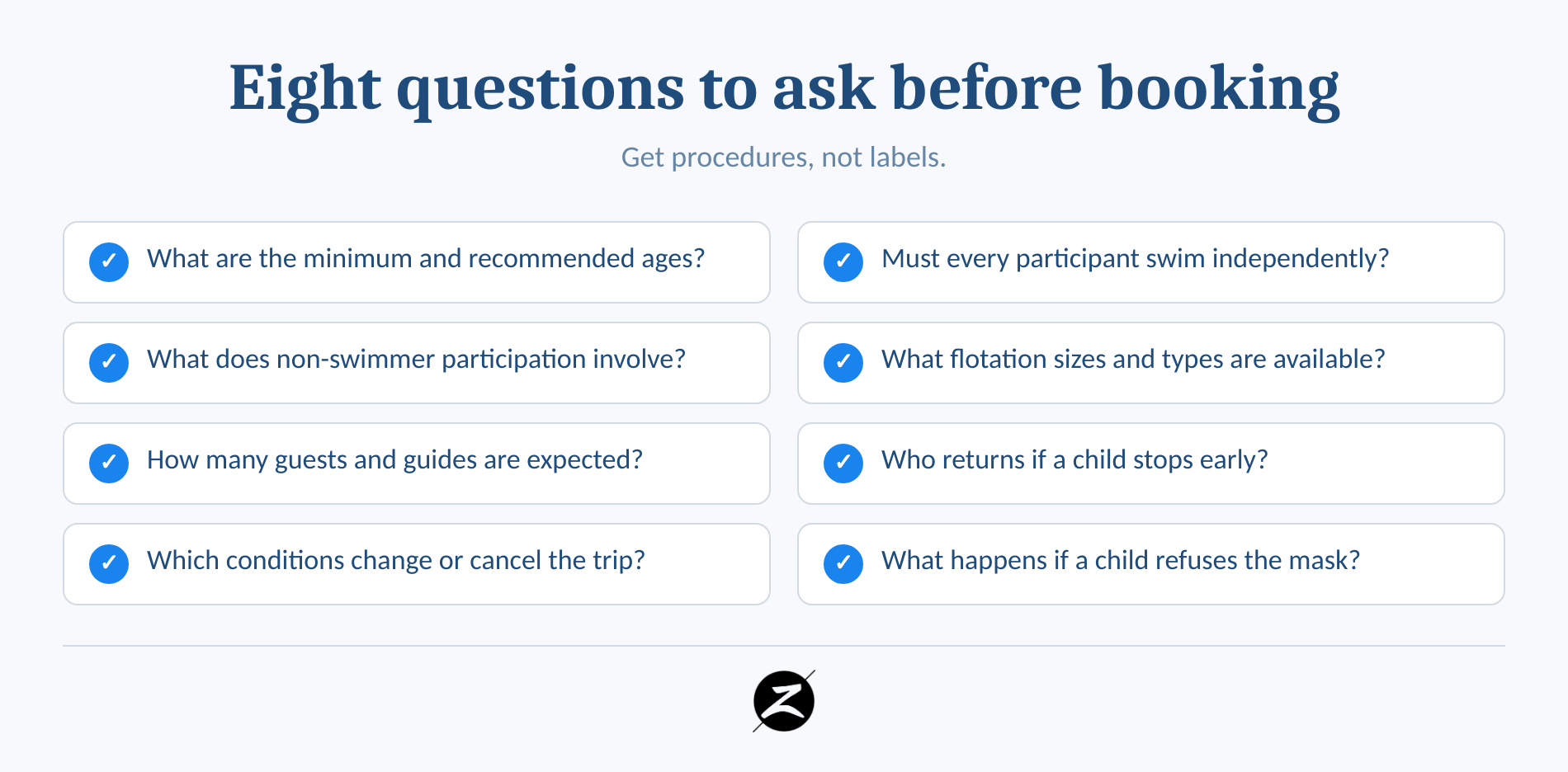
Ask questions that reveal what happens when the day does not follow the ideal itinerary. The most useful answers describe actual procedures rather than relying on labels such as beginner-friendly, family-friendly or non-swimmer-friendly.
Use these questions before paying:
- What is the minimum age, and is that different from the recommended age?
- Must each participant be able to swim independently?
- What does non-swimmer participation involve after shallow-water practice?
- What flotation is available in child and adult sizes?
- How many guests and guides are expected on our departure?
- Can one adult return with a child while another child continues with the guide?
- What conditions cause a cancellation, relocation or shortened water session?
- What is the policy if a child refuses the mask or decides not to enter?
Also ask what is included. Families may need child-size masks and fins, exposure protection, secure storage, drinking water, photos or a specific meeting location. Review the operator’s family snorkeling FAQs and then confirm details that are specific to your departure because equipment, age rules and operating conditions can change.
Treat wildlife language carefully. No responsible operator can guarantee sea turtles, fish or any other wild animal on a particular trip. NOAA’s Hawaii-specific guidance recommends remaining at least 10 feet from sea turtles on land and in the water, and protected-species laws prohibit harassment. Parents should prepare children to watch without chasing, touching, feeding or blocking an animal. NOAA’s Hawaii wildlife guidance explains the distinction. (fisheries.noaa.gov)
A useful booking call ends with a clear picture of who helps the child, how far the child progresses and how the family stops.
How do you plan for the day of the snorkel?
The day-of plan should protect the option to cancel, shorten or stay ashore. Check the child, the equipment and the ocean again even when the reservation was made months earlier.
The day before:
- Review the mask, snorkel and hand signals without creating pressure to perform.
- Tell the child that shallow practice counts as participation and returning to shore is allowed.
- Confirm the meeting point, parking, required arrival time and what the operator supplies using the company’s first-time visitor guidance.
- Pack a towel, sun protection, water, dry clothing and any item listed in the booking confirmation.
At check-in:
- Give the guide an honest description of each person’s swimming ability. Pool comfort, ocean experience and previous snorkeling are different facts.
- Mention mask anxiety, trouble breathing through the mouth, seasickness or a previous frightening water experience.
- Ask who will return with a child if the family needs to split.
- Check that the mask seals without being painfully tight and that the child can remove it on request.
Before entering:
Check posted warnings, wind, waves, visibility and the behavior of the water at the entry. Hawaii Ocean Safety advises against snorkeling during high surf, high winds, heavy shorebreak or strong currents and recommends checking with a lifeguard where one is present. Conditions can change after a tour is booked. (oceansafety.hawaii.gov)
In the water:
Keep the child close enough for immediate help and maintain the assigned buddy system. If the child becomes dizzy, disoriented, unusually breathless or develops a headache, remove the snorkel equipment and exit as safely as conditions permit. Those symptoms should not be treated as something to push through. (oceansafety.hawaii.gov)
Children do not owe adults a long reef swim because the activity was prepaid. A child who decides that playing in the sand and watching from the edge is more enjoyable has still communicated an important limit.
The day-of plan works only when every adult is genuinely willing to replace the snorkel with a beach morning.
What would a good choice look like for a real family?
A useful choice becomes clearer when the family is evaluated as a group. The goal is not to make every person complete the same amount of snorkeling; the goal is to choose an experience where the least-confident child can stop without creating a crisis.
Worked example: Two adults are traveling with an 8-year-old and a 12-year-old. The 12-year-old swims confidently and has snorkeled before. The 8-year-old is comfortable in a pool but has never worn a snorkel or swum in the ocean.
A standard swim-required tour might suit the older child but asks too much of the family as a unit. A beginner-oriented shore experience with standing-depth practice, fitted flotation and a documented early-exit procedure gives the younger child a more appropriate starting point.
Before booking, the parents ask whether one adult can remain with the 8-year-old if the child does not progress beyond the shallows. They also confirm that the 12-year-old would still be supervised by a guide and the second parent rather than being allowed to continue independently.
On the morning of the activity, the 8-year-old cannot tolerate water entering the mask. The family uses the shallow practice period, then one parent returns to the beach with the younger child. The older child continues only if the guide confirms that the remaining supervision arrangement still works.
This example does not treat stopping as failure. The booking succeeds because the family chose a format that could absorb a change of plan without pressuring the child or improvising supervision.
When abilities differ, choose the experience that still works after the least-confident person says stop.
What else do parents ask about snorkeling with kids on Maui?
Parents usually want a beach name, tour ranking or minimum age, but each answer depends on current conditions and the individual child. The following answers are decision rules rather than guarantees about a location, operator or wildlife encounter.
Where is the best place to snorkel with kids on Maui?
There is no single best beach for every child. The best place is a site with calm conditions that day, a manageable entry, room to pause, and supervision matched to the child’s ability. For inexperienced families, guided shallow-water practice may matter more than choosing Maui’s most famous reef.
What are the best snorkeling tours for families on Maui?
The best family snorkeling tours on Maui state their minimum age and swimming requirements before checkout, provide correctly fitted gear and appropriate flotation, allow shallow-water practice, keep groups manageable, and explain how guides respond if a child stops. The right tour is the one designed for the least-confident participant.
What age can kids snorkel in Hawaii?
A child can snorkel when the tour accepts the child’s age and the child can remain calm, follow instructions, tolerate the equipment and communicate discomfort. Zephyr Maui’s beginner Wailea experience lists a minimum age of 7 as of August 2026, but age alone does not establish readiness. (zephyrmaui.com)
Where is the best snorkeling for kids?
The best snorkeling for kids is usually the option with the easiest manageable entry, calm current conditions, clear adult supervision and a quick way to return to shore or the vessel. Reef reputation comes second. A famous location is a poor choice when a child is tired, anxious, cold or unable to follow instructions.
The best answer for a child begins with present ability and current conditions, not a universal beach or age.
What should you do before you book?
Write down each participant’s age, swimming ability, ocean experience and concerns, then compare that list with the tour’s published requirements. Contact the operator whenever a label such as beginner or non-swimmer leaves the depth, flotation, supervision or exit procedure unclear.
If your family includes a first-timer or non-swimmer age 7 or older, review our First Timers & Non-Swimmers Wailea experience. Tell us each child’s age and honest water ability before reserving so we can explain the current requirements, itinerary and included support without promising conditions or wildlife sightings.
Book only after the least-confident family member has a clear way to practice, pause and return to shore.