
In short
South Maui's best snorkeling spot depends on swimming ability, entry comfort, current conditions, and the experience you want. Ulua suits first-timers who already swim, Kamaole III adds lifeguard coverage, Maluaka favors a sandy entry and turtle interest, Makena Landing rewards stronger swimmers, and Ahihi-Kinau is best reserved for experienced snorkelers.
Key takeaways
- 🌊 No South Maui beach is best every day; wind, swell, visibility, and entry conditions can change the answer.
- 🛟 Kamaole III has daily lifeguard coverage from 8:00 a.m. to 4:45 p.m. on Hawaii Ocean Safety's June 2026 schedule.
- Ulua-Mokapu has a sandy beach, parking, restrooms, and showers, but Maui County lists no lifeguard.
- 🐢 Maluaka is a strong choice for turtle interest, but no beach or tour can guarantee a wildlife sighting.
- Ahihi-Kinau requires experienced judgment, reserve-rule compliance, and a $10 nonresident vehicle fee as of September 4, 2026.
Table of contents
- Which South Maui snorkeling spot fits you best?
- What should you check before choosing a beach?
- Where is the easiest place to snorkel in Maui?
- Where should beginners go if easy logistics matter most?
- Which beach is best for turtles and a sandy entry?
- Which spot is best for stronger swimmers who want more reef?
- Is Ahihi-Kinau worth the drive?
- How do you snorkel around turtles and reef life responsibly?
- When does a guided experience make more sense?
- What else do travelers ask about Maui snorkeling?
- Which South Maui snorkel should you choose today?
The best snorkeling in South Maui is not one permanent location. This guide goes deeper on the Kihei, Wailea, and Makena coast; travelers comparing other parts of the island can start with the broader guide to the best Maui beaches for snorkeling from shore.
Which South Maui snorkeling spot fits you best?
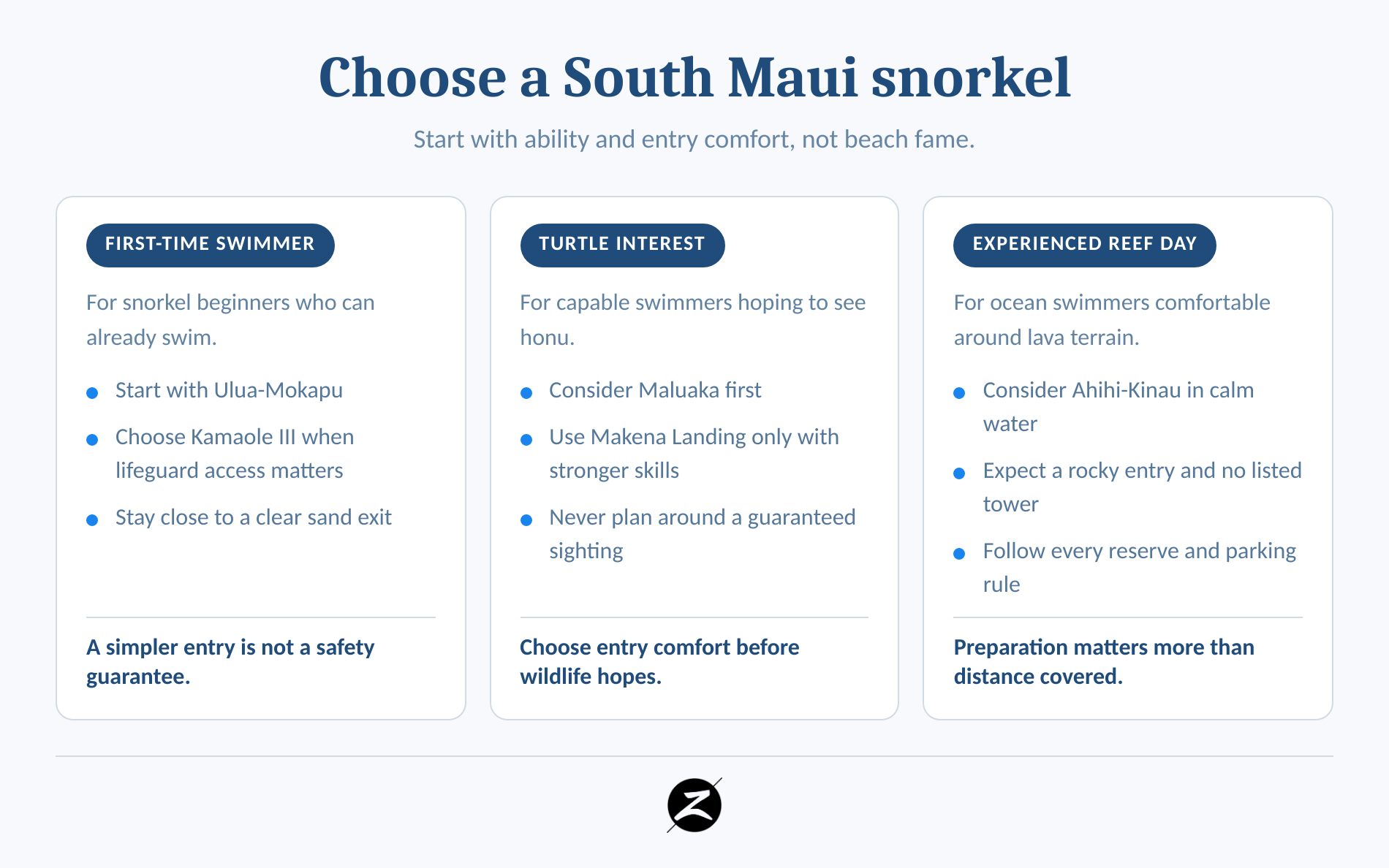
The right spot is the one that matches the least confident swimmer and today's water, not the most famous name. Use this shortlist to narrow the choice, then make a final go or no-go decision at the beach.
| Spot | Best fit | Entry and support | Main reason to reconsider |
|---|---|---|---|
| Ulua-Mokapu | First-time snorkelers who can already swim | Sandy beach, restrooms, showers, parking; no lifeguard | The easy-looking entry can still become unsuitable in wind or swell |
| Kamaole III | Families prioritizing a lifeguard and facilities | Sandy beach, lifeguard, restrooms, showers, parking | Regular shorebreak can reduce comfort and visibility |
| Maluaka | Sandy entry plus interest in turtles and reef fish | Broad beach; no lifeguard listed | Wildlife is never guaranteed, and the reef requires a swim from the sand |
| Makena Landing | Confident swimmers who want more reef exploration | Smaller mixed sand-and-rock entry; no lifeguard listed | Entry, route finding, and the return swim require more judgment |
| ʻĀhihi-Kīnaʻu | Experienced ocean swimmers in calm conditions | Rocky lava coast inside a protected reserve | Fragile terrain, reserve rules, parking fees, and no listed lifeguard tower |
Kihei snorkeling beaches such as the Kamaole parks are convenient, while Wailea and Makena offer a wider range of shore-entry styles. Convenience does not determine water quality or safety, so keep a second beach in mind instead of trying to force the original plan.
No shoreline can guarantee turtles, clear water, or a particular fish sighting. Treat wildlife as a possible part of the day, not the condition that decides how far offshore to swim.
What does a worked example look like?
Consider a couple staying in Wailea. One person is a confident ocean swimmer, while the other can swim but has never used a mask and snorkel. Ulua is the logical first check because of its sand and facilities. If shorebreak or wind makes the exit uncertain, Kamaole III offers a lifeguard to consult. Maluaka becomes a better option only if both swimmers are comfortable and same-day conditions support the longer reef-oriented swim.
Pick the beach that fits the least confident swimmer, not the beach with the strongest reputation.
What should you check before choosing a beach?
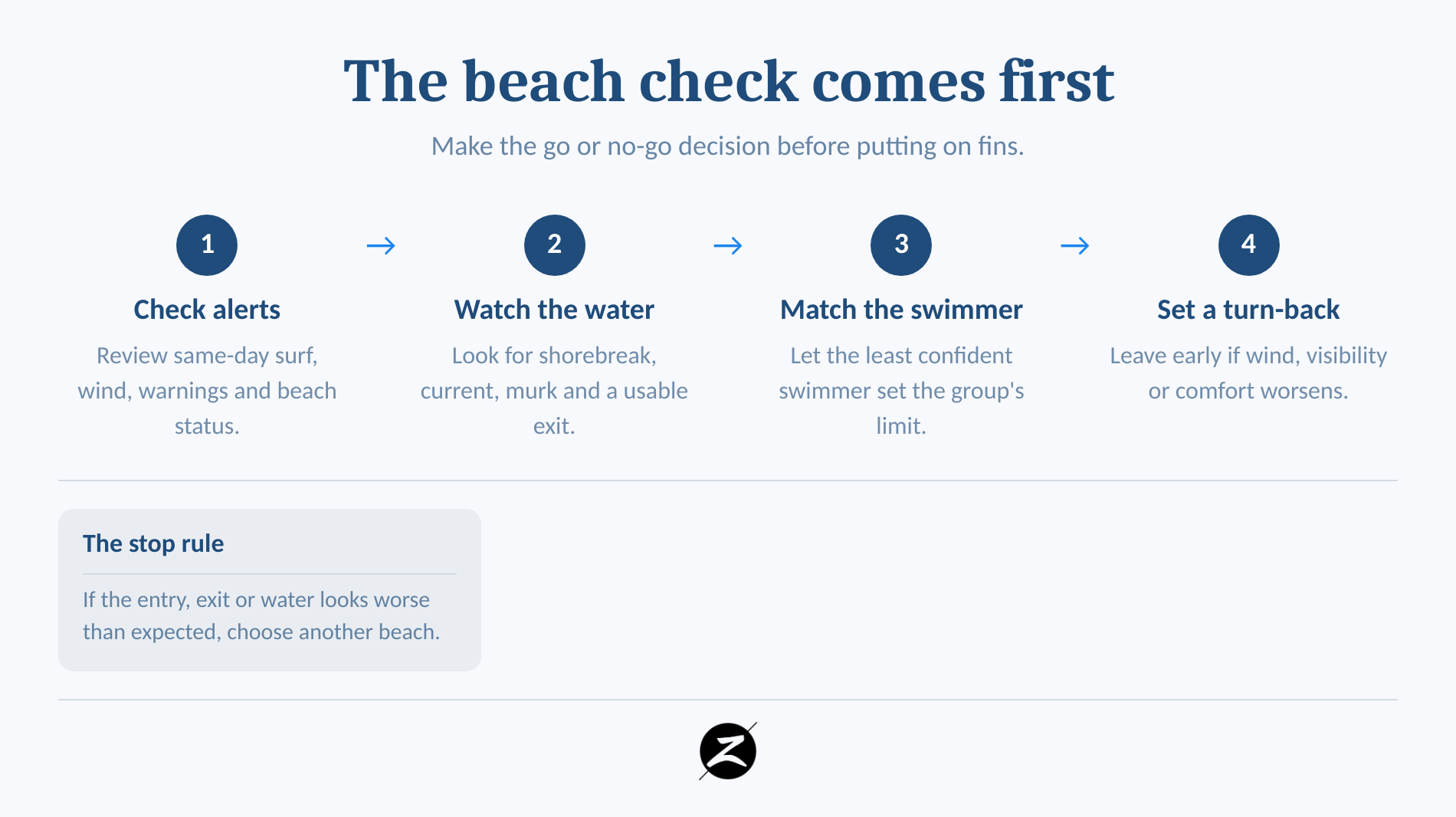
Check surf, wind, visibility, warnings, and the exit before putting on fins. A famous beach in poor conditions is a worse choice than a modest beach with calm water and a clear way back to shore.
Hawaii Ocean Safety's June 15, 2026 guidance identifies high surf, high winds, heavy shorebreak, and strong currents as poor snorkeling conditions. The agency recommends going with a buddy, preparing equipment before entry, conserving energy, and favoring morning conditions.
Start with Hawaii Beach Safety, but do not stop at a screen. Watch several wave sets, find the planned exit, look for brown or murky water, read every posted warning, and ask a lifeguard when one is present.
Morning often offers a better starting window, but morning is not a safety guarantee. If the water becomes rougher, the wind pushes swimmers away from the exit, or either person feels uncomfortable, leave before fatigue turns a manageable problem into an emergency.
The best beach is the one that passes today's condition check and gives the group a clear exit.
Where is the easiest place to snorkel in Maui?
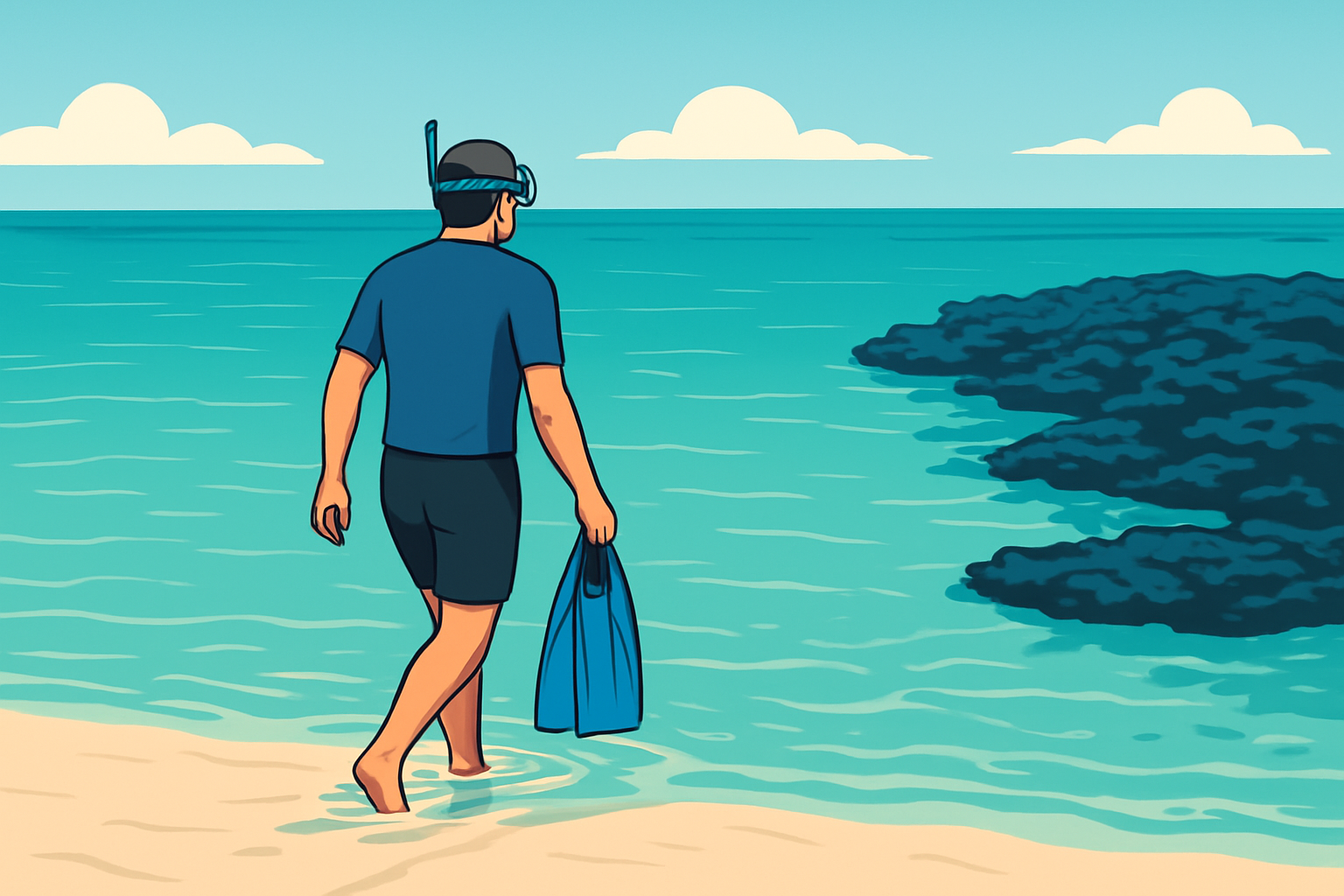
For a first-time snorkeler who can already swim, Ulua-Mokapu is often the simplest South Maui starting point in calm conditions. Its sand and facilities remove some logistical friction, but there is no lifeguard on duty.
Maui County's current Ulua-Mokapu facility page lists sand, parking, public restrooms, showers, and partial accessibility. The same page states that swimming is offshore and no lifeguard is on duty.
Travelers searching for the best snorkeling in South Maui for beginners should separate equipment experience from swimming ability. A person can be new to snorkeling and still be a capable swimmer; a person who cannot swim should not treat a calm-looking beach, fins, or flotation as permission to snorkel independently.
Enter and exit over open sand rather than stepping onto reef or rock. Stay close enough to the planned exit that the return remains easy, and finish while everyone still has energy.
Ulua is an easy-looking entry, not permission to ignore swimming ability or same-day conditions.
Where should beginners go if easy logistics matter most?
Kamaole III is the practical pick when a lifeguard, restrooms, parking, and family logistics matter more than reaching the largest reef. It can support a short, conservative snorkel in calm, clear water, but regular shorebreak means the lifeguard's advice should decide the plan.
The June 2026 lifeguarded-beach schedule lists Kamaole I, II, and III with daily coverage from 8:00 a.m. to 4:45 p.m. Lifeguard staffing and hours can change, so confirm that the tower is operating when you arrive.
GoHawaii's Kamaole Beach Parks page lists snorkeling among the activities but also identifies regular shorebreak at Kamaole III. Ask the lifeguard where entry and exit are safest that day, and which rocky or shallow areas to avoid.
Kamaole III is not automatically the best snorkeling in Kihei because it has a tower. The advantage is access to a trained person who can evaluate conditions that an online list cannot see.
Kamaole III is the practical choice when lifeguard access and facilities matter more than chasing the biggest reef.
Which beach is best for turtles and a sandy entry?
Maluaka is often the strongest match for swimmers who want a broad sandy entry and the possibility of seeing honu near reef habitat. Choose Maluaka for the entry and setting first, because turtle sightings remain unpredictable.
Maui Ocean Center's South Maui snorkeling guide describes rocky outcrops at the ends of Maluaka, weather-dependent water conditions, and frequent turtle sightings. It also notes that the beach has no lifeguard.
Maluaka Beach snorkeling is commonly associated with Turtle Town, but Turtle Town is a travel name for reef areas along the Makena coast, not a promise attached to one point on a map. Fish and turtles move, visibility changes, and a sighting from yesterday says little about today's safest route.
Begin and finish over sand. Do not follow a turtle farther offshore, crowd a surfacing animal, or remain in the water after the wind, visibility, or least confident swimmer begins to deteriorate.
Maluaka is a strong sandy-entry choice for turtle interest, but wildlife remains unpredictable.
Which spot is best for stronger swimmers who want more reef?
Makena Landing is a better fit for confident swimmers who value reef exploration more than the simplest beach entry. Compared with Maluaka, its smaller mixed entry requires more attention to footing, other water users, navigation, and the return route.
A Maui County shoreline inventory identifies Makena Landing as a sand-and-rock access point. Shorelines change, so use that description only as planning context and confirm the actual entry when you arrive.
Makena Landing should not be a first snorkeling session simply because the cove looks protected. Both partners should be able to manage their own equipment, maintain orientation, and return without relying on a flotation device to replace swimming ability.
Expect the experience to depend on route choice and conditions rather than a guaranteed list of animals. If the entry or exit feels awkward before the swim begins, Maluaka or a lifeguarded Kamaole beach is the more conservative choice.
Makena Landing suits confident swimmers who value reef exploration over the simplest beach entry.
Is Ahihi-Kinau worth the drive?
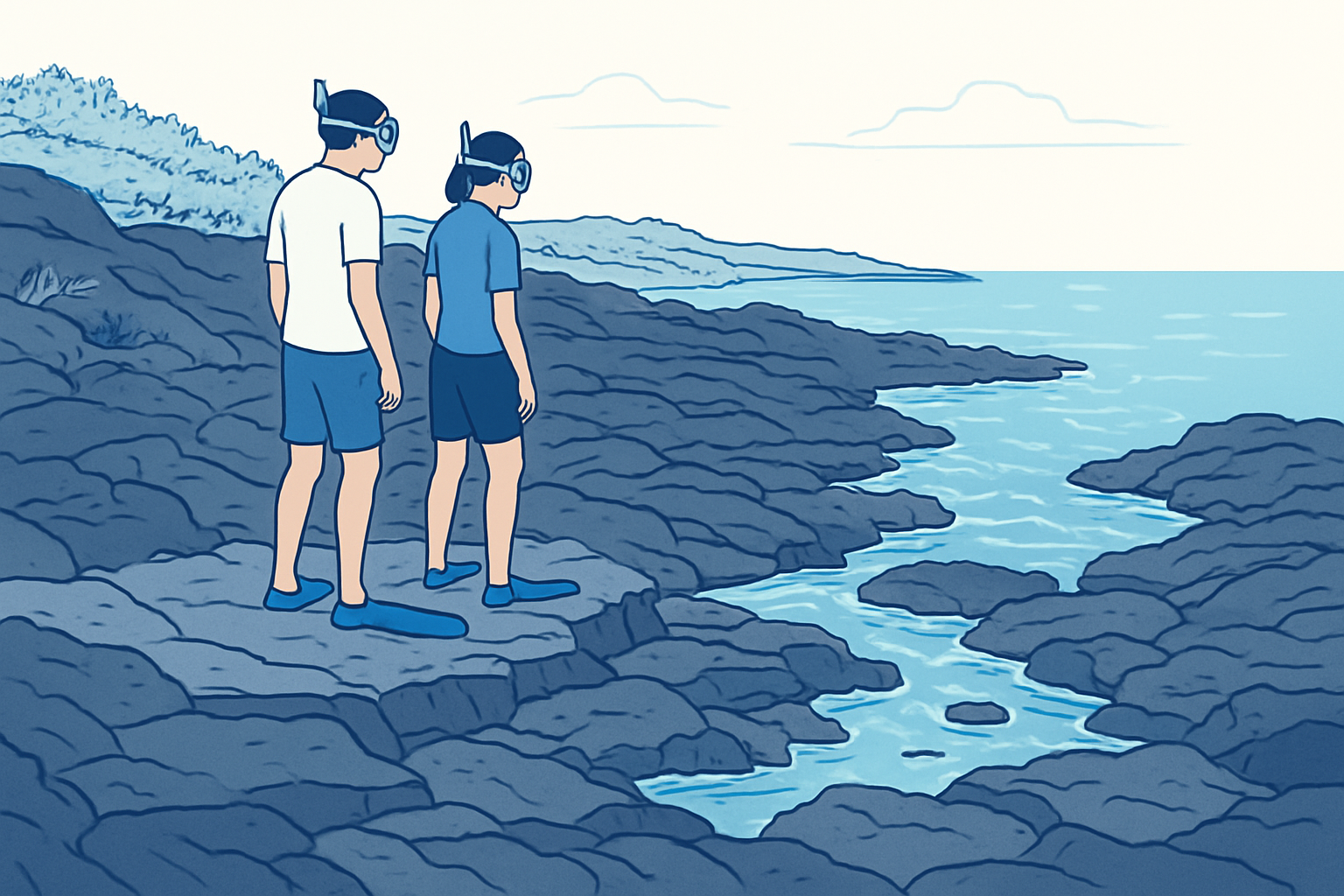
ʻĀhihi-Kīnaʻu is worth considering for experienced ocean swimmers who understand rocky entries and protected-area etiquette. Choose another beach if anyone needs a gentle sand entry, a lifeguard, or a place to learn basic equipment skills.
As of September 4, 2026, DLNR's current visitor page lists visiting hours of 5:30 a.m. to 7:30 p.m. and a $10 daily vehicle fee for nonresidents, payable by debit or credit card. The page describes 1,238 land acres and 807 submerged acres inside the reserve.
DLNR's aquatic reserve rules prohibit removing, injuring, or killing plants or animals and prohibit operating, anchoring, or mooring motorized vessels in the regulated waters. Posted closures and designated parking requirements must also be followed.
Rocky lava terrain can make a calm-looking shoreline difficult to enter or exit. This is not the place to learn mask clearing, test unfamiliar fins, or discover that one member of the group is uncomfortable away from sand.
Ahihi-Kinau rewards preparation and restraint, not improvisation.
How do you snorkel around turtles and reef life responsibly?
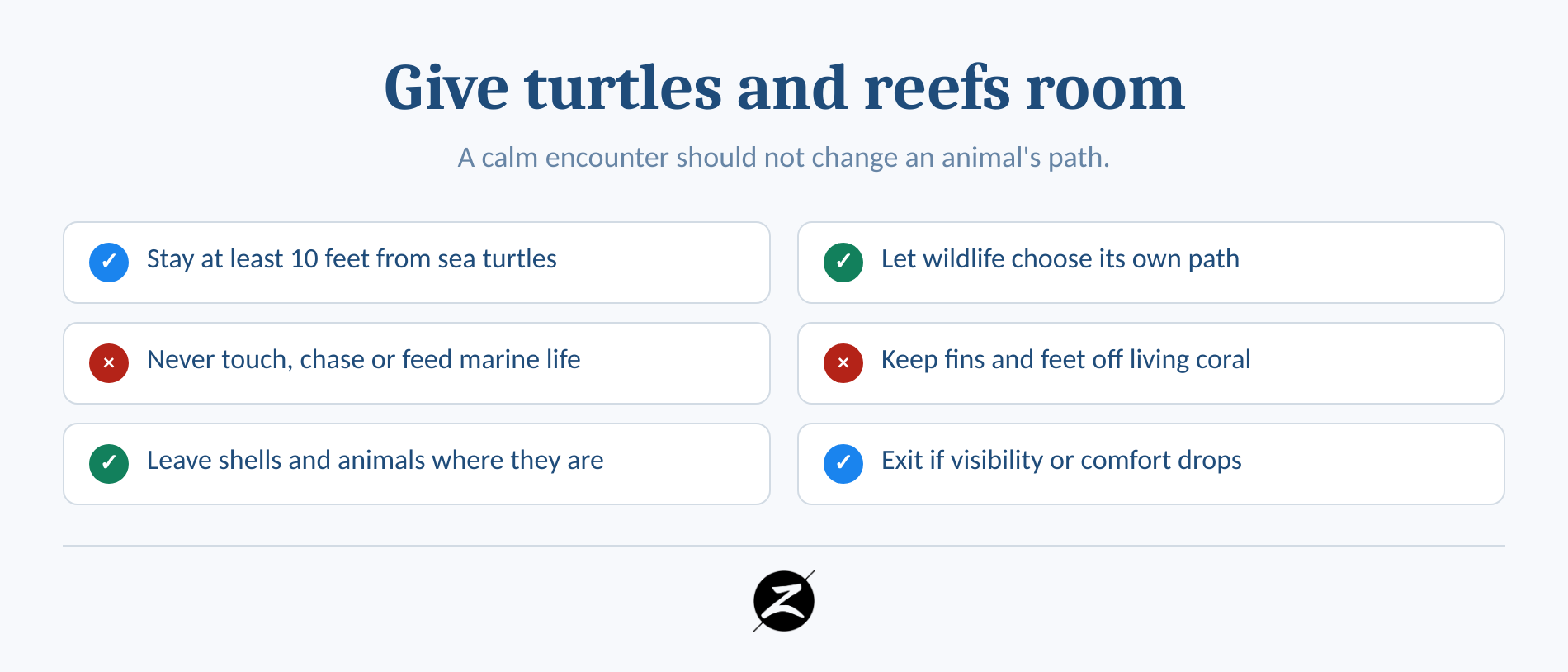
Keep at least 10 feet, or 3 meters, from Hawaiian sea turtles on land and in the water. Never touch, chase, surround, ride, or feed a turtle, and keep fins and feet away from living coral.
NOAA Fisheries' 2026 Hawaii viewing guidance recommends staying at least 10 feet from sea turtles. If an animal approaches, remain calm and create space instead of blocking its route to the surface or shore.
Hawaii Ocean Safety also advises snorkelers not to touch marine life or stand on coral. Maintain a horizontal floating position in shallow reef areas, control fins before turning, and return to sand if a break is needed.
Wildlife interest should never pull a swimmer beyond a comfortable return distance. A distant turtle seen safely is a better encounter than a close view that changes the animal's path or leaves the swimmer exhausted.
A good turtle encounter is one where the turtle never has to change course because of you.
When does a guided experience make more sense?
A guide makes sense when swimming ability, equipment use, beach selection, or ocean confidence is the main uncertainty. Guidance can also help mixed-ability groups avoid building the entire plan around the strongest swimmer.
Hawaii Ocean Safety's 2026 guidance says snorkelers should already be experienced ocean swimmers. Zephyr Adventures Maui also offers First Timers & Non-Swimmers Wailea, a guided confidence-building experience whose documented topics include flotation, breathing, mask seal, body position, equipment use, and ocean awareness.
Those facts should not be blurred. A guided format does not make independent snorkeling appropriate for a non-swimmer, and flotation does not replace swimming ability. Guests who cannot swim, have relevant health concerns, or feel anxious in open water should disclose that information before booking and discuss whether the activity is suitable.
A guide can also be useful for a capable swimmer who does not want to interpret an unfamiliar shoreline alone. The value is support with gear, entry decisions, group pacing, and wildlife etiquette, not a promise that a particular animal or water condition will appear.
Guidance is most valuable when ability, equipment, or beach choice is the real uncertainty.
What else do travelers ask about Maui snorkeling?
Most Maui snorkeling questions have the same underlying answer: choose for the swimmer and the conditions before choosing for reputation. The following answers apply to shore snorkeling and do not replace same-day warnings or lifeguard advice.
Which side of Maui is best for snorkeling?
South and west Maui are the two coasts most visitors compare, but no side is always best. South Maui offers many shore-access choices near Kihei, Wailea, and Makena. The right coast on a given day is the one with calmer, clearer water and an entry that suits the least confident swimmer.
Where are the best snorkeling spots in Maui?
Maui's best-known snorkeling areas include the South Maui beaches from Wailea through Makena, plus West Maui bays and reefs. In South Maui, Ulua-Mokapu, Kamaole III, Maluaka, Makena Landing, and Ahihi-Kinau serve different ability levels. Same-day ocean conditions matter more than any fixed ranking.
Where is the easiest place to snorkel in Maui?
For a first-time snorkeler who can already swim, Ulua-Mokapu is often the simplest South Maui starting point because the beach has sand, parking, restrooms, and showers. Ulua-Mokapu has no lifeguard, so calm water, a buddy, a clear exit, and an honest skills check are still required.
Maui's easiest snorkeling spot is the calm, suitable entry that matches the swimmer on that day.
Which South Maui snorkel should you choose today?
Choose Ulua for a simple sand entry, Kamaole III for lifeguard access, Maluaka for sand plus turtle interest, Makena Landing for stronger swimmers, or ʻĀhihi-Kīnaʻu for an experienced reserve visit. Change the plan whenever conditions or group comfort disagree with that shortlist.
Travelers who want a guided turtle snorkel combined with beach stops, golden-hour coastal scenery, and a drive toward La Perouse can review our Wailea Wildlife Experience. Before booking, share each guest's swimming ability, snorkeling experience, and comfort with shore entry so the activity can be assessed honestly.
Choose conditions and fit first; the beach name comes second.