
In short
Maui in March is a strong choice for visitors who want seasonal humpback whale viewing, beach time, reef activities, and cooler high-elevation exploring in one trip. Build each day around current ocean conditions, make reservations for popular parks early, and keep one land-based alternative ready when wind, rain, or surf changes the plan.
Key takeaways
- 🌊 Put flexible ocean activities early in the trip so you can move them if surf, wind, or visibility changes.
- 🐋 March falls within Hawaiʻi’s humpback whale season, which runs roughly from September through May, although sightings are never guaranteed.
- Haleakalā sunrise requires an advance vehicle reservation, while the summit can be cold, wet, and windy even when the coast is warm.
- Give sea turtles at least 10 feet of space and humpback whales at least 100 yards of space.
- A five-day Maui trip is enough for a balanced mix of South Maui ocean time, Haleakalā, and one full Road to Hāna day.
Table of contents
- Is March a good month to visit Maui?
- What should you book first for a March Maui trip?
- Which ocean activities work best in March?
- What should you do if snorkeling conditions change?
- What land plans belong in a March itinerary?
- What is a practical 5-day Maui itinerary for March?
- How should families, beginners, and couples adapt the plan?
- What else do travelers ask about Maui in March?
- What should you book now?
Is March a good month to visit Maui?
Yes. March gives Maui visitors an unusual mix of winter-season wildlife, warm coastal days, green scenery, and enough variety to build both ocean and land days into one trip.
The important qualification is that March is not a promise of identical beach weather across the island. A rainy or windy morning in one area does not make the whole day unusable, but it should change the order of your plans. Check the National Weather Service surf forecast for Hawaiʻi, local beach hazard information, and operator updates before committing to a water entry.
March is also within Hawaiʻi’s humpback whale season. The Hawaiʻi Department of Land and Natural Resources says whales can arrive as early as September and remain through May, with peak season usually in January and February. March can still offer excellent viewing, especially in waters around Maui, Lānaʻi, and Molokaʻi, but no ethical operator should promise a sighting. The state’s whale-viewing guidance also says to remain at least 100 yards from humpback whales.
A flexible plan is the advantage: use the best ocean window you get, then use the rest of the week for driving, hiking, food, beaches, and higher-elevation scenery.
What should you book first for a March Maui trip?
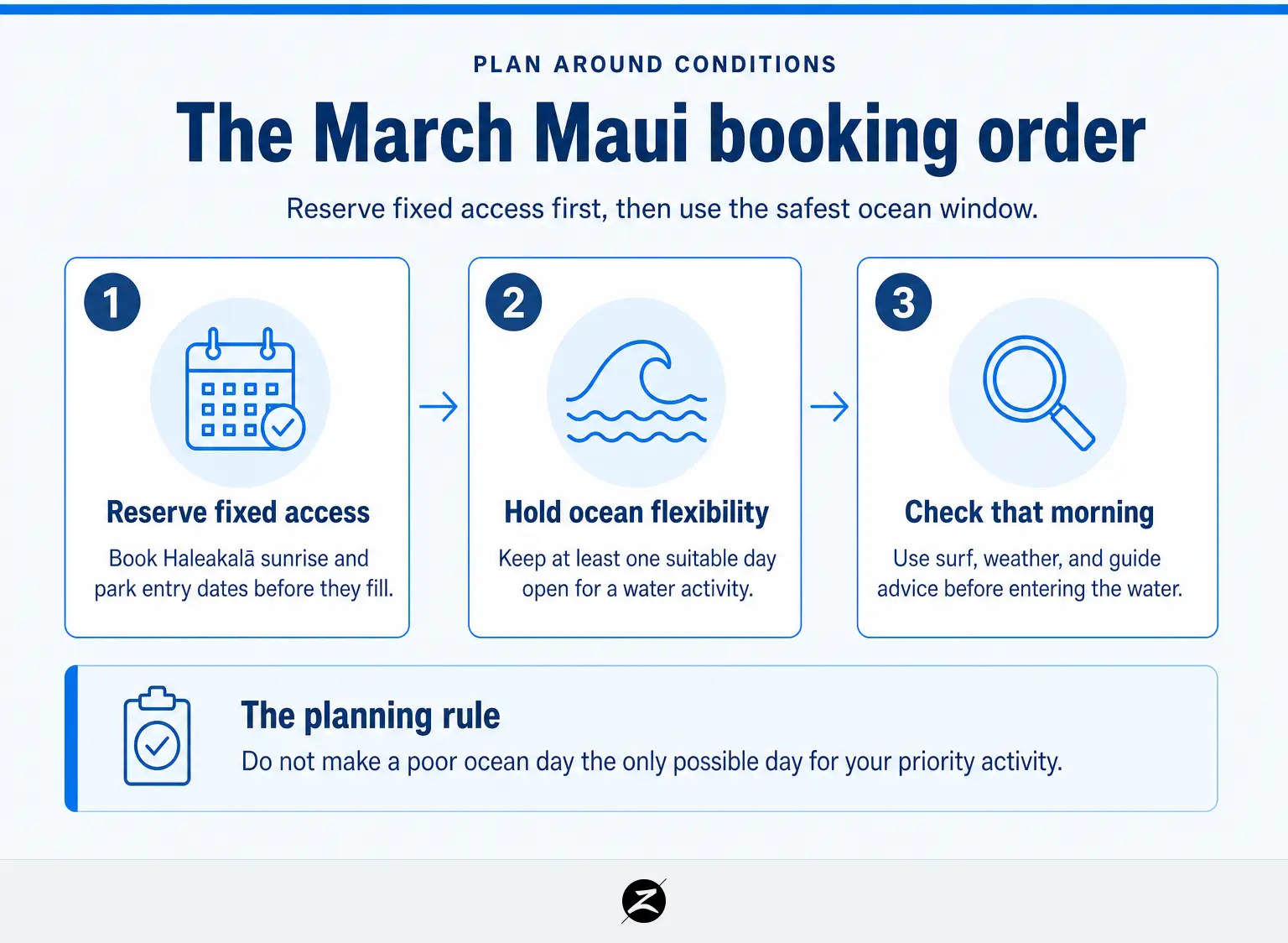
Book limited-entry experiences and fixed-date reservations first, then put flexible ocean activities around them. In practice, that means Haleakalā sunrise, Waiʻānapanapa State Park, and any private or small-group activity you would be disappointed to miss.
Haleakalā sunrise access requires an advance reservation for vehicles entering the Summit District between 3:00 a.m. and 7:00 a.m. The National Park Service releases reservations up to 60 days ahead, with an additional portion released two days before the visit. The reservation is separate from the park entrance fee. Review Haleakalā’s current reservation rules before booking, because policies and availability can change.
For the Road to Hāna, reserve Waiʻānapanapa State Park if it is on your list. The state requires advance parking and entry reservations for nonresidents, and reservations can be made up to 30 days ahead. Check the official Waiʻānapanapa reservation page rather than assuming walk-in access.
Work example: If you have five days, reserve Haleakalā for Day 2 and Waiʻānapanapa for Day 4. Keep Day 1 or Day 3 open for your preferred ocean activity. That order lets you move the water day if conditions do not suit your group.
The practical rule is simple: reserve what cannot move, then keep the ocean portion of your schedule movable.
Which ocean activities work best in March?
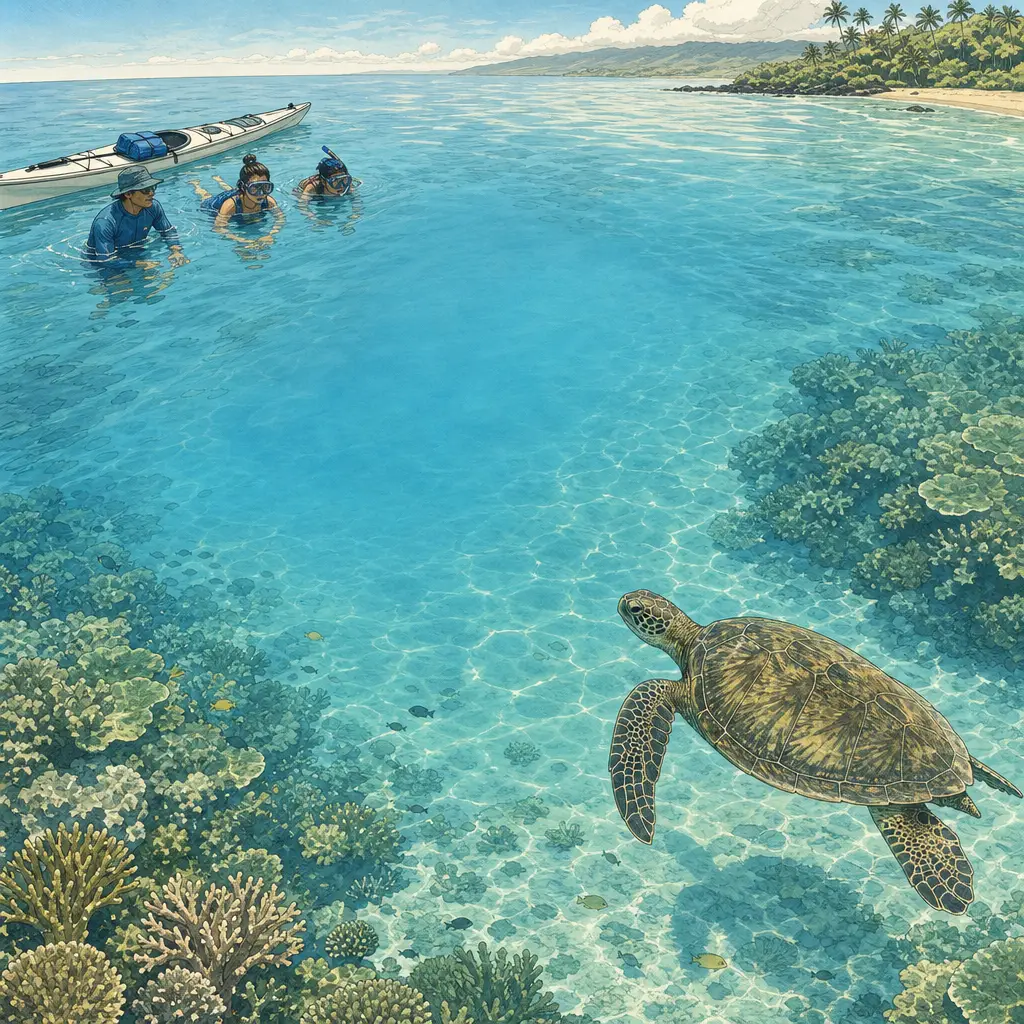
Guided snorkeling, coastal kayaking, beach time, and wildlife observation can all fit a March Maui itinerary. The best choice depends less on the calendar than on the day’s surf, wind, visibility, confidence level, and the shoreline you plan to use.
Start with the activity that has the narrowest comfort range for your group. A first-time snorkeler may prefer a supported shore-entry experience on a day with gentle conditions, while confident swimmers may want a longer reef session or a kayak-and-snorkel outing. We recommend checking a Maui snorkeling report before setting out, then changing the plan if the forecast, guide briefing, or beach conditions point to a poor match.
Marine wildlife is a reason to slow down, not a reason to approach. Hawaiʻi’s Division of Aquatic Resources advises visitors to stay at least 10 feet away from sea turtles on land and in the water, and not to touch, feed, or harass them. Read the state’s sea turtle guidance. A close photo is not worth stressing an animal or putting yourself in its path.
For visitors who want a combined paddle and reef experience, our guided Turtle Town coastal kayak and snorkel is designed around small groups, equipment support, and seasonal whale observation. It is not a dedicated whale-watching cruise, and wildlife appearances remain unpredictable.
The best March ocean plan is the one that matches the actual conditions and the least confident person in your group.
What should you do if snorkeling conditions change?
Do not force a snorkel because it appears on the itinerary. If surf, wind, water movement, visibility, or a guide’s safety assessment makes the water unsuitable for your group, swap the activity rather than trying to salvage the plan.
Use a simple two-track approach. Track A is your water plan. Track B is a land plan that still feels like a Maui day, such as a scenic drive, a cultural site, a food stop, an art gallery, a beach walk away from the surf zone, or an early start toward Haleakalā if you do not already have a summit booking.
| If the day looks like this | Move toward this plan | Keep in mind |
|---|---|---|
| Calm, comfortable conditions | Guided snorkeling, kayaking, or a beach morning | Follow local advice and use the briefing to decide if conditions suit everyone. |
| Choppy water or poor visibility | Scenic South Maui drive, food, shopping, or an inland outing | A sunny sky does not guarantee comfortable water. |
| Rain near Hāna or on trails | Shorter scenic stops and indoor breaks | Check road, park, and weather updates before committing to long drives. |
| Strong surf or posted hazards | Stay out of the water and choose an inland or protected activity | The National Weather Service urges beachgoers to use caution and enter near a lifeguard. |
Do not treat a beach as safe simply because other people are in the water. Read signs, ask local ocean-safety staff when available, avoid isolated entries, and keep children within immediate reach. Conditions can change faster than an itinerary.
A changed ocean plan is not a lost day when you have a real land alternative ready.
What land plans belong in a March itinerary?
Haleakalā, the Road to Hāna, Waiʻānapanapa State Park, and unstructured beach or town time are the strongest land-based anchors for March. They give the trip range and keep it enjoyable if you need to move an ocean booking.
Haleakalā deserves preparation. The summit reaches 10,023 feet, and the National Park Service warns that weather can change rapidly, with temperatures varying sharply between the coast and the mountain. Pack warm layers, water, and sun protection even if you leave your accommodation in beach clothes. A sunrise reservation is required, but sunset does not use the same sunrise reservation system.
A Road to Hāna day works best as one long, deliberately unhurried outing rather than a checklist. Pick a few stops, leave room for traffic and weather, and respect closures, private property, and posted rules. If you hold a Waiʻānapanapa reservation, arrive within its required time window and leave enough margin to enjoy the park without rushing.
For a low-commitment day, choose a scenic coastal walk, a relaxed beach visit, or a town meal. This is useful after a sunrise start, a long driving day, or a demanding snorkel session.
March land plans work best when they provide breathing room instead of competing to become another full-day expedition.
What is a practical 5-day Maui itinerary for March?
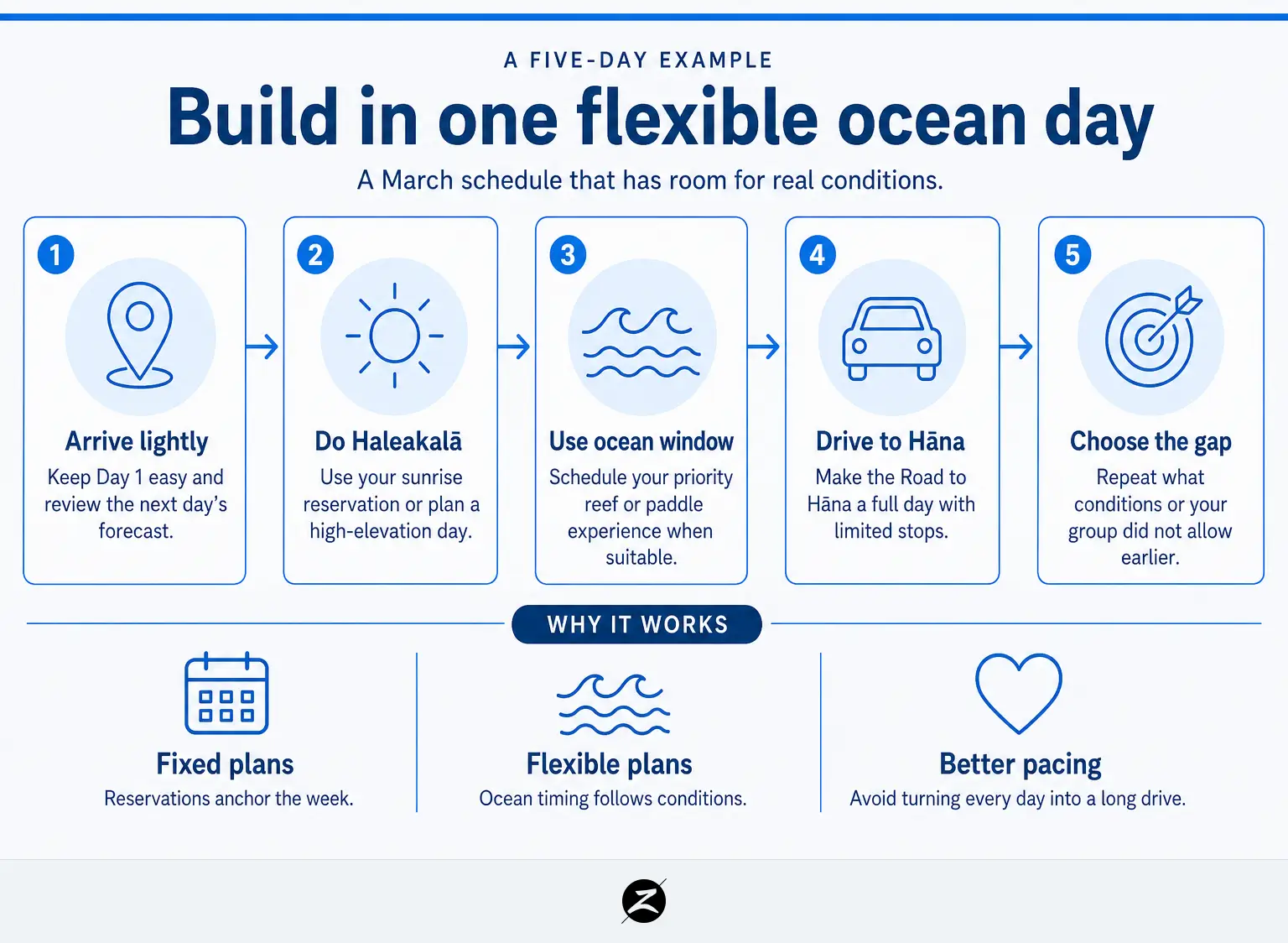
Five days is enough for a balanced Maui trip if you limit long-drive days and leave your main ocean activity flexible. This sample itinerary gives you a complete experience without relying on a single perfect-weather day.
Day 1: Arrive and keep it light. Walk a nearby beach, buy water and snacks for the week, and check the next day’s forecast. Do not schedule a demanding activity immediately after a long flight.
Day 2: Haleakalā or an early land day. Use your reserved sunrise slot if you have one. Rest afterward, then spend the afternoon at an easy beach, on a scenic drive, or at a relaxed dinner.
Day 3: Your priority ocean day. If conditions and group confidence align, schedule snorkeling, kayaking, or a guided reef experience. If the water does not suit the day, switch to your Track B plan and preserve the next available ocean window.
Day 4: Road to Hāna and Waiʻānapanapa. Make this your full driving day. Keep stops selective, obey all reservation requirements, and avoid trying to stack another major excursion after you return.
Day 5: Choose what the week has not delivered yet. If you have not had a good ocean window, use it here. If you have, choose a final scenic outing, a longer beach morning, or a premium land-and-sea experience.
For travelers who want the final day to combine a private reef snorkel, sea scooters, coastal driving, lava-field outlooks, and personal photography, our Land to Sea Experience is a paid guided option. Availability should be confirmed before building the rest of the itinerary around it.
A good five-day March itinerary has one fixed mountain day, one fixed Hāna day, and enough open space to take the best safe ocean window.
How should families, beginners, and couples adapt the plan?
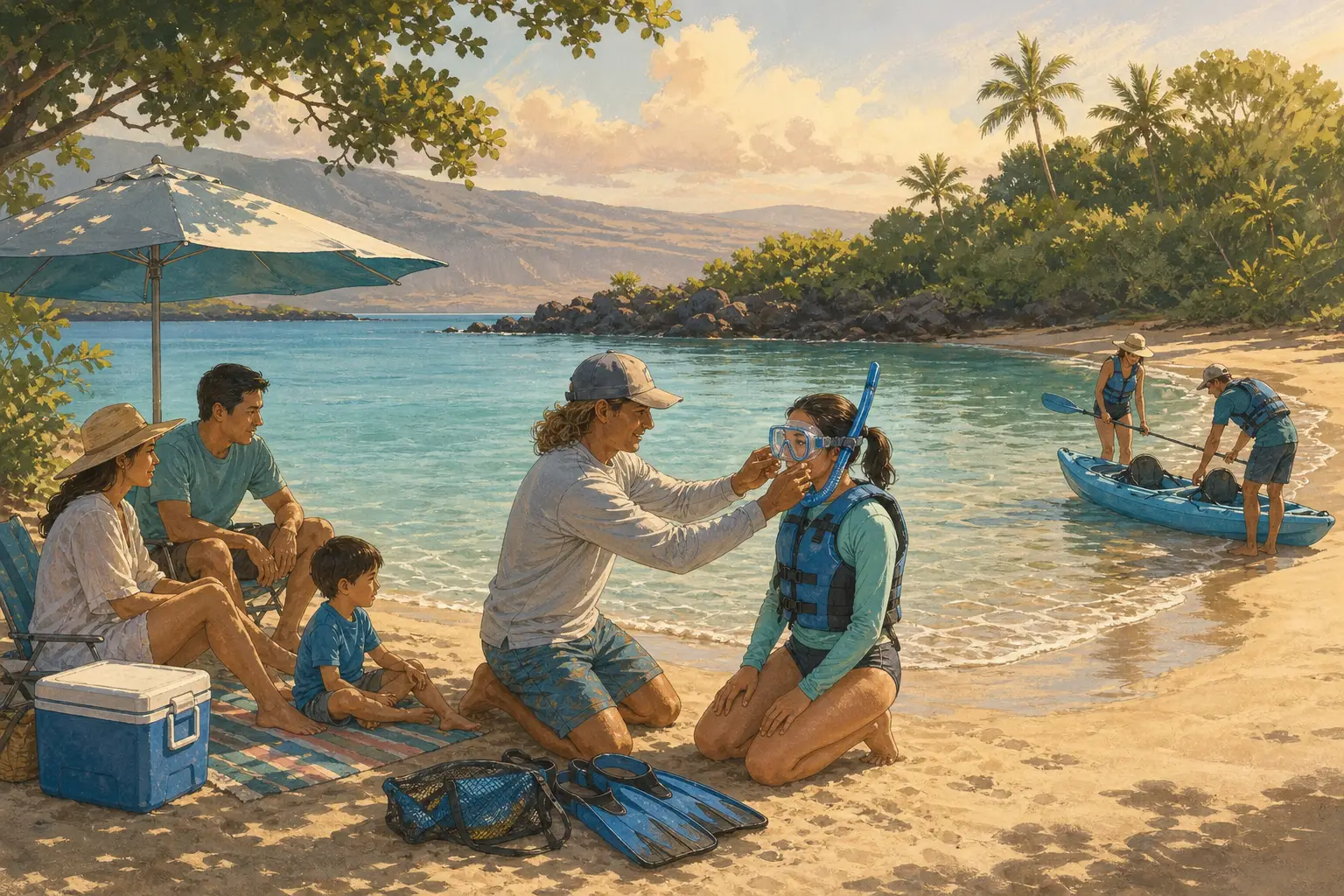
Families, beginners, and couples do not need different islands or entirely separate itineraries. They need different pacing, activity thresholds, and backup plans.
Families should avoid building every day around a timed booking. Give younger travelers a simple daily highlight, such as a turtle-respecting beach visit, a short scenic stop, or a guide-supported water activity, then leave recovery time for meals and rest.
Beginners should make the water activity the day’s main event, not one item squeezed between a sunrise, a long drive, and dinner reservations. Choose an experience that includes equipment fitting, basic skill instruction, flotation support where appropriate, and an honest condition assessment. Being a beginner is not a reason to push through discomfort.
Couples can create a calmer itinerary by using one active morning, one slow afternoon, and one golden-hour outing rather than trying to cover every landmark. A sunset-oriented kayak experience or a private option can make more sense than adding another long car day.
The right March plan is not the busiest version of Maui; it is the version your group can enjoy safely and remember clearly.
What else do travelers ask about Maui in March?
These common planning questions matter because a March itinerary is partly about what to reserve and partly about what to leave flexible.
Is March a good month to visit Maui?
March is a good month to visit Maui for travelers who want a mix of beach time, seasonal humpback whale viewing, reef activities, and scenic drives. March weather and ocean conditions can vary by location and day, so visitors should keep water activities flexible and check the latest surf forecast before entering the ocean.
What is one thing not to miss on Maui?
For many March visitors, one thing not to miss on Maui is responsibly viewing humpback whales during Hawaiʻi’s seasonal migration. Maui also offers Haleakalā, the Road to Hāna, and guided reef experiences, but humpback whale season makes March distinct. Keep at least 100 yards from humpback whales and never expect a guaranteed encounter.
What to stay away from in Maui?
Stay away from unsafe ocean entries, posted closures, restricted areas, and wildlife interactions that disturb animals. Do not enter water when surf or current conditions exceed your group’s ability, do not touch or feed sea turtles, and do not approach whales. In March, a flexible itinerary is safer than forcing an activity during poor conditions.
How many days in Maui is enough?
Five to seven days is enough for many Maui visitors to experience South Maui, one ocean activity, Haleakalā, and a Road to Hāna day without rushing every morning. A shorter trip can still work, but travelers should choose fewer regions and avoid trying to combine Haleakalā, Hāna, and a major ocean activity into one day.
The most useful Maui answer is usually not another attraction; it is knowing which plan can move when the day changes.
What should you book now?
Book the dates that have limited availability first: Haleakalā sunrise, Waiʻānapanapa entry, and the one guided experience your group most wants to do. Then arrive with one flexible ocean day and one land-based backup plan.
If a supported, small-group South Maui ocean day fits your March trip, we can help you choose an experience that suits your group’s confidence and schedule. Start with the activity details, confirm availability, and let the conditions guide the final timing.