
In short
Maui's best turtle-viewing places include Hoʻokipa Beach Park for shore viewing and Maluaka Beach, Makena Landing, Ulua Beach, Black Rock, and Kapalua Bay for possible in-water encounters. No location guarantees turtles. Check conditions, stay at least 10 feet away, and never touch, chase, feed, or block a turtle.
Key takeaways
- 🐢 Hoʻokipa Beach Park is the clearest no-water choice, while Maluaka and Makena are stronger fits for in-water viewing.
- No Maui beach can guarantee a turtle sighting or honestly claim a permanent “most turtles” title.
- Hawaiʻi Ocean Safety says morning usually offers better snorkeling conditions and visibility.
- NOAA recommends keeping at least 10 feet of space from sea turtles on land and in the water.
- The safest choice depends first on swimming ability and current conditions, not on a viral location list.
Table of contents
- Where should you go if you only have time for one spot?
- Where are the best places to see turtles in Maui?
- Which Maui turtle spot fits your swimming ability?
- What time of day and month give you the best chance?
- What would a realistic turtle-viewing morning look like?
- How close can you get to a sea turtle in Maui?
- What should you do if no turtles appear?
- FAQ about seeing turtles in Maui
- What should you do next?
Maui turtle planning starts with one distinction: watching from dry land and entering the ocean are different activities with different risks. The Hawaiʻi Division of Aquatic Resources identifies the green sea turtle, or honu, as the turtle most commonly encountered on Hawaiʻi reefs and beaches; hawksbills are much rarer.
Where should you go if you only have time for one spot?
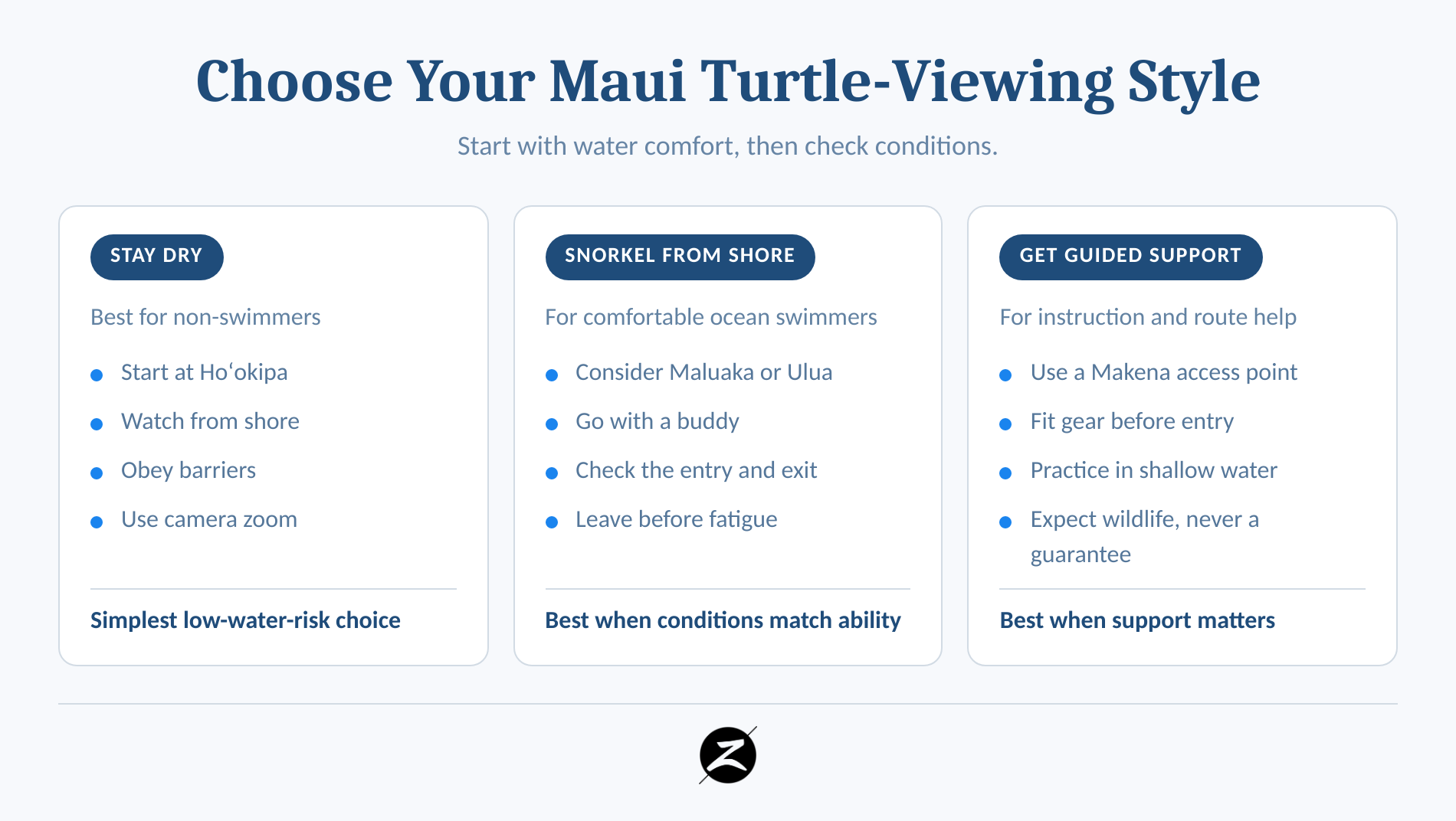
If you want to stay dry, choose Hoʻokipa Beach Park; if you want to snorkel, choose Maluaka Beach or a Makena-area guided experience. That split is more useful than pretending one beach is best for every traveler.
Hoʻokipa is the simpler answer for a mixed group that includes non-swimmers. The County of Maui's current Hoʻokipa page identifies the park as a major surfing venue, notes Hawaiian green sea turtle observation, and lists lifeguard coverage from 8:00 a.m. to 4:30 p.m. The surf reputation is a reason to watch from shore, not a reason to enter unfamiliar water.
Maluaka and nearby Makena access points are better matches for people who specifically want to snorkel around reef habitat. Turtle Town is a commonly used name for the Makena reef area, not a controlled wildlife enclosure, so neither a pin on a map nor a paid guide can schedule a turtle.
Choose Hoʻokipa to stay dry and Maluaka or Makena when the goal is a responsible in-water encounter.
Where are the best places to see turtles in Maui?
Seven practical choices cover the main ways travelers look for honu: shore watching, beach-entry snorkeling, and guided reef access. NOAA's 2023 Federal Register analysis identified all seven as Maui areas where sea turtles are known to occur, but that finding does not predict what will be present during one visit.
| Place | Best for | Viewing style | Water comfort | Main caution |
|---|---|---|---|---|
| Hoʻokipa Beach Park | Non-swimmers and photographers | Shore | No swimming required | Powerful North Shore surf |
| Maluaka Beach | All-around Turtle Town access | Shore snorkel | Comfortable ocean swimmer | Conditions and visibility change |
| Makena Landing | Instruction and guided access | Cove and reef snorkel | Beginner with support | Outer routes are not beginner water |
| Ulua Beach | Wailea facilities and beach entry | Shore snorkel | Comfortable ocean swimmer | No lifeguard listed |
| Pōʻōlenalena Beach | A quieter South Maui alternative | Shore snorkel | Experienced ocean swimmer | Quiet does not mean hazard-free |
| Black Rock, Puʻu Kekaʻa | Resort-area snorkeling | Reef-edge snorkel | Confident ocean swimmer | Crowds, rock and current |
| Kapalua Bay | A West Maui sandy-bay option | Shore snorkel | Comfortable ocean swimmer | Calm appearance can change quickly |
1. Hoʻokipa Beach Park: best for staying dry
Hoʻokipa is the strongest choice for travelers who want a possible turtle encounter without wearing a mask or fins. Scan the beach and rocky shoreline from a respectful position, remain behind any barrier, and avoid standing between a resting turtle and the water.
The park's lifeguards do not make every part of the water appropriate for swimming. Hoʻokipa is internationally known for surf, so the responsible turtle plan is usually observation from land.
2. Maluaka Beach: best all-around DIY Turtle Town option
Maluaka is a practical beach access point for the Makena reef zone commonly called Turtle Town. It is a better fit for comfortable ocean swimmers on a calm morning than for someone learning to swim or use a snorkel.
Look along reef edges without following, surrounding, or hovering above a turtle. Begin the return swim while everyone still has ample energy rather than waiting for fatigue to make the decision.
3. Makena Landing: best when guidance matters
Makena Landing is useful when entry practice, flotation, or a guide matters. Zephyr Maui's First Timers & Non-Swimmers Wailea experience starts with equipment fitting, shallow-water breathing, mask seal, flotation, body position, and ocean awareness before the guided reef portion.
Independent visitors should not assume that a protected-looking cove makes every route beyond it easy. Rocky reef, open water, waves, and changing wind still require judgment.
4. Ulua Beach: best for practical Wailea facilities
The County of Maui's current Ulua-Mōkapu page lists free admission, parking, restrooms, showers, and offshore swimming. It also states that no lifeguard is on duty.
Those facilities simplify a beach morning, but they do not reduce ocean risk. Snorkel with a buddy, stay close enough to shore for your ability, and leave the water before wind or fatigue builds.
5. Pōʻōlenalena Beach: best as a South Maui backup
The County of Maui's current Pōʻōlenalena page describes swimming and snorkeling access in a relatively uncrowded setting. The beach is also called Chang's Beach in some official and local references.
Pōʻōlenalena can be a useful alternative when another South Maui beach feels crowded, but fewer people do not make the water safer. Check the entry, reef, wind, and exit before committing.
6. Black Rock, Puʻu Kekaʻa: best for a resort-area option
Black Rock appears in the federal occurrence list, and official Hawaiʻi visitor guidance identifies the northern end of Kāʻanapali Beach near Puʻu Kekaʻa as a known snorkeling area. Its convenience also brings swimmers into a concentrated reef-edge space.
Enter from a suitable sandy area rather than jumping from rock. Keep clear of the point when current, waves, crowding, or your own ability makes the return uncertain.
7. Kapalua Bay: best for a West Maui sandy-bay option
Kapalua Bay is another location identified in NOAA's 2023 analysis as an area where sea turtles are known to occur. The sandy bay offers a different type of access from a rocky point, but turtles are more likely to be associated with reef habitat than with open sand.
A bay that looks calm from the parking area can still have surge or current along its edges. Watch the water first, identify the return route, and keep the group together.
Travelers looking for places to see turtles in Maui for free do not need a tour simply to watch from shore. Ulua-Mōkapu is explicitly listed with free admission, although transport, parking elsewhere, equipment, and guided support may add costs.
The best Maui turtle spot is the one that matches your location, ability, and the ocean conditions that day.
Which Maui turtle spot fits your swimming ability?
Non-swimmers should choose shore viewing at Hoʻokipa rather than self-guided snorkeling. First-time snorkelers should seek structured instruction and close support, while experienced swimmers still need to assess conditions before entering.
Hawaiʻi Ocean Safety's June 2026 snorkeling guidance advises that snorkelers should be experienced ocean swimmers and familiar with surf, currents, and shallow-water waves. Zephyr Maui offers a supported format for first-timers and non-swimmers, but flotation and a guide do not erase health risks, difficult conditions, or personal discomfort.
- Non-swimmer: Watch from shore at Hoʻokipa and keep the full 10-foot distance.
- First-time snorkeler: Choose structured shallow-water practice instead of copying independent swimmers.
- Comfortable ocean swimmer: Consider Maluaka or Ulua only when conditions fit your ability.
- Confident ocean swimmer: Black Rock, Kapalua, and Pōʻōlenalena may be options, but confidence never replaces a buddy or an exit plan.
Anyone who cannot breathe calmly through the equipment, remove a mask independently, or communicate discomfort should stop before entering deeper water. A successful Maui wildlife experience does not require every group member to snorkel.
Choose the viewing format around the least confident person in the group, not the strongest swimmer.
What time of day and month give you the best chance?
For in-water viewing, morning is usually the better planning window because Hawaiʻi Ocean Safety says mornings often bring better conditions and visibility. No month guarantees turtles; choose the month for your trip, then select the safest beach and day.
Hawaiian green turtles use shallow reef, rocky outcrops, and algae-rich foraging habitat around the islands. Turtle viewing is therefore not a short visitor season comparable to a seasonal wildlife migration, although individual turtles move and sightings vary.
Morning is a starting rule, not an appointment with a turtle. A calm afternoon is safer than a rough morning, and official guidance advises avoiding dawn, dusk, murky water, high surf, high wind, and strong currents when snorkeling.
Check current beach conditions and safety alerts on the day of the outing. Read posted signs, ask a lifeguard when one is present, and change the plan if the water does not match the group's ability.
For snorkeling, a calm morning matters more than a supposedly perfect month.
What would a realistic turtle-viewing morning look like?
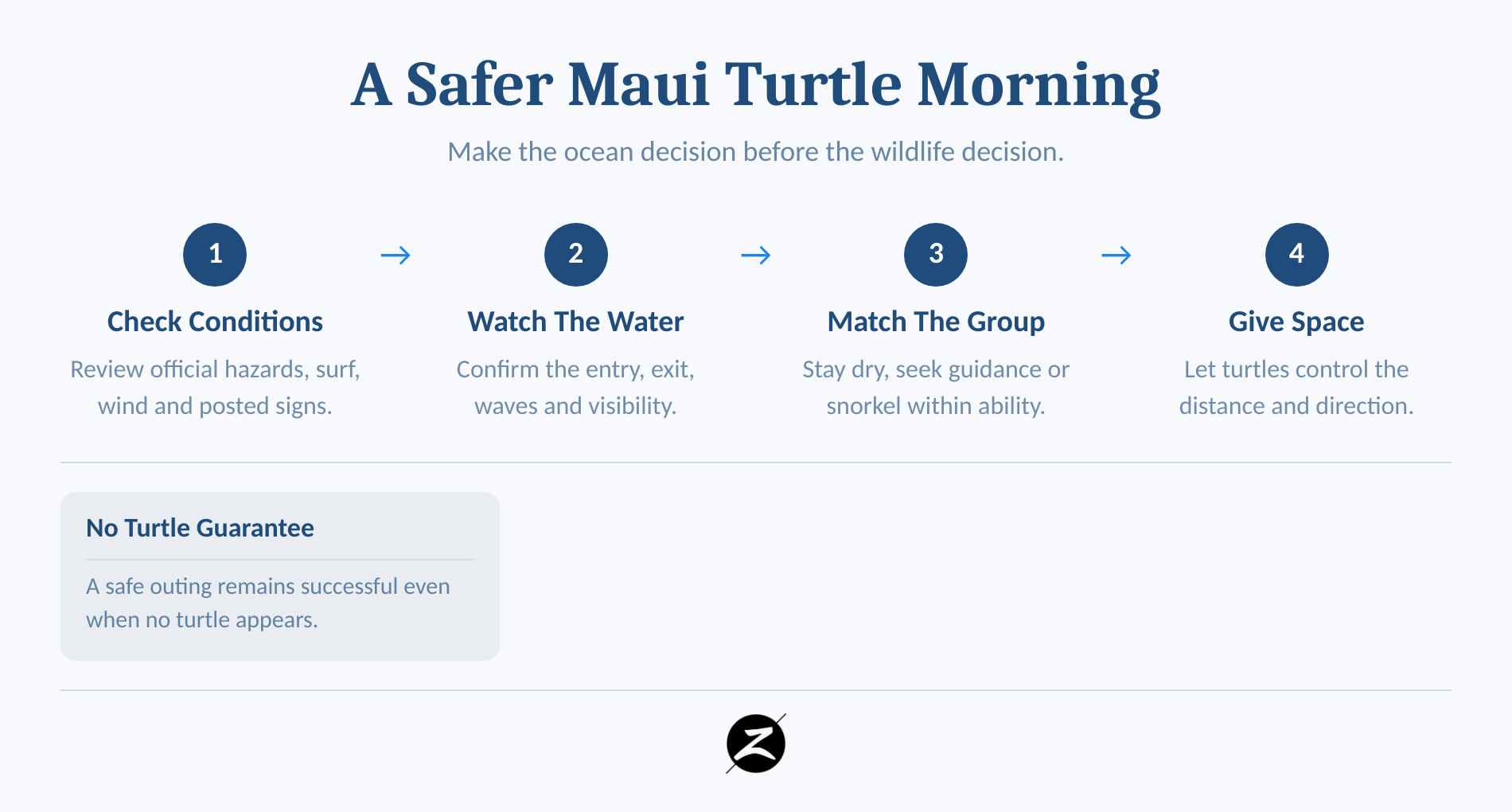
A good plan starts with conditions, not a fixed beach. This worked example shows how a South Maui traveler can make a decision without turning a turtle sighting into a promise.
A traveler staying in Wailea checks official beach conditions before breakfast. If South Maui is calm and both travelers are comfortable ocean swimmers, they choose Maluaka, watch several wave sets, identify the exit, and enter together.
If the water is choppy, murky, or beyond either person's ability, they stay dry. They can move snorkeling to another day and consider a shoreline stop at Hoʻokipa when park conditions and the driving plan make sense.
A second worked option is the Wailea Wildlife Experience, which combines guided snorkeling with beach stops and a coastal drive. That structure means the outing still has a purpose if one wildlife moment does not happen.
A flexible plan is successful when it keeps the group safe, even if no turtle appears.
How close can you get to a sea turtle in Maui?
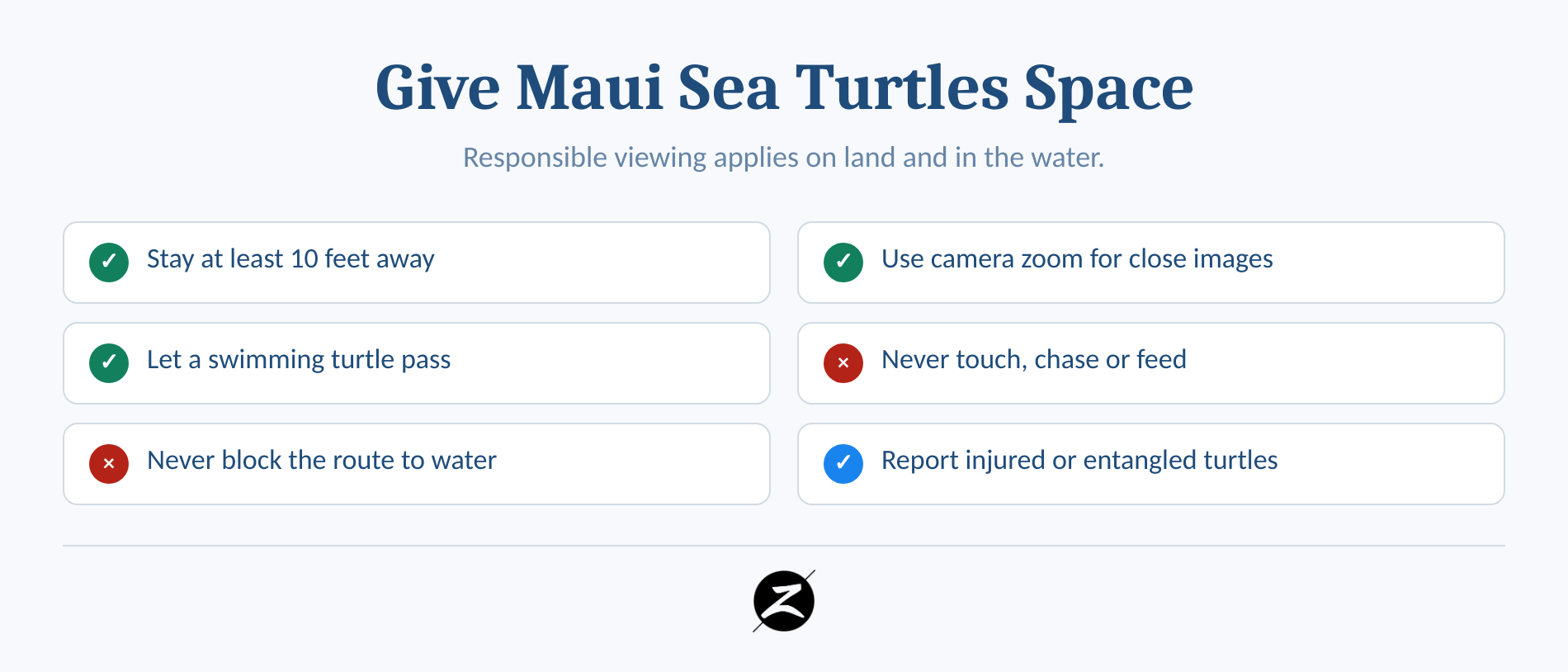
As of August 2026, NOAA Fisheries' current sea turtle guidance recommends staying at least 10 feet, or 3 meters, from sea turtles on land and in the water. The 10-foot distance is guidance rather than a fixed enforceable boundary, while harassment, touching, feeding, chasing, and harming turtles can violate federal or Hawaiʻi law.
NOAA's harassment reporting guide explains the distinction. Standing inside 10 feet is not automatically a separate distance offense, but moving close enough to alter a turtle's behavior increases the possibility of illegal harassment.
If a swimming turtle approaches, stop pursuing the animal and create room for it to pass. Do not box the turtle against reef, shore, another swimmer, or a group of cameras.
If a turtle is resting on land, do not touch it, pour water over it, push it toward the ocean, or stand between it and the water. Basking is normal green sea turtle behavior in Hawaiʻi.
Use a camera's zoom instead of closing the distance. Report an injured, entangled, nesting, or dead turtle to the statewide NOAA Marine Wildlife Hotline at 888-256-9840, then remain back and follow the responder's directions.
Ten feet is the starting distance; respectful behavior means creating more space whenever a turtle changes course or behavior.
What should you do if no turtles appear?
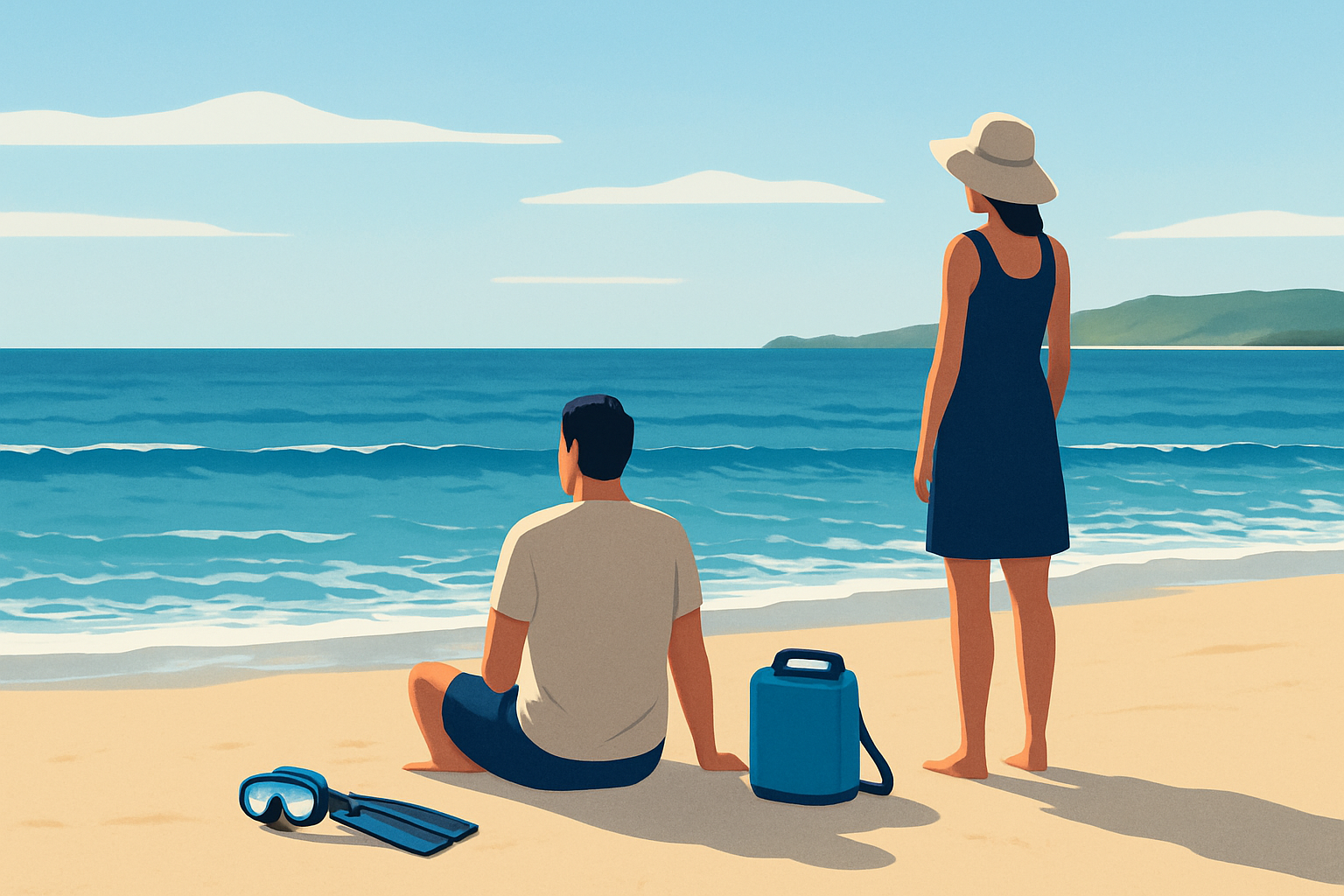
Do not chase a sighting by entering rougher water, following strangers farther offshore, or crowding the first turtle someone finds. Wait, change locations only when conditions support it, or switch to shore viewing and accept that wildlife remains wild.
Give one suitable area time rather than repeatedly driving between beaches and rushing into unfamiliar entries. Turtles surface to breathe and may move along reef edges, but waiting does not justify blocking their path when one appears.
A tour can provide gear, instruction, local route knowledge, and someone monitoring the group. It cannot honestly guarantee a wild turtle, a particular number of animals, or calm water on every date.
A missed sighting is better than a risky entry or a stressed turtle.
FAQ about seeing turtles in Maui
These four questions capture the decisions most travelers make before choosing a beach. Each answer follows the same rule: wildlife may be likely, but it is never scheduled.
Which beach in Maui has the most turtles?
No Maui beach has a verified, permanent “most turtles” ranking, and daily sightings change. Hoʻokipa Beach Park is the strongest dry-land choice, while Maluaka Beach and the Makena reef area are practical in-water choices. Treat both as opportunities, not guarantees, and keep the NOAA-recommended 10-foot distance.
Which month is the best to see turtles in Maui?
There is no single best month for seeing turtles in Maui. Hawaiian green turtles use nearshore feeding and resting habitat throughout the islands, so sightings are not a short seasonal event. Ocean conditions matter more: select a calm day, check warnings, and move the activity rather than entering unsafe water.
Is Turtle Town Maui worth it?
Turtle Town Maui is worth considering for comfortable swimmers who want a shore-entry reef snorkel, especially with guidance. The name refers broadly to the Makena reef area rather than a guaranteed turtle enclosure. Value comes from the reef experience, instruction, and conditions, not from a promised number of turtles.
What time of day is best to see sea turtles in Maui?
Morning is usually the best time for snorkeling because Hawaiʻi Ocean Safety says conditions and visibility are often better then. That is a safety and visibility recommendation, not a turtle appointment. For dry-land viewing at Hoʻokipa, visit during park hours, obey barriers, and leave resting turtles undisturbed.
The reliable plan is to choose a safe window and suitable viewing style, not to chase a calendar promise.
What should you do next?
Choose shore viewing if anyone in the group would be safer or happier out of the water. Choose guided snorkeling only when participants meet the activity requirements and the day's conditions support entry.
For a small-group, shore-entry outing with gear fitting, a safety briefing, in-water practice, more than an hour of guided reef time, and included photos and video, check availability for our Turtle Town Signature Snorkel. Turtle sightings remain possible rather than promised.
Pick the safest format for your group, then let the wildlife decide whether an encounter happens.