
In short
Snorkeling equipment is easiest to use when you fit the mask before tightening it, practice gentle mouth breathing while standing in calm shallow water, and treat fins and flotation as support rather than speed tools. A snorkel only supplies air while its open end remains above water, so first-time snorkelers should start on the surface with supervision.
Key takeaways
- A mask should seal with a light touch and a gentle inhale before its strap is tightened.
- A snorkel works only when the top of the tube remains above the water, so beginners should learn surface breathing before attempting any descent.
- 🤿 Practice breathing, floating, clearing water, and standing up again in calm shallow water before moving into deeper water.
- Ocean conditions can change even on bright days, so check local conditions and ask a lifeguard or guide before entering.
- A guided session is the safer first step for non-swimmers, people who cannot float comfortably, and anyone who panics when water reaches their face.
Table of contents
- What are the 7 basic equipment in snorkeling?
- How do you fit a mask, snorkel, fins and flotation equipment before you enter?
- How does snorkeling work for beginners?
- How do you enter the water and start snorkeling?
- How do you stay underwater with a snorkel?
- How hard is it to snorkel for the first time?
- What else do beginners ask about snorkeling equipment?
- What is the safest next step after practicing with gear?
Using snorkeling equipment is less about athletic swimming than creating a comfortable routine: seal the mask, make the mouthpiece feel normal, float without rushing, and stay in water you can leave easily. Start slowly. Reef time comes after the gear feels ordinary.
Safety review recommended: a qualified Maui snorkel guide should verify these instructions against local conditions, Zephyr Adventures Maui equipment, and the day’s water plan before publication.
What are the 7 basic equipment in snorkeling?
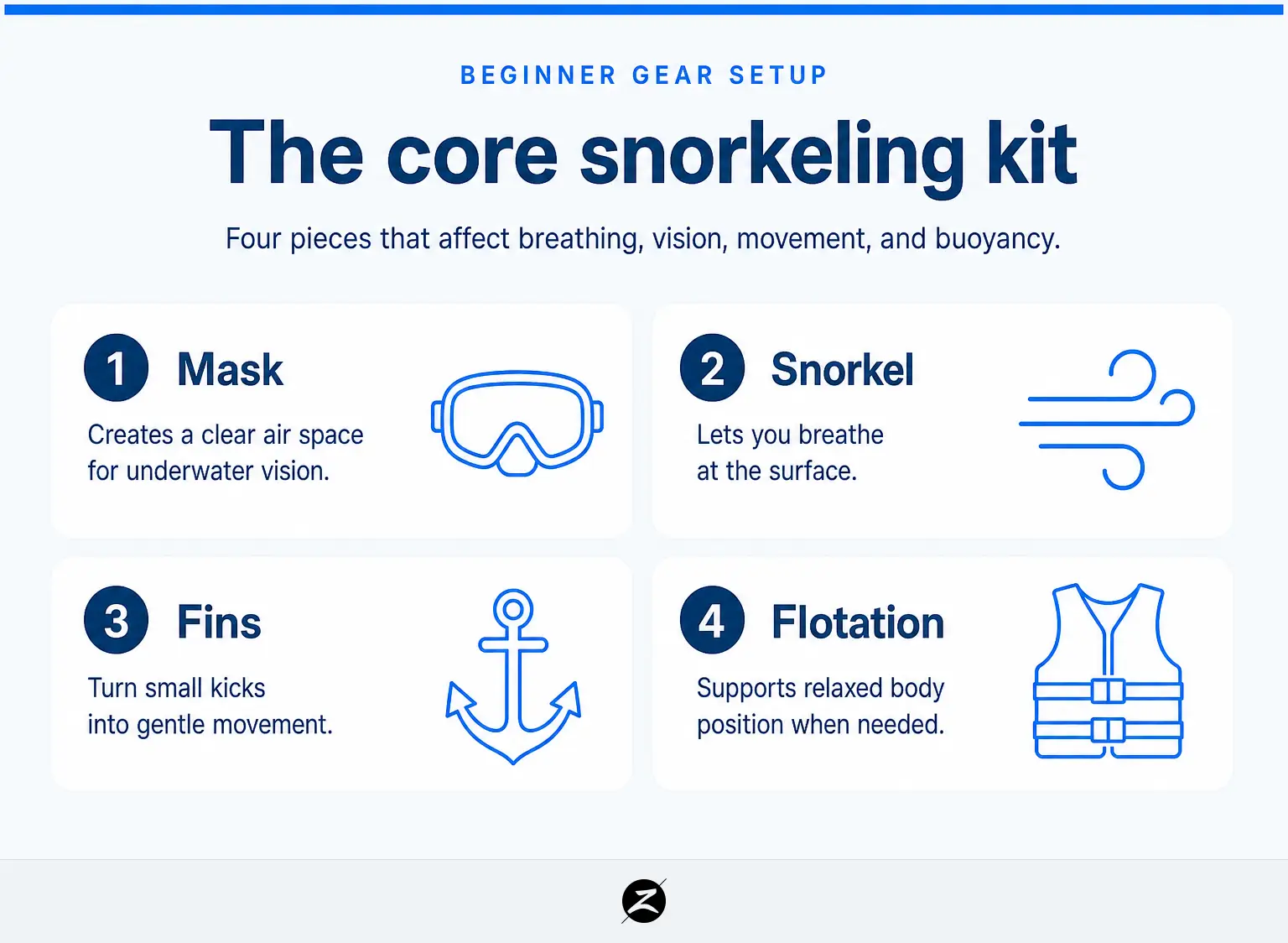
The core snorkeling setup is a mask, snorkel, fins, and suitable flotation when a beginner needs extra support. For a practical first shore session, add an exposure layer, sun protection, and water for hydration, but do not mistake a larger packing list for greater readiness.
There is no universal official list of exactly seven snorkeling items. The useful question is whether each item helps a beginner see, breathe at the surface, move gently, stay buoyant, or remain comfortable enough to make good decisions.
The four pieces that affect your time in the water
Mask. The mask creates an air space in front of your eyes so you can see underwater. A mask that leaks repeatedly is distracting, but overtightening it usually does not solve the problem. Hair, a twisted skirt, or a poor fit is often the real issue.
Snorkel. The snorkel is the breathing tube. The mouthpiece rests between your teeth while your lips seal around it. Its open end must stay above the surface, which is why surface floating is the starting skill.
Fins. Fins turn a small, slow kick into more movement. They are for gentle propulsion, not fast kicking. A fin that rubs, squeezes, or slips will take attention away from breathing and surroundings.
Flotation. A properly fitted flotation aid can help a nervous beginner focus on breathing and body position rather than trying to stay up. It is support, not permission to ignore conditions, distance, fatigue, or instructions from a guide.
The useful supporting items
A rash guard or other suitable exposure layer can reduce sun exposure and skin irritation. A towel, drinking water, and a secure place for valuables make the shore portion of the outing easier. If children are joining, family snorkeling preparation can help adults plan the pace, supervision, and expectations before anyone reaches the water.
Skip anything that complicates the first session. A beginner does not need to chase fish, dive down, take photos, or learn a powerful fin kick before learning to float and breathe comfortably.
A useful beginner kit is the one you can wear comfortably enough to concentrate on the water, not the one with the most accessories.
How do you fit a mask, snorkel, fins and flotation equipment before you enter?
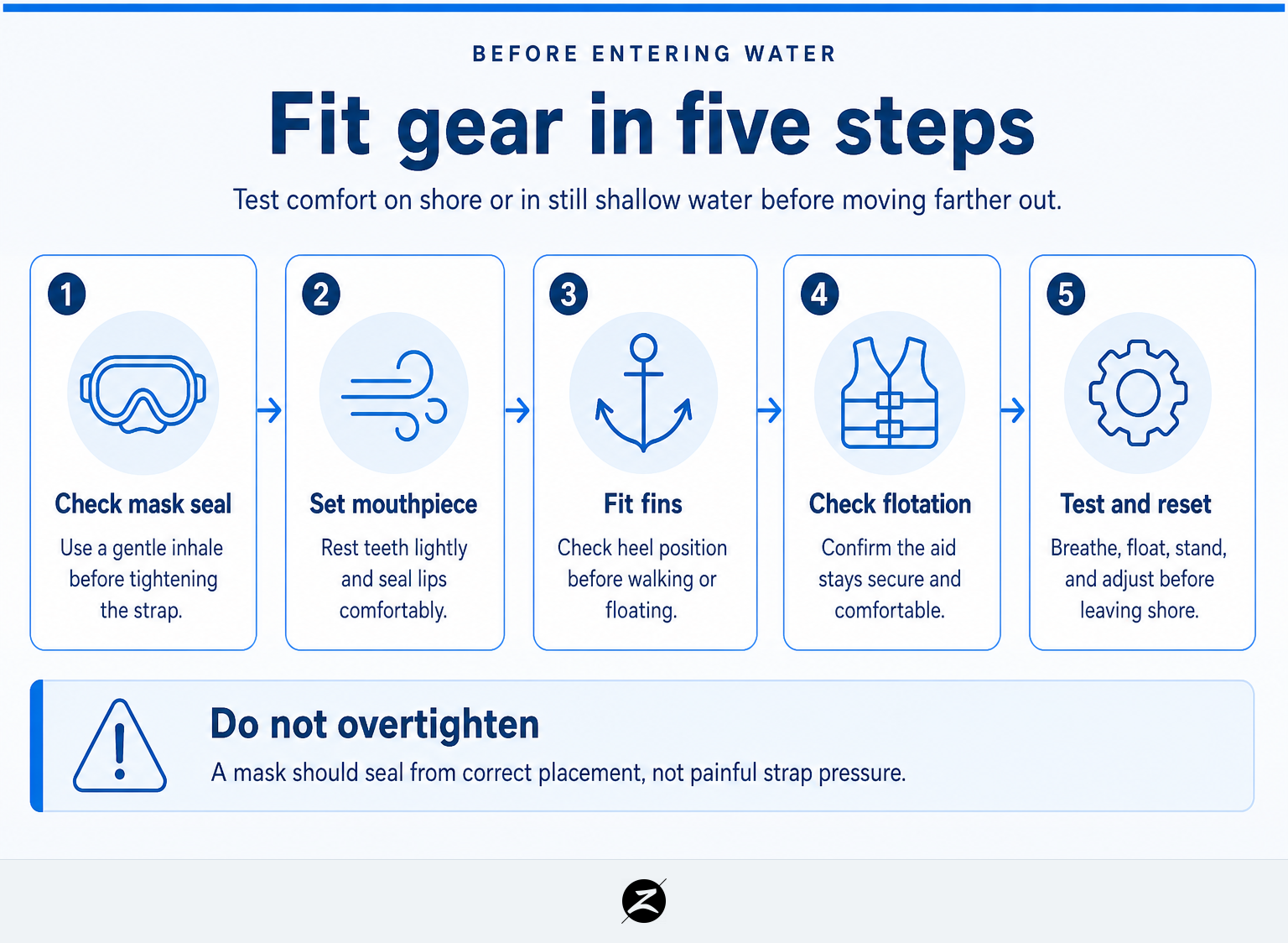
Fit every piece on shore or in still, shallow water before moving away from your exit point. A good fit feels secure without pressure points, jaw clenching, or a mask strap pulled painfully tight.
Do the fitting in a calm order: mask first, snorkel second, fins third, then flotation. Adjusting all four while waves are moving around you is harder than it needs to be.
1. Check the mask seal before using the strap
Move hair away from your forehead and cheeks. Hold the mask lightly against your face without the strap, then inhale gently through your nose. A mask that briefly stays in place has formed a basic seal.
Put the strap around the crown of your head, not low against the neck. Tighten only enough to hold the mask in place. If the mask leaks, remove it, clear hair or debris from the skirt, and reseat it before tightening anything further.
2. Set the snorkel mouthpiece without biting down
Attach the snorkel to the mask strap using its clip or keeper. Put the mouthpiece in your mouth, rest your teeth lightly on the bite tabs, and close your lips around the outside.
The mouthpiece should not make your jaw ache. If it does, pause and reset it. A relaxed seal is easier to maintain than a hard bite.
3. Put fins on where you will not stumble
Sit down, use a stable shoreline spot, or stand in still shallow water to put on fins. Check that the heel is seated and that the fin does not fold, pinch, or slide off when you lift one foot.
Once fins are on, take small steps and avoid walking across uneven rock or reef. Fins are designed for swimming, not for covering ground on shore.
4. Test flotation before you need it
If you are using a flotation aid, have a guide or experienced helper check its fit before moving into deeper water. The flotation should let you relax into a horizontal position without riding up around your face or limiting normal breathing.
For readers visiting Maui for the first time, first-time Maui snorkeling guidance can help set expectations for a supported shore-entry experience rather than an independent first attempt.
5. Do a one-minute comfort check
Before entering farther, stand in shallow water and test four things: look down through the mask, breathe through the snorkel, let your body float with support, and stand back up. If any step feels wrong, fix it there.
The right time to adjust a mask, mouthpiece, fin, or flotation aid is before a beginner feels stressed in deeper water.
How does snorkeling work for beginners?
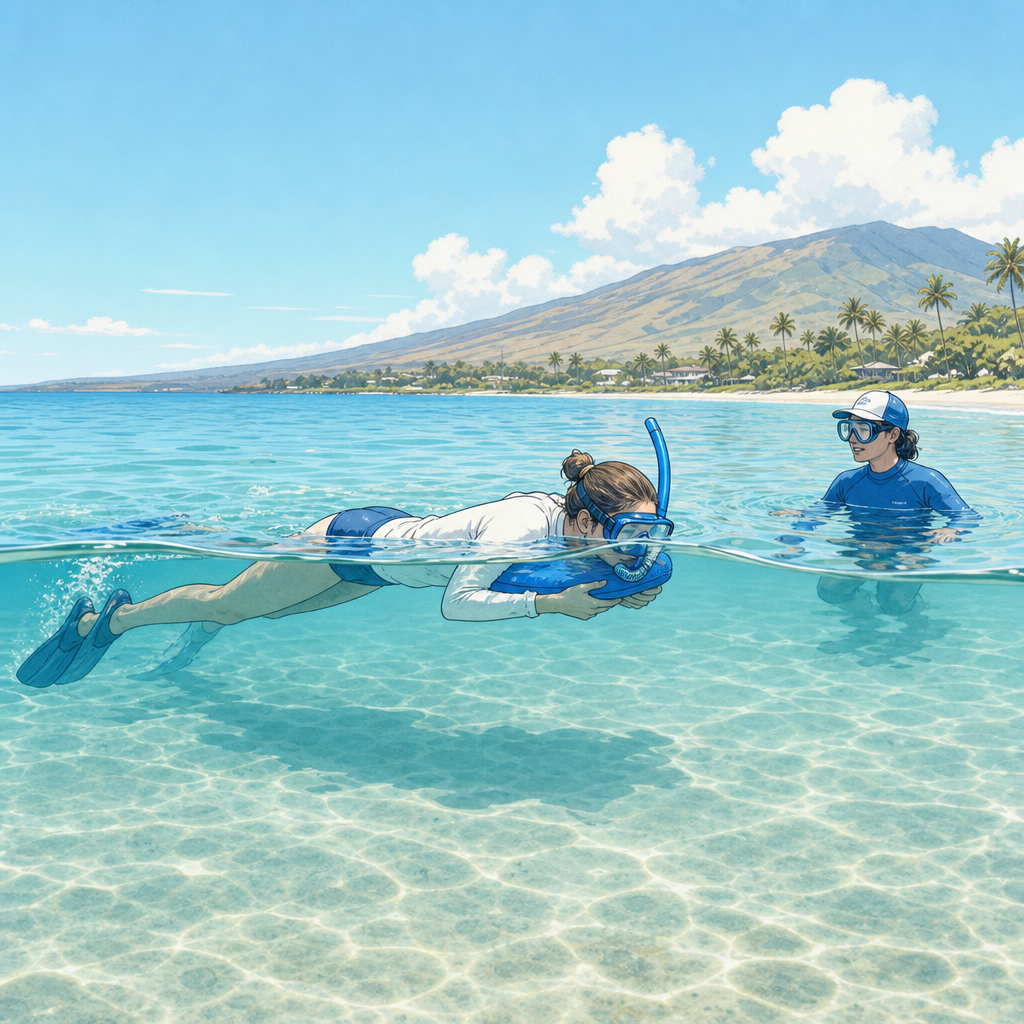
Snorkeling works when you float face-down at the surface and breathe slowly through the snorkel while its open end remains in the air. The goal is not to swim hard or stay underwater. The goal is to become calm enough that looking through the mask and breathing through the mouthpiece feel normal together.
A beginner’s body position is long and relaxed: face in the water, hips near the surface, arms quiet, and legs making small kicks only when needed. Lifting your head to look ahead often drops your hips and makes the experience feel harder.
Start with breathing, not distance
Stand where you can comfortably regain your footing. Place the snorkel mouthpiece in your mouth and breathe normally for a few breaths with your face out of the water. Then lower just your face into the water and keep the top of the snorkel clear.
If water reaches the mouthpiece, lift your face, remove the mouthpiece, and reset. A beginner does not need to push through coughing or discomfort to make progress.
Learn the basic snorkel clear
A small splash can send water into an open-top snorkel. At the surface, raise your face enough to ensure the snorkel opening is clear, then give a firm, controlled exhale through the mouthpiece to push water out. If water remains or you feel uncertain, remove the mouthpiece and breathe normally above water before trying again.
Do not treat a forceful purge as a test of bravery. It is simply a reset skill. Practice it in shallow, calm water with a guide or capable buddy nearby.
Worked example: a five-minute first rehearsal
At a guided lesson or with a qualified instructor in calm shallow water, a nervous beginner can stand with the water at a manageable level, hold a flotation aid, and take three slow breaths through the snorkel with their face in the water. Next, the beginner floats for five to ten seconds, stands up, clears the snorkel if needed, and repeats.
That sequence teaches the most valuable lesson: you can stop, stand, and reset. Once that feels routine, add a few gentle fin kicks while remaining close to the entry point.
A successful first practice is one where the snorkeler can breathe, float, stop, and restart without feeling rushed.
How do you enter the water and start snorkeling?
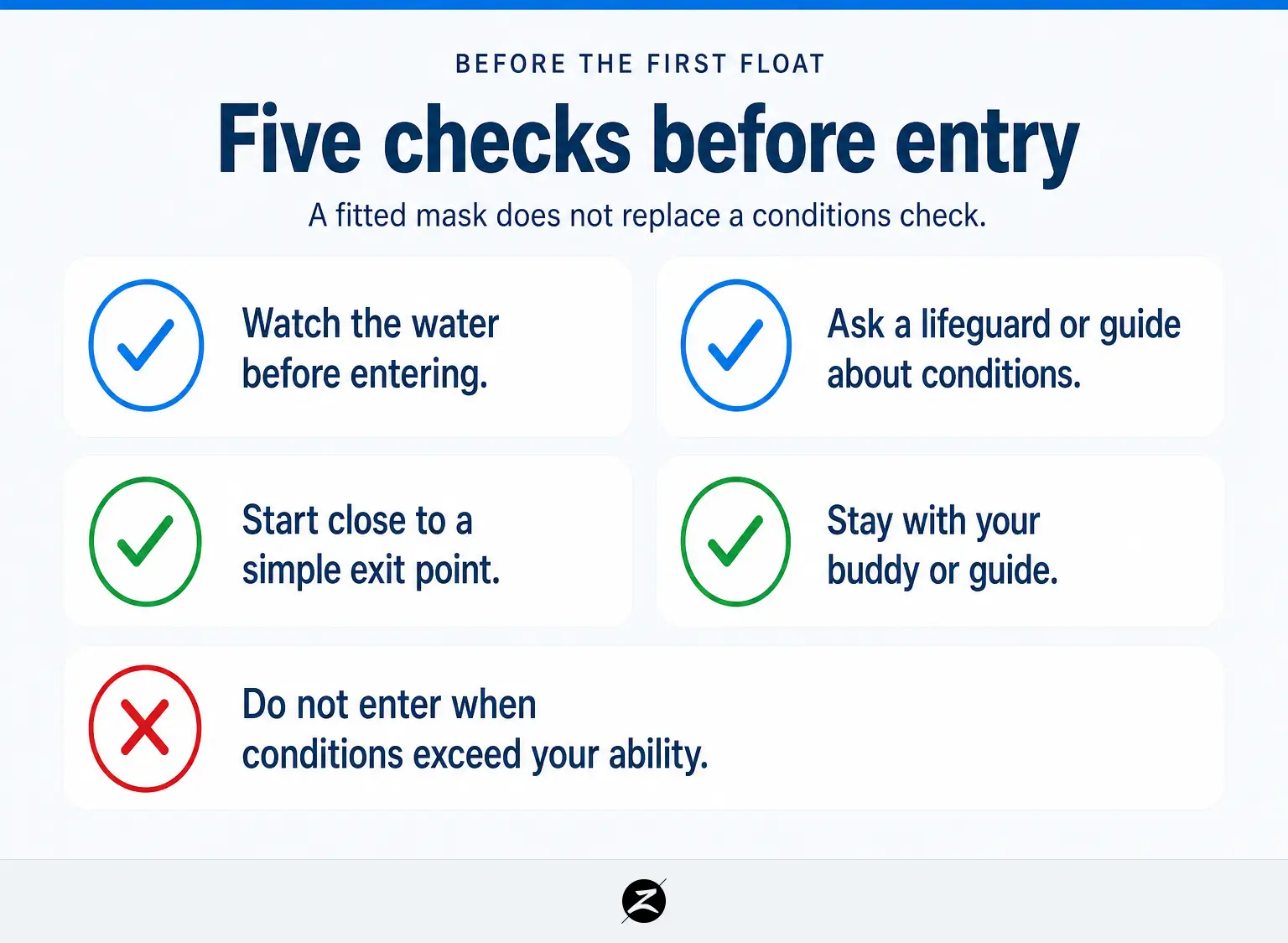
Enter only after checking the water, agreeing on a turnaround point, and confirming that everyone knows how to signal for a break. Start close to shore or beside a guide, then move gradually rather than pushing straight toward the reef.
The National Weather Service advises beach visitors to check local conditions before entering and speak with a lifeguard at the beach. It also warns that calm, sunny weather does not guarantee calm or safe water because rip currents can still form on those days. Read the National Weather Service rip-current guidance before treating a bright beach day as a green light.
Use an entry routine
- Look first. Watch the water before you put your face down. Notice waves, current, rocks, other swimmers, and the route back to shore.
- Choose a simple start point. Begin where you can stand or where your guide has selected a calm, manageable launch area. Do not turn a first practice into a distance swim.
- Enter with control. Walk carefully until there is enough depth to float without scraping fins. Keep the mask on your face and the snorkel mouthpiece out until you are ready to breathe through it.
- Float before you kick. Put your face in, breathe slowly, and settle your body position. Add small fin kicks only after your breathing feels steady.
- Stay together. Do not snorkel alone. If the group changes direction, take a break, or returns to shore, make sure everyone knows.
In Hawaiʻi, the Department of Land and Natural Resources says that a person who breaks the surface and submerges out of sight in navigable state waters requires a dive flag. Its page, posted January 5, 2026, also explains the distance requirements around that flag. Read the Hawaiʻi DLNR snorkeling and diving rules before planning any underwater descent.
The safest entry is the one that leaves a beginner enough energy, attention, and distance to return comfortably.
How do you stay underwater with a snorkel?
You do not stay underwater by breathing through a standard snorkel. A normal snorkel is a surface-breathing tube, so its upper opening must remain above water for air to move through it.
A snorkeler may briefly submerge on a breath hold, but that is a separate skill from surface snorkeling. It adds pressure changes, orientation demands, recovery breathing, and local safety or legal considerations that do not belong in a first independent practice.
If you accidentally dip the snorkel opening below the surface, lift your head, regain normal breathing, and clear or remove the mouthpiece. Do not try to inhale through a flooded tube.
If your main goal is to look at fish below the surface, first get comfortable floating face-down and viewing the reef from above. The water often looks more accessible once your breathing is steady and your body is relaxed.
For a first-time snorkeler, staying at the surface is not a limitation. It is the correct place to build the skills that make the experience enjoyable.
How hard is it to snorkel for the first time?
For a comfortable swimmer in calm, supervised water, first-time snorkeling can be straightforward after a short gear and breathing practice. For a non-swimmer, someone who cannot float comfortably, or anyone who panics with their face in the water, it can be challenging enough that guided instruction is the safer choice.
Difficulty comes less from the mask or fins than from trying to manage unfamiliar breathing, buoyancy, waves, and decision-making at once. Reduce the number of new things: use appropriate flotation, choose calm conditions, stay near help, and make the first goal a short practice rather than a long route.
Choose guided help if any of these sound familiar
- You can swim a little but do not feel calm floating on your front.
- Water entering your nose or mouth causes panic.
- You are not confident reading waves, currents, or safe entry points.
- You are bringing a child, a nervous partner, or a family member who needs close attention.
- You want someone to fit the gear, demonstrate the breathing sequence, and remain nearby while you practice.
At Zephyr Adventures Maui, we offer a small-group guided first-time snorkeling experience for non-swimmers that covers flotation, gear use, breathing, mask seal, body position, ocean awareness, and a guided reef experience. It is designed for guests who want more support than a self-directed first attempt.
First-time snorkeling is manageable when the conditions and support level match the swimmer, not when the swimmer tries to match everyone else’s pace.
What else do beginners ask about snorkeling equipment?
The same questions come up before nearly every first session: what gear is truly necessary, how surface breathing works, whether a snorkeler can remain underwater, and how much swimming skill is needed. The answers below are written to stand alone, but local conditions and a qualified guide’s instructions should always take priority.
What are the 7 basic equipment in snorkeling?
There is no official universal list of seven items. For a beginner shore snorkel, use a mask, snorkel, fins, correctly fitted flotation when needed, suitable swimwear or an exposure layer, sun protection, and drinking water. The core equipment is still the mask, snorkel, fins, and flotation support where appropriate.
How does snorkeling work for beginners?
Snorkeling for beginners works by floating face-down at the surface while breathing slowly through a mouthpiece connected to a tube whose opening stays above water. Start in calm, shallow water with a buddy or guide, keep movements small, and stand up to reset whenever breathing or mask fit feels uncomfortable.
How do you stay underwater with a snorkel?
You do not stay underwater by breathing through a standard snorkel. The tube must remain above the surface, so a beginner should surface-breathe and only submerge after learning appropriate breath-hold skills. In Hawaiʻi, the DLNR says submerging out of sight in navigable waters requires a dive flag.
How hard is it to snorkel for the first time?
First-time snorkeling is often manageable for a comfortable swimmer in calm, supervised water after a short practice with fitted gear. It can be difficult for non-swimmers or people who panic when water reaches their face. In those situations, use flotation and choose an instructor-led or guide-led introduction.
The right beginner answer is specific: start at the surface, stay close to your exit, and ask for help before discomfort becomes panic.
What is the safest next step after practicing with gear?
After you can seal the mask, breathe calmly through the snorkel, float with support, and stand up to reset, practice in conditions selected by a qualified guide or lifeguard. Do not use a first success in a pool or protected shallows as proof that every beach condition is suitable.
If breathing through the snorkel still feels unfamiliar, choose guided instruction before trying a longer independent route. The best next step is a short, calm practice where stopping is easy and support is close by.