
In short
Maui in February is best for travelers who want warm days, seasonal whale activity, coastal scenery, and flexible outdoor plans. Build each day around the ocean forecast: choose guided snorkeling or kayaking when conditions support it, keep a land-based option ready, and view whales and sea turtles from a respectful distance.
Key takeaways
- Kahului’s 1991–2020 February climate normal is a daily high of 82.2°F (27.9°C) and a daily low of 63.8°F (17.7°C), but Maui’s conditions vary sharply by elevation and shoreline. (ncei.noaa.gov)
- January and February are peak months for humpback whale sightings in Hawaii, especially in waters around Maui, Lānaʻi, and Molokaʻi. (dlnr.hawaii.gov)
- February snorkeling can be rewarding, but winter swells and wind make the day’s beach and shoreline more important than a fixed itinerary. (oceansafety.hawaii.gov)
- Hawaii guidance recommends staying at least 10 feet from sea turtles and at least 100 yards from humpback whales. (dar.hawaii.gov)
- Haleakalā sunrise requires an advance vehicle reservation between 3:00 a.m. and 7:00 a.m., so reserve early or plan a later visit instead. (home.nps.gov)
Table of contents
- What makes February a good time to visit Maui?
- Which ocean activities are best in Maui in February?
- Can you see whales in February in Maui?
- What should you check before any ocean plan?
- Which land adventures work well in February?
- What can families and first-time snorkelers do?
- What does a realistic February day in Maui look like?
- Frequently asked questions
February is not a month to plan Maui minute by minute. It is a month to book the experiences that need reservations, then leave room to switch between water time and land time as the forecast develops.
What makes February a good time to visit Maui?
February gives Maui visitors warm low-elevation days, seasonal whale activity, and plenty of outdoor options. The trade-off is variability: one coast can be breezy or rough while another is more suitable for a beach walk, snorkeling plan, or scenic drive.
NOAA’s 1991–2020 normals for Kahului Airport put February’s average daily high at 82.2°F (27.9°C), average daily low at 63.8°F (17.7°C), and mean temperature at 73.0°F (22.8°C). Kahului is useful as a reference point, not a forecast for every part of the island. Higher elevations are colder, windward areas are often wetter, and beach conditions can change rapidly. (ncei.noaa.gov)
That is why February works best for travelers who enjoy a mix of ocean time and sightseeing. You might have a calm morning suited to a guided reef outing, then spend the afternoon driving the coast, visiting a beach, or heading uphill toward Haleakalā.
For a useful seasonal comparison after a winter visit, see this guide to planning Maui activities in March. If you are deciding what to pack for Hawaii’s cooler, wetter season, this Maui December weather guide offers another practical reference point.
A February packing list should include a reef-safe sun layer, water, a light rain layer, secure sandals or shoes for uneven ground, and a warm layer for Haleakalā. Do not assume a beach day means mountain temperatures will be mild. The National Park Service warns that conditions around dawn at Haleakalā can be wet, windy, and below freezing. (home.nps.gov)
February on Maui rewards flexible planning: use the warm forecast as an invitation to get outside, not as a guarantee that every shoreline will be calm.
Which ocean activities are best in Maui in February?
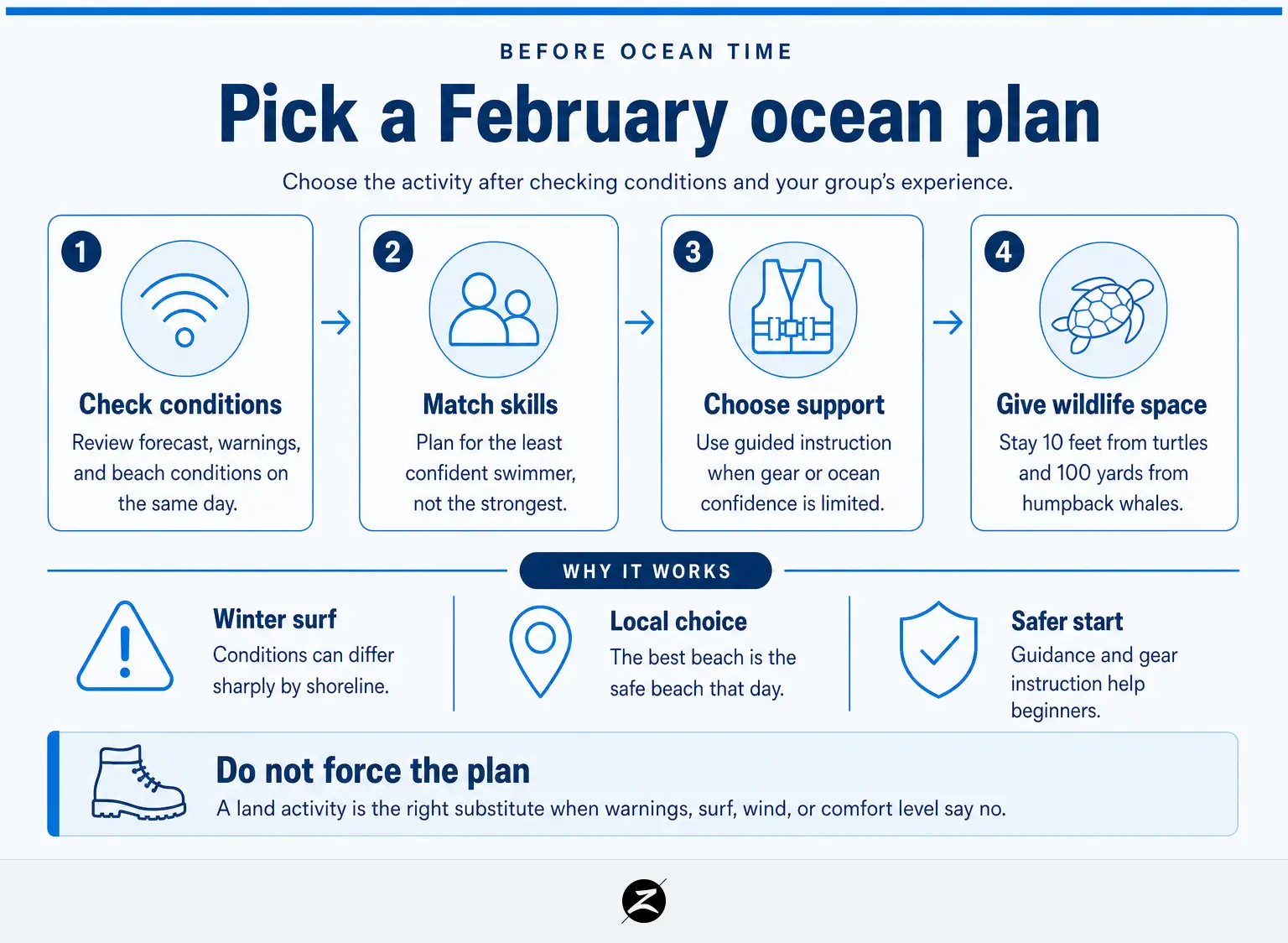
Guided snorkeling, coastal kayaking, and a land-and-sea outing can all work well in February when the selected location and conditions match the group’s skills. A guided format is especially useful for visitors who want help with equipment, entry, safety decisions, and reading the day’s ocean.
For confident swimmers, a small-group shore snorkel can focus on reef life and sea turtles without requiring a large vessel excursion. A guided kayak-and-snorkel experience adds time on the water and a broader coastal perspective. Visitors who prefer more support can choose an instructor-led introduction that covers flotation, breathing, mask fit, body position, and basic ocean awareness before the reef portion begins.
A practical work example: a family with one strong swimmer and one nervous first-timer could choose a morning guided confidence-building snorkel rather than trying to teach mask clearing and buoyancy from scratch at an unfamiliar beach. If the water is not suitable, move the ocean activity to another day and keep the afternoon for a coastal drive or Haleakalā.
For visitors who want a more complete South Maui day, our Land to Sea Experience combines private reef snorkeling with sea scooters, scenic coastal driving, lava-field outlooks, 4×4 transportation, and a personal photographer. It is designed for travelers who would rather not choose between a guided water experience and seeing more of the coastline.
Do not book an ocean activity simply because it is February whale season. Whales may be visible from shore or while traveling along the coast, but wildlife sightings and water conditions are never guaranteed.
The best February ocean activity is the one that fits the day’s conditions and your group’s actual comfort in the water.
Can you see whales in February in Maui?
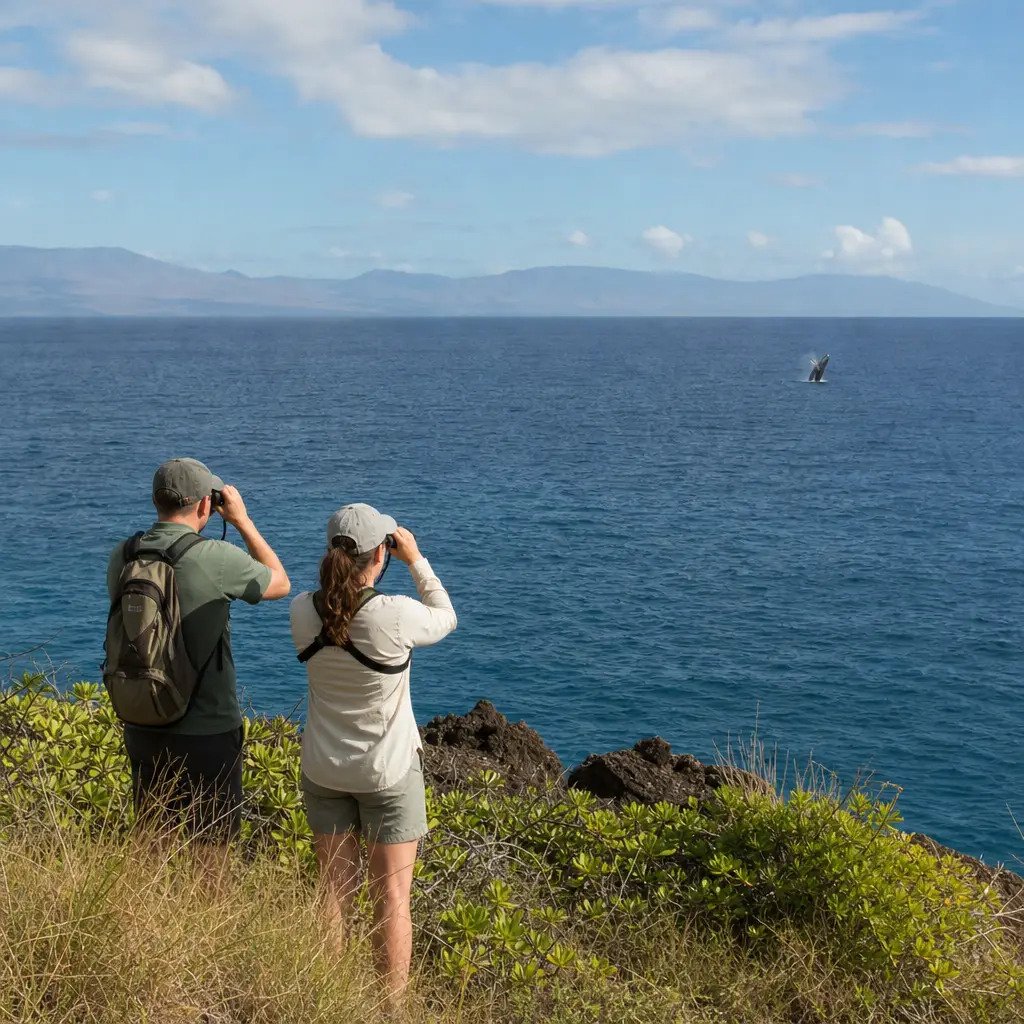
Yes, February is one of Maui’s strongest months for humpback whale sightings, but a sighting is never guaranteed. Hawaii’s Department of Land and Natural Resources says humpbacks typically arrive as early as September, remain as late as May, and peak in January and February. (dlnr.hawaii.gov)
Maui visitors can often look for whale activity from coastal overlooks, beaches, and shoreline walks. Bring binoculars, scan patiently, and keep the experience low-impact. The point is to observe wild animals on their terms, not to get close enough for a better photo.
Federal and state guidance prohibits vessels and swimmers from approaching within 100 yards of humpback whales. If whales move closer on their own, people on the water should stay calm and move away slowly or place a vessel in neutral or at no-wake speed as appropriate. (dar.hawaii.gov)
The same care applies to sea turtles. Hawaii’s Department of Land and Natural Resources recommends staying at least 10 feet away from turtles in the water and on land, and never approaching a turtle resting on shore. (dar.hawaii.gov)
February whale season is a reason to look closely at the horizon, not a reason to crowd wildlife.
What should you check before any ocean plan?
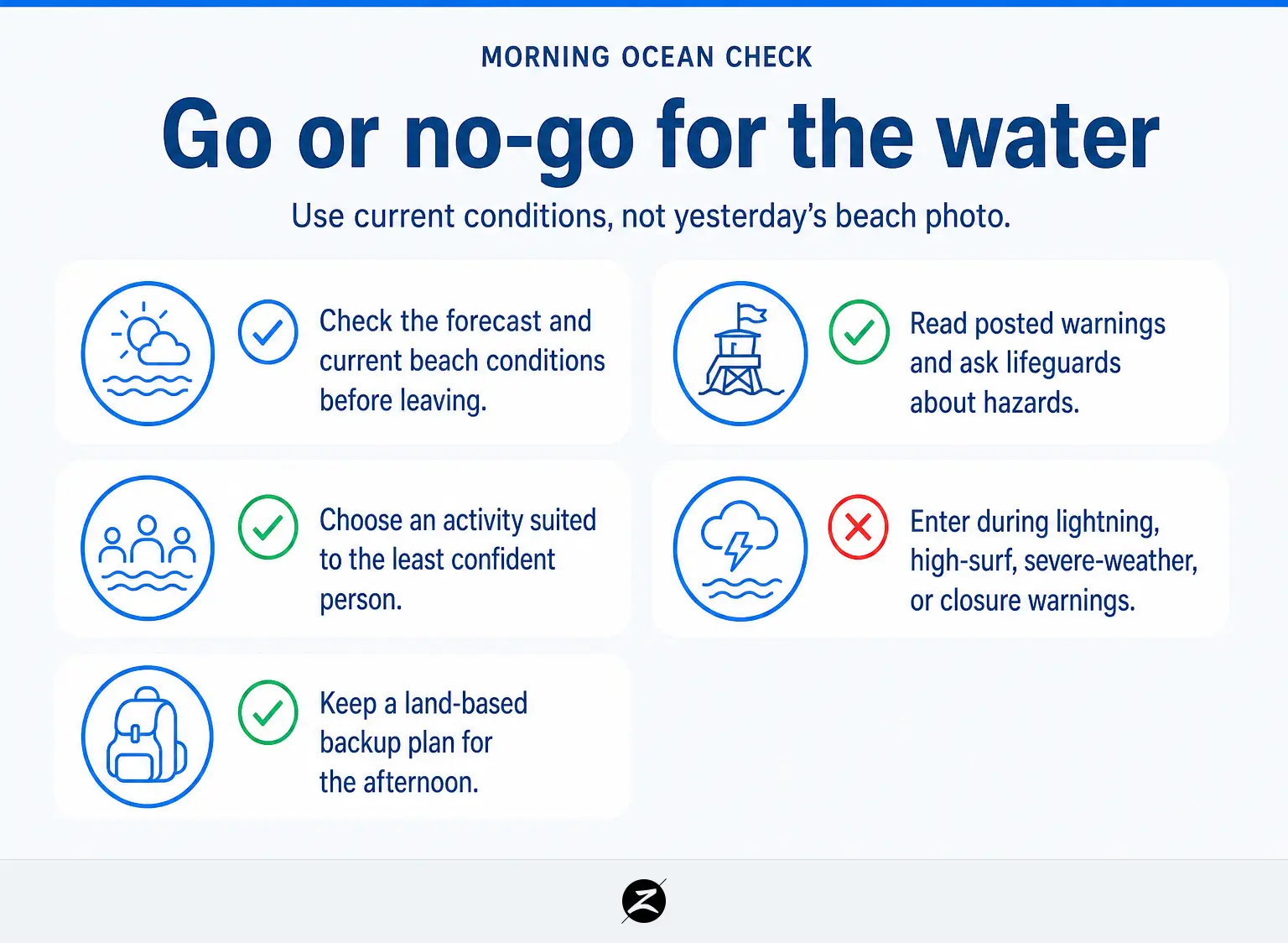
Check current beach conditions, posted signs, and the advice of lifeguards or qualified guides before entering the water. Winter conditions are localized, so a beach that looks inviting in a photo may not be suitable for your group on that particular morning.
Hawaii Ocean Safety notes that winter, generally November through April, can bring dangerous surf to north- and west-facing shores, while conditions on other shorelines may differ. The state also directs visitors to current beach-condition information and encourages swimming near lifeguards. (oceansafety.hawaii.gov)
Use this quick check before snorkeling, swimming, or kayaking:
- Check the day’s conditions. Look at the forecast and beach warnings before leaving your accommodation.
- Read every posted sign. Hawaii Ocean Safety says the absence of a warning sign does not mean that no hazard exists. (oceansafety.hawaii.gov)
- Ask at a lifeguarded beach. Maui lifeguard coverage includes several South Maui locations, including Kamaole Beach Parks 1, 2, and 3, plus Makena State Park, though schedules and conditions can change. (oceansafety.hawaii.gov)
- Match the activity to the least confident person. A nervous swimmer should not be pushed into a rough-water plan because everyone else wants to go.
- Treat heavy rain, lightning, strong current, shorebreak, and high-surf warnings as stop signs. Hawaii Ocean Safety advises staying out of the ocean and away from beaches and shorelines during severe weather. (oceansafety.hawaii.gov)
A guide can provide equipment instruction and local context, but no guide should override a closure, lifeguard warning, or unsafe conditions.
The right decision in February is sometimes to stay out of the water and enjoy Maui from land instead.
Which land adventures work well in February?
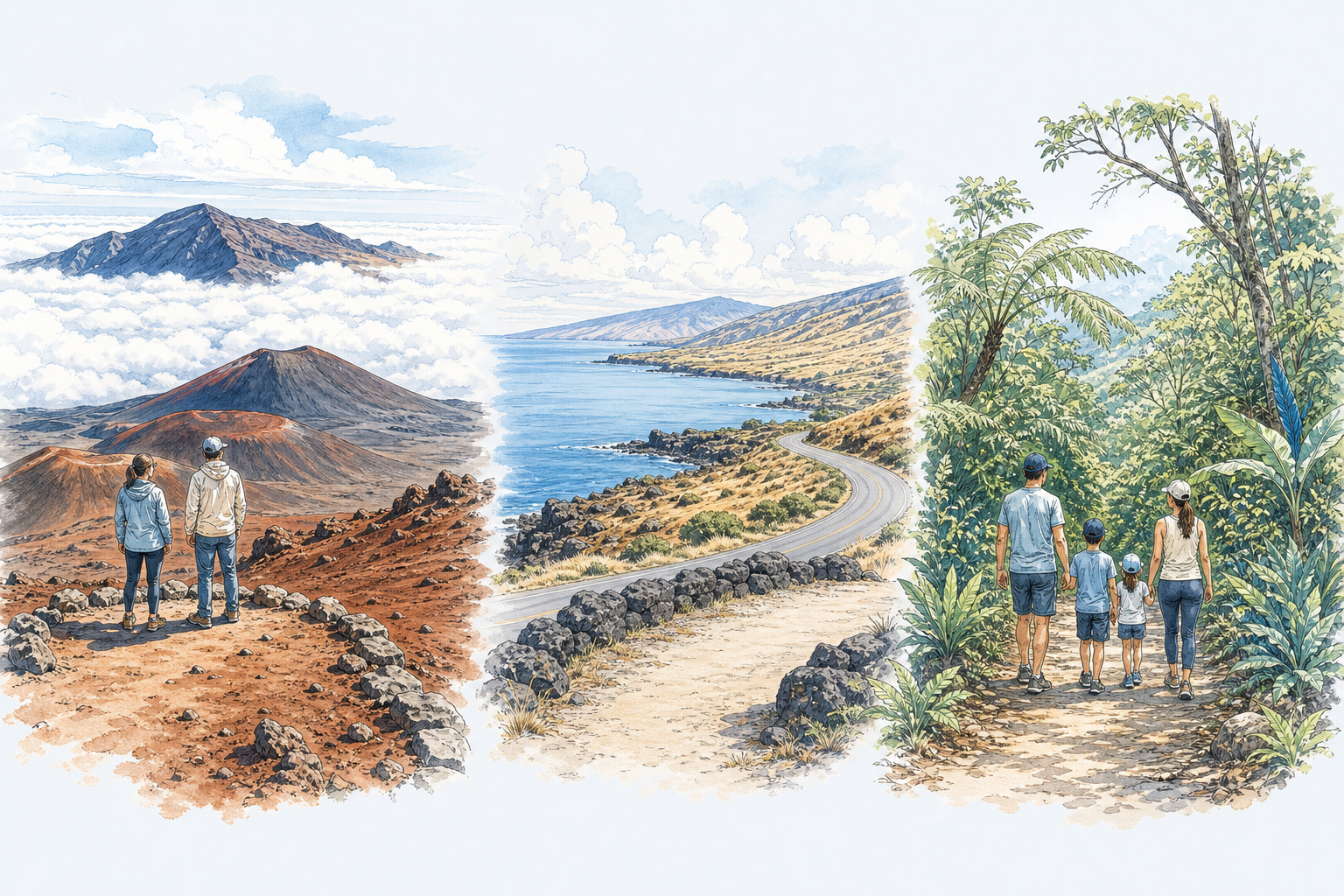
Haleakalā, South Maui coastal drives, scenic overlooks, and low-commitment beach walks are strong February alternatives when the ocean is rough or your group needs a slower day. These options also make sense for travelers who want scenery without spending every vacation day in the water.
Haleakalā National Park is Maui’s biggest change-of-scene: the park stretches from the 10,023-foot summit down toward the Kīpahulu coast. (nps.gov) A sunrise visit requires a vehicle reservation from 3:00 a.m. to 7:00 a.m.; reservations are released up to 60 days ahead, with some availability released 48 hours before the visit. (home.nps.gov)
If an early alarm is not your idea of a vacation, visit Haleakalā later in the day instead. The National Park Service confirms that the sunrise reservation applies only during the 3:00 a.m. to 7:00 a.m. window, though entrance fees or passes still apply. Check the park’s conditions page immediately before your trip because access, facilities, road conditions, and closures can change. (home.nps.gov)
The Kīpahulu District is another option for travelers combining a scenic drive with short walks and cultural landscape. Do not plan on swimming at the Pools of ʻOheʻo: the National Park Service states that the pools can be viewed from Kūloa Point Trail but are not open for swimming. (home.nps.gov)
Land days are not second-best days in February; they are the flexibility that lets you enjoy Maui without forcing an unsafe ocean plan.
What can families and first-time snorkelers do?
Families and beginners should choose activities with a clear safety briefing, patient equipment instruction, and a location selected for the day rather than an assumed outcome. A first snorkeling experience should feel supported, not like a test of courage.
At Zephyr Adventures Maui, the First Timers & Non-Swimmers Wailea experience is built around flotation, snorkel use, breathing, mask seal, body position, and ocean awareness before the guided reef portion. That structure can suit travelers who want to participate but are not ready to independently manage unfamiliar gear and conditions.
For a mixed-age group, avoid building the day around the strongest swimmer. Choose a plan that lets a cautious participant stay comfortable, and make the land portion meaningful enough that nobody feels left out if conditions change.
A work example: grandparents may prefer a scenic coastal stop and turtle viewing from shore while confident adult swimmers join a guided snorkel. Meeting again for a beach picnic or sunset lookout gives the group a shared day without asking everyone to do the same activity.
Families get more from February Maui when the plan leaves room for different comfort levels rather than treating every beach day as an all-or-nothing water activity.
What does a realistic February day in Maui look like?
A good February Maui day starts with the conditions you have, not the itinerary you hoped to keep. Book time-sensitive activities early, then make the afternoon flexible enough to become a scenic drive, a beach walk, or a slower family outing.
Here is one practical example for visitors staying in South Maui:
- Morning: Check the forecast, beach conditions, and wind before committing to the ocean. If conditions are suitable, join a guided reef snorkel or kayak-and-snorkel outing.
- Midday: Eat, hydrate, and take a break from direct sun. Use this time to review photos, explore nearby shops, or relax before another activity.
- Afternoon: Take a coastal drive toward lava fields and overlooks, or visit a lifeguarded beach to watch conditions from shore.
- Golden hour: Look for whale activity from land, keeping binoculars handy and maintaining legal wildlife distances.
- Backup plan: If the surf or weather changes, swap the ocean portion for Haleakalā, a cultural stop, or a scenic drive rather than trying to force the original plan.
The practical advantage of a combined outing is that it does not make the whole day depend on one activity. A land-and-sea format can create room for reef time, coastal scenery, and photo stops in one itinerary when conditions cooperate.
The February itinerary that works best is the one that has a safe alternative before you need it.
Frequently asked questions
How is the weather in Maui in January and February?
January and February are Maui’s cooler winter months, but Kahului’s 1991–2020 normals still show average daily highs near 82°F (28°C). February can bring rain, wind, and variable surf, especially by shoreline and elevation, so visitors should pack a light layer, check daily conditions, and avoid treating one forecast as island-wide. (ncei.noaa.gov)
What is the weather like in Hawaii in February?
Hawaii in February is generally warm at sea level, with cooler conditions at higher elevations and more variable winter weather than summer. On Maui, the most useful planning detail is not the average temperature alone: rain, wind, and surf can differ substantially between coasts, so check conditions close to the activity time. (ncei.noaa.gov)
Can you see whales in February in Maui?
Yes. Hawaii’s Department of Land and Natural Resources identifies January and February as peak humpback whale months, with high concentrations in waters around Maui, Lānaʻi, and Molokaʻi. Sightings remain wildlife encounters, not guarantees, and vessels and swimmers must remain at least 100 yards from humpback whales. (dlnr.hawaii.gov)
If you are planning February dates now, reserve the activities that suit your group’s confidence level, then keep one land-based alternative open for every ocean day.