
In short
Wailea Beach is a public South Maui shoreline with a broad sandy crescent, public access routes and a connected coastal path. It can be a rewarding place to swim when conditions are mild, but surf, currents and visibility change, so check the ocean first and treat snorkeling as an ocean activity rather than a pool activity. Hawaiʻi DLNR shoreline-access guidance
- Wailea Beach has public shoreline access, but that does not mean visitors may use private resort grounds, pools or guest-only facilities.
- The shoreline can look calm and still be a poor choice for a particular swimmer, child or first-time snorkeler.
- Hawaiʻi Ocean Safety advises that people who cannot swim should not snorkel, including with flotation equipment.
- 🐢 Stay at least 10 feet from sea turtles in the water and on land, and never touch, feed or pursue them.
Contents
- What is Wailea Beach actually like?
- Is Wailea Beach free, and how do you access it?
- Is Wailea Beach swimmable?
- Can you snorkel at Wailea Beach?
- What should first-time snorkelers and non-swimmers do?
- How should you behave around turtles and reef?
- What else do people ask about Wailea Beach?
- What is the right next step before an ocean day?
What is Wailea Beach actually like?
Wailea Beach is a polished South Maui beach day: a sandy shoreline, clear views across the water, a developed resort setting and a coastal path for walking before or after time on the sand. A local beach reference lists showers, restrooms and public parking, while also noting that the beach can become crowded and that south swells can create hazardous conditions. Maui Guidebook's Wailea Beach listing
The practical appeal is simple. Visitors can arrive for a swim, spend time on the sand, walk the shoreline path and leave without building the entire day around a long drive or a boat departure.
The important limitation is that a beach can be inviting without being suitable for every ocean activity. A bright morning, a sandy entry and other people in the water are not proof that conditions match your abilities.
Wailea Beach works best when visitors separate the beach experience from the decision to enter the ocean.
Is Wailea Beach free, and how do you access it?
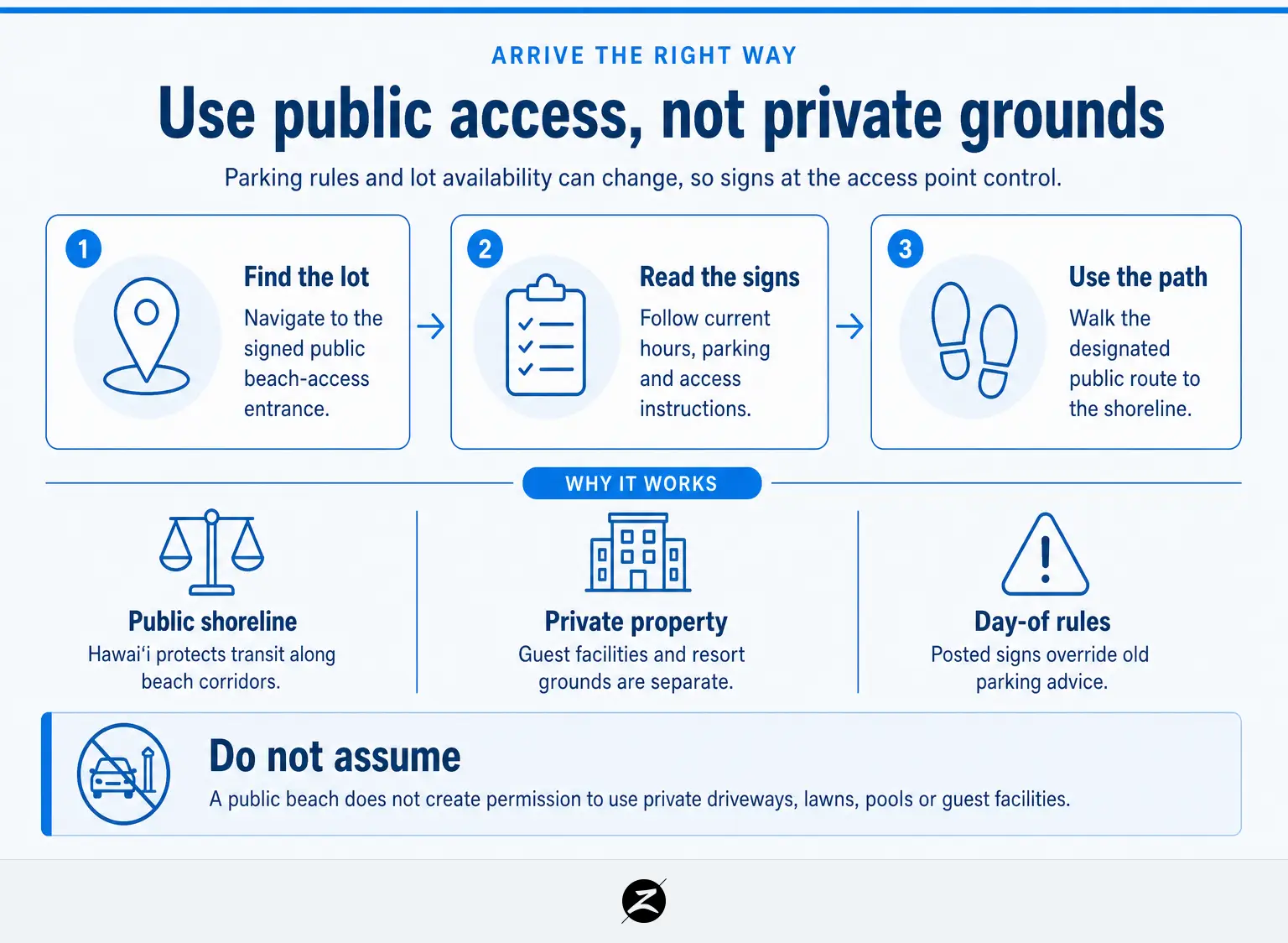
There is no admission charge to use the shoreline, and Hawaiʻi recognizes public transit along shoreline beach corridors. Use signed public access routes rather than assuming that a hotel driveway, lawn, pool deck or valet area is open to beach visitors. DLNR explains Hawaiʻi's shoreline-access rights
For a low-stress arrival, search for the signed public beach-access lot before you leave your accommodation, then read the posted rules when you arrive. Parking arrangements, gates, fees and available spaces can change, so an old blog post or map pin should not be treated as a same-day guarantee.
A useful work example: a family planning a 9 a.m. beach morning should save the public-access location, pack water and reef-safe sun protection, and agree in advance that they will switch to walking the coastal path or relaxing on the sand if the lot is full or water conditions are not right.
Do not park in a resort-controlled area unless the signs clearly authorize it, and do not cross private grounds to shorten the walk to the sand.
Public shoreline access is real, but visitors should use the marked route and obey the rules posted at the access point.
Is Wailea Beach swimmable?
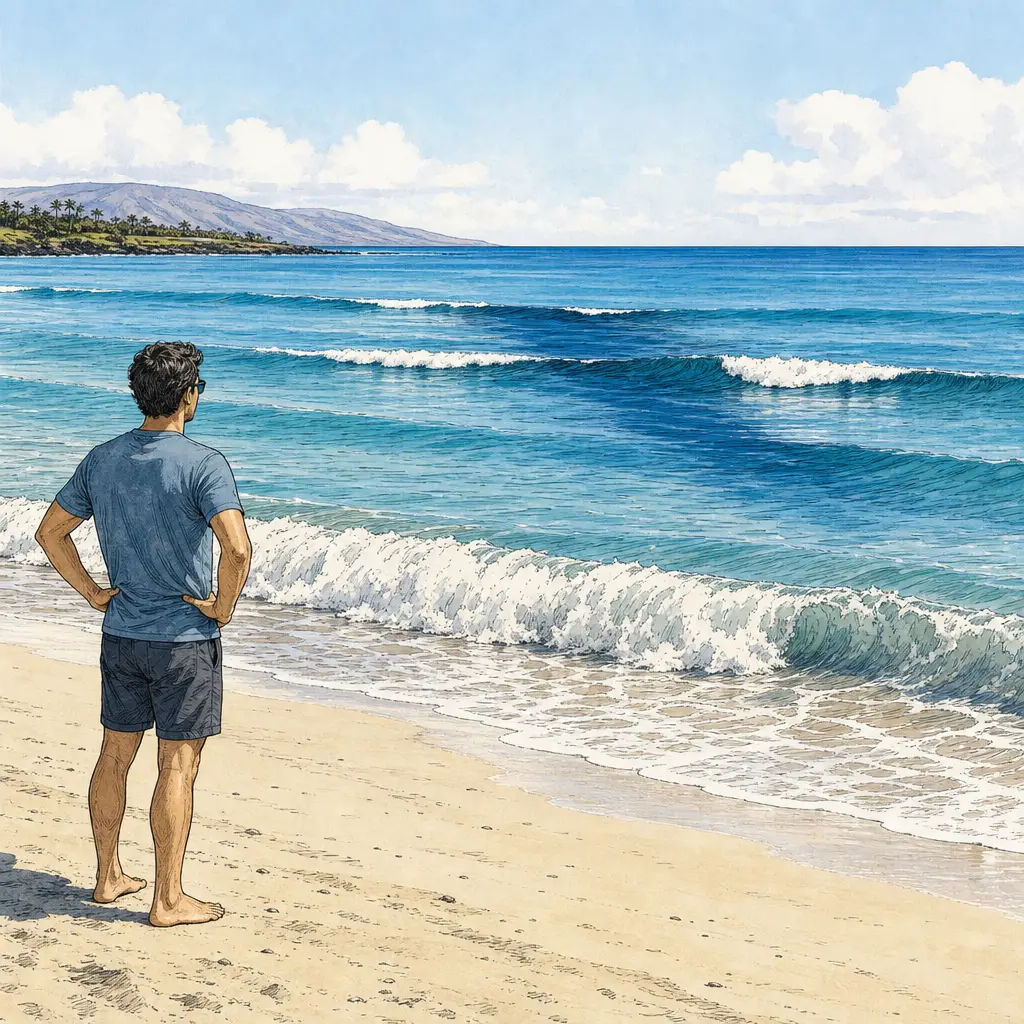
Wailea Beach can be swimmable when surf, currents and shorebreak are mild and your skills match the conditions. It is not automatically swimmable because the sky is sunny or the water looks flat from shore.
Check the National Weather Service Honolulu surf forecast before leaving, then reassess from the beach. South-facing Maui shores can receive changing swell, and the forecast gives regional guidance rather than a personal clearance to enter. National Weather Service Honolulu surf forecast
As checked on September 24, 2026, Hawaiʻi Ocean Safety's published list of lifeguarded Maui beaches includes Kihei and Mākena locations but does not list Wailea Beach. That is a reason to plan conservatively, not a reason to assume that nearby beaches have the same conditions. Hawaiʻi Ocean Safety's lifeguarded-beach list
Before entering, watch the water for several minutes. Look for strong shorebreak, water pulling seaward, murky visibility, people struggling to make progress, or posted warnings. Hawaiʻi Ocean Safety notes that dangerous conditions can change quickly and that the absence of a sign does not prove that there is no hazard. How to read beach warning signs
If conditions are doubtful, keep the Wailea Beach visit on land. The path, sand and views are still a complete beach outing.
Can you snorkel at Wailea Beach?
You can consider snorkeling at Wailea Beach only when the water is clear, the surf is mild, you are comfortable swimming in the ocean and you have a buddy. Snorkeling is not simply swimming with a mask because breathing through a snorkel, managing equipment and exiting through moving water add demands.
Hawaiʻi Ocean Safety says that all snorkelers should be experienced ocean swimmers, recommends checking conditions and advises against snorkeling in high surf, high winds, heavy shorebreak or strong currents. The same guidance says morning hours can offer better conditions and visibility, but the check still happens on the day. Hawaiʻi Ocean Safety snorkeling guidance
| If your plan is… | A safer decision looks like… |
|---|---|
| A casual beach swim | Stay close to shore, swim with a buddy and leave the water if wave action or fatigue increases. |
| Independent snorkeling | Enter only with clear water, mild conditions, ocean-swimming ability and a buddy who remains close. |
| Seeing reef life without ocean confidence | Enjoy the beach from shore, or choose an instructor-led format only after discussing your skills and day-of conditions. |
Rock and reef can be part of the underwater appeal, but they also make a poor exit more difficult. Never stand on coral, and do not push farther from shore just because fish or turtles are farther out.
Visitors comparing several shore-entry options can use our guide to Maui beaches for shore snorkeling to identify places worth considering after checking conditions.
A good snorkel plan begins with conditions and ability, not with a hope of seeing a particular animal.
What should first-time snorkelers and non-swimmers do?
First-time snorkelers should practice mask fit, calm breathing, floating and equipment removal before treating the ocean as the classroom. Non-swimmers should follow Hawaiʻi Ocean Safety's direct advice to stay out of the water for snorkeling, even when flotation equipment is available. Hawaiʻi Ocean Safety's snorkeling guidance
That distinction matters because flotation is not a substitute for swimming ability, judgment or the ability to respond calmly when water moves unexpectedly. Ocean conditions can change during the time it takes to put on a mask, and pool confidence does not automatically carry over to surf, wind and an unfamiliar shoreline.
A supported experience can still be useful for a visitor who is new to snorkeling, but guided support has limits. At Zephyr Adventures Maui, we offer a small-group First Timers & Non-Swimmers Wailea format with equipment instruction, flotation, breathing and mask-seal coaching, body-position guidance and ocean-awareness support. It does not override posted warnings, unsafe conditions or Hawaiʻi Ocean Safety guidance for a person who cannot swim.
A practical work example: a visitor who can swim but has never used a snorkel may benefit from practicing equipment skills with an instructor before making an ocean-entry decision. A visitor who cannot swim should plan to enjoy Wailea Beach from shore unless qualified professionals determine that a different, appropriate activity is available and conditions allow it.
For broader shore-entry planning, see our South Maui snorkeling overview before choosing a location or activity.
The right beginner plan is the one that lets a person stop before discomfort becomes an emergency.
How should you behave around turtles and reef?
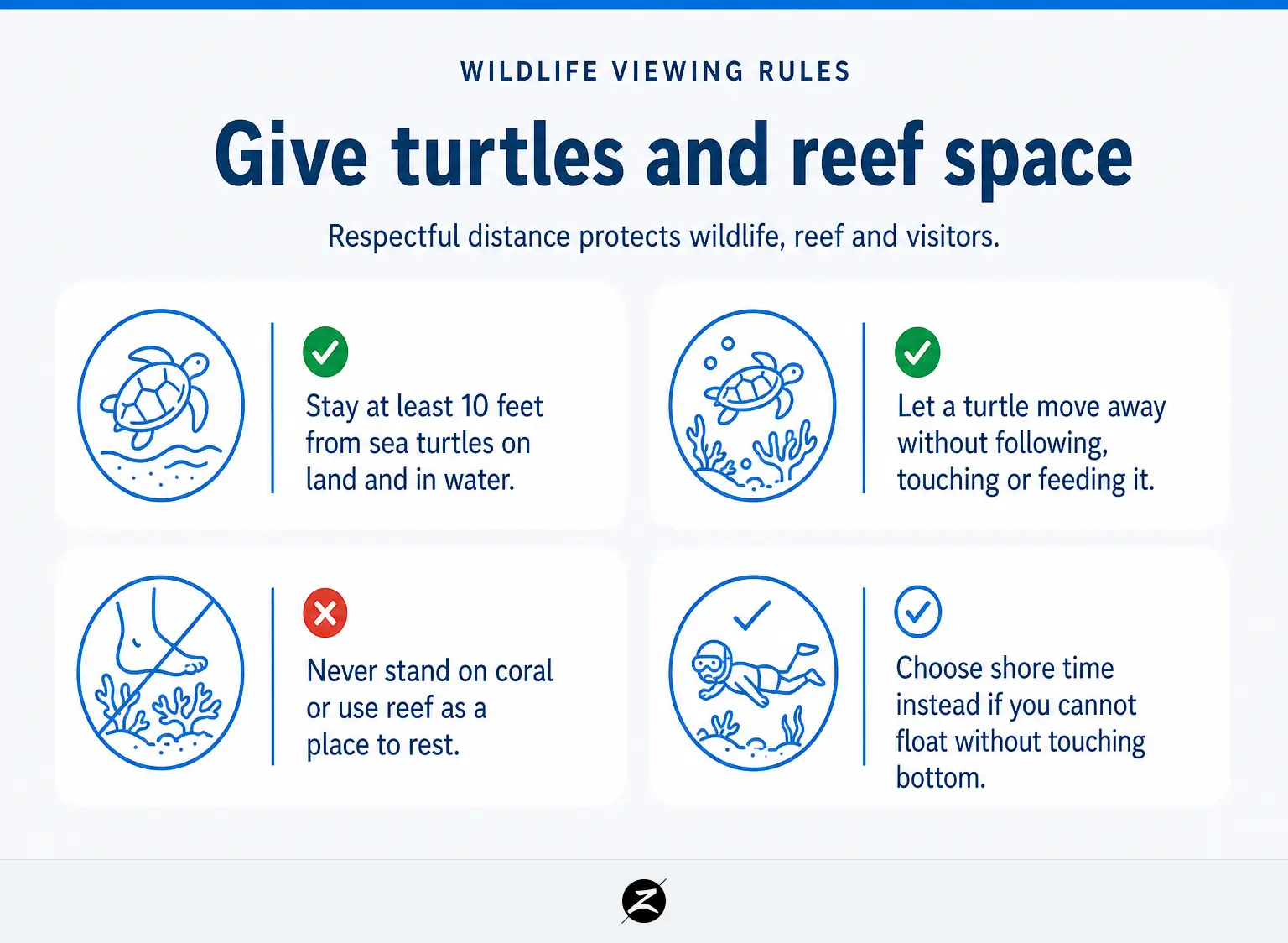
Watch turtles and reef life from a distance, keep your hands off coral and never feed, touch or pursue an animal. Hawaiʻi DLNR recommends at least 10 feet of space from sea turtles on land and in the water. DLNR sea turtle guidance
A turtle that swims near you has not invited contact. Stop moving toward the animal, give it a clear route away from you and let the encounter end on the turtle's terms. The same approach protects visitors from bites, avoids stress for wildlife and keeps other swimmers from bunching around the animal.
Reef protection is equally practical. Standing on coral can injure both the reef and the person trying to balance on it. If you cannot float or maintain position without touching the bottom, that is a reason to remain in deeper-free shore water only when conditions allow, or to skip the snorkel.
The best wildlife encounter is one that does not alter the animal's behavior.
What else do people ask about Wailea Beach?
These answers address common planning questions, but conditions remain the final decision-maker on any beach day.
What is the prettiest beach in Maui?
There is no single objective answer because beauty depends on what you want from the day. Wailea Beach suits visitors who value a sandy, developed South Maui setting and an easy coastal walk. A beach with stronger surf, a quieter feel, dramatic rock formations or a remote setting may feel prettier to someone else.
Is Wailea Beach free?
Wailea Beach does not charge admission for use of the public shoreline. Hawaiʻi protects public shoreline transit, but that right does not give visitors access to private resort facilities or permission to disregard posted parking rules. Check the signed public access point and current lot signage before arriving. DLNR shoreline-access guidance
What is nicer, Wailea or Kaanapali?
Neither area is universally nicer. Wailea generally fits visitors planning a South Maui stay with a resort-coast setting, while Kaanapali serves a different part of the island and itinerary. Choose based on where you are staying, the beach conditions that day, driving time and whether your priority is swimming, walking or another activity.
Is Wailea Beach swimmable?
Wailea Beach can be swimmable when waves, currents and shorebreak are mild for your ability. Check the National Weather Service surf forecast, read warnings and watch the water before entering. If the conditions feel questionable from shore, do not use the ocean to test your confidence. National Weather Service Honolulu surf forecast
A useful Wailea Beach answer always includes conditions, ability and the option to stay on shore.
What is the right next step before an ocean day?
Check the surf forecast, inspect conditions from shore and decide what kind of beach day matches the least-experienced person in your group. If you can swim but want coaching on mask use, floating and shore-entry skills before a guided reef experience, review our beginner and non-swimmer support in Wailea.
The beach will still be there if the water is not right today.