
WHALE SEASON · KIHEI + LAHAINA, MAUI
Whale Watching in Kihei & Lahaina
Humpback season on Maui — mid-December to mid-April — watched the quiet way: from a kayak, at water level, in groups of ten or fewer.

Turtle Town Coastal Kayak, Snorkel, & Whale Watch
📍 Mile Marker 14, Olowalu
$129 per person
Total for 2: $268.32 incl. tax
✦ Complimentary — The Maui Insider Guide, our local handbook to South Maui. Yours with every reservation.
Free cancellation up to 24 hours before the tour
🔒 Secure checkout · Instant confirmation
Every winter the humpbacks come back. Thousands of them make the swim from Alaska — some 3,000 miles — to mate, give birth, and rest in the warm, sheltered water between Maui, Lānaʻi and Molokaʻi. It is one of the largest gatherings of humpback whales anywhere on earth, and it happens right off the Kihei and Lahaina coasts. Whale watching here is seasonal — the whales are in Maui water from mid-December to mid-April, and feeding in Alaska the rest of the year.
We watch them the way this coast asks to be watched: from a kayak, engine off, at water level. You hear a blow before you see it. A calf practices breaching while its mother rests below. On a still morning, a singing male's song can carry up through the hull.
Our whale watch runs off both departure coasts — Kihei and Lahaina — in small groups, never more than ten, with local guides who have read this water for 15 years. No deck three stories up, no crowd at the rail. Just you, the quiet, and whatever the whales decide to show you.
Whale season, month by month
Hawaiʻi's whale season runs mid-December to mid-April. What you'll see depends on when you come.
November
The first whales arrive — early scouts, a blow here and there. Sightings are a bonus, not a promise.
December
Season opens and numbers build week by week. By the holidays, whales are a regular part of the morning.
January – March PEAK
Mothers and new calves rest close to shore. Breaches, tail slaps, and singing males — the full show, most days.
April
The last whales linger into mid-April, then head north to feed. Season closes quietly, the way it opened.
Two coasts, one season
Most whale tours leave from one side of the island. Ours go out of both — pick the coast that fits your stay.
Kihei & Mākena side
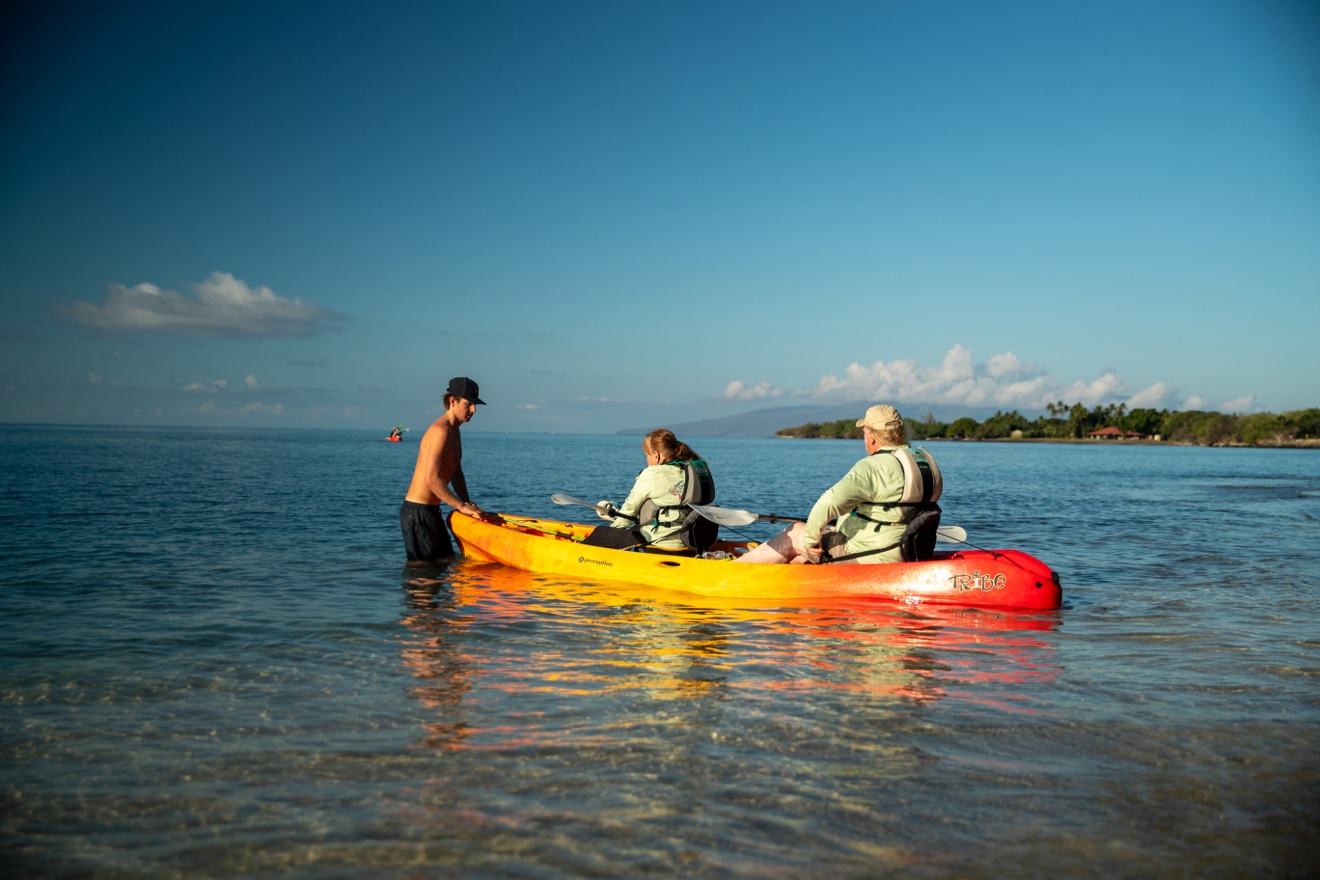
South Maui's coast is calving water — mothers bring newborn calves into the calm shallows off Kīhei, Wailea and Mākena. Our snorkel tours from Mākena Landing spot blows and breaches between stops all season, and the kayak puts you right in the middle of it.
Lahaina & Olowalu side
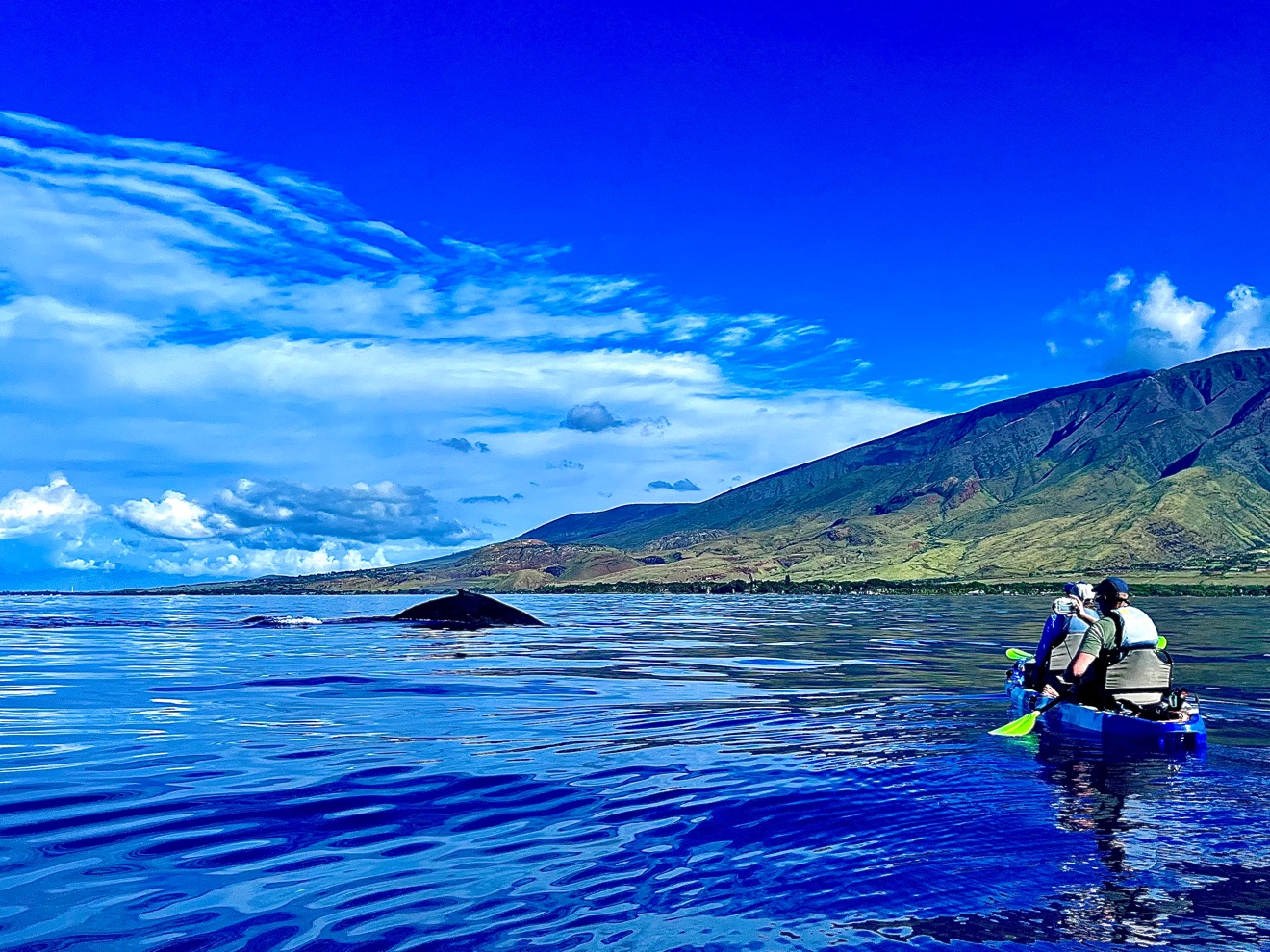
The kayak launches at Mile Marker 14, Olowalu — straight into the ʻAuau Channel, the sheltered stretch between Maui and Lānaʻi where the whales gather thickest. Morning water is glassy, the West Maui mountains behind you, whales in front.
Watching whales from a kayak
A boat gets you there faster. A kayak gets you closer to what it actually feels like — within the rules, always.
At water level
A whale surfacing fifty yards off your bow is a different thing from a whale watched from a deck. You're in their world, quietly, and they know the difference — curious whales often choose to come and look at the kayaks.
The 100-yard rule
Federal law keeps every boat and kayak at least 100 yards from humpbacks, and so do we. When a whale closes that distance itself — called a mugging — we stop paddling, sit still, and let it pass on its own terms.
Ears, not just eyes
Humpback song is a males-only chorus, and sound travels far underwater. On calm mornings you can hear a singer through the surface — and sometimes feel the song through the hull of the kayak under you.
Good to know
The honest details, before you book.
SEASON
Mid-Dec to mid-Apr
PEAK MONTHS
January to March
DEPARTURES
Kihei + Lahaina coasts
BEST TIME
Mornings — calmest water
THE RULES
100 yards, always
SIGHTINGS
Likely at peak, never guaranteed
Whale watching questions
What guests ask us most, answered straight.
When is whale season on Maui?
Mid-December through mid-April, with the first whales arriving in November. January through March is the peak — that's when mothers and calves are close to shore and sightings are a near-daily thing.
Can you see whales from Kihei?
Yes — the South Maui coast from Kihei down through Wailea and Mākena is prime whale water in season. You can spot blows and breaches from shore on calm mornings, and our tours leave from this coast all season.
Is a kayak or a boat better for whale watching?
Different, not better. A boat covers more water and watches from a deck. A kayak is quiet, engine-free, and at water level — fewer people, closer feel, and the whales set the pace. If you want the calmer, smaller experience, paddle. If you want range and a roof, take a boat.
How close do you get to the whales?
By law, 100 yards — that's the rule for everyone, and we hold to it. The exception is when a whale approaches us: then we stop, engines (and paddles) silent, and let the whale decide how the encounter goes.
Can you swim with the whales?
No — swimming with humpbacks isn't permitted in Hawaiʻi, and no honest operator will offer it. Whale watching here is a surface experience. The snorkeling on our kayak tour is with turtles and reef life at Turtle Town.
What if we don't see any whales?
It can happen early and late in the season — the ocean doesn't take bookings. At peak season it's uncommon. Either way the tour is still a paddle and snorkel at Turtle Town with the turtles; the whales are the season's headline, not the whole trip.
Outside whale season
This page stays up all year — the whales don't. From May to November they're feeding in Alaska. The kayak & snorkel tour runs year-round either way: Turtle Town, the turtles, the reef, calm morning water. Coming in winter, you're in season. Coming in summer, book the kayak for the snorkel — and know the whales will be back in December.
Whale season is short. Mornings go first.
The kayak & whale watch tour runs daily in season — small groups, both coasts, from $129.
Book the Kayak & Whale WatchZephyr Reviews — Desktop
Zephyr Reviews — Mobile