
In short
A Hawaii snorkeling trip is easiest to choose when you decide first on the island, then on how you want to reach the reef. Choose Maui for a small guided shore or kayak experience, Oʻahu for reservation-based access near Honolulu, Hawaiʻi Island for Kona conditions, and Kauaʻi for protected shore options that fit your itinerary.
- 🧭 Zephyr Adventures Maui operates only on Maui, so use the island comparison to choose your vacation, not to find a Zephyr trip outside Maui.
- A boat excursion makes sense when the reef or destination requires a vessel, while a shore snorkel reduces boat logistics and starts with an ocean entry from land.
- Hawaiʻi Ocean Safety advises checking conditions before entering the water, snorkeling with a buddy, and favoring morning hours when conditions are often better.
- A tour price is only useful when paired with the format, group size, equipment, time in the water, and skill requirements included with that trip.
Table of contents
- How do you choose a Hawaii snorkeling trip?
- Which Hawaiian island fits your snorkeling plan?
- Should you take a boat, paddle out, or enter from shore?
- When is a small guided shore snorkel the better fit?
- What should you check before getting in the water?
- Frequently asked questions about Hawaii snorkeling trips
The statewide search for a Hawaii snorkeling trip can be misleading because the islands solve different vacation problems. Start with where you are staying, how comfortable your group is in open water, and whether the experience you want is a reef visit, a boat outing, a kayak-and-snorkel combination, or guided support from the shoreline.
How do you choose a Hawaii snorkeling trip?
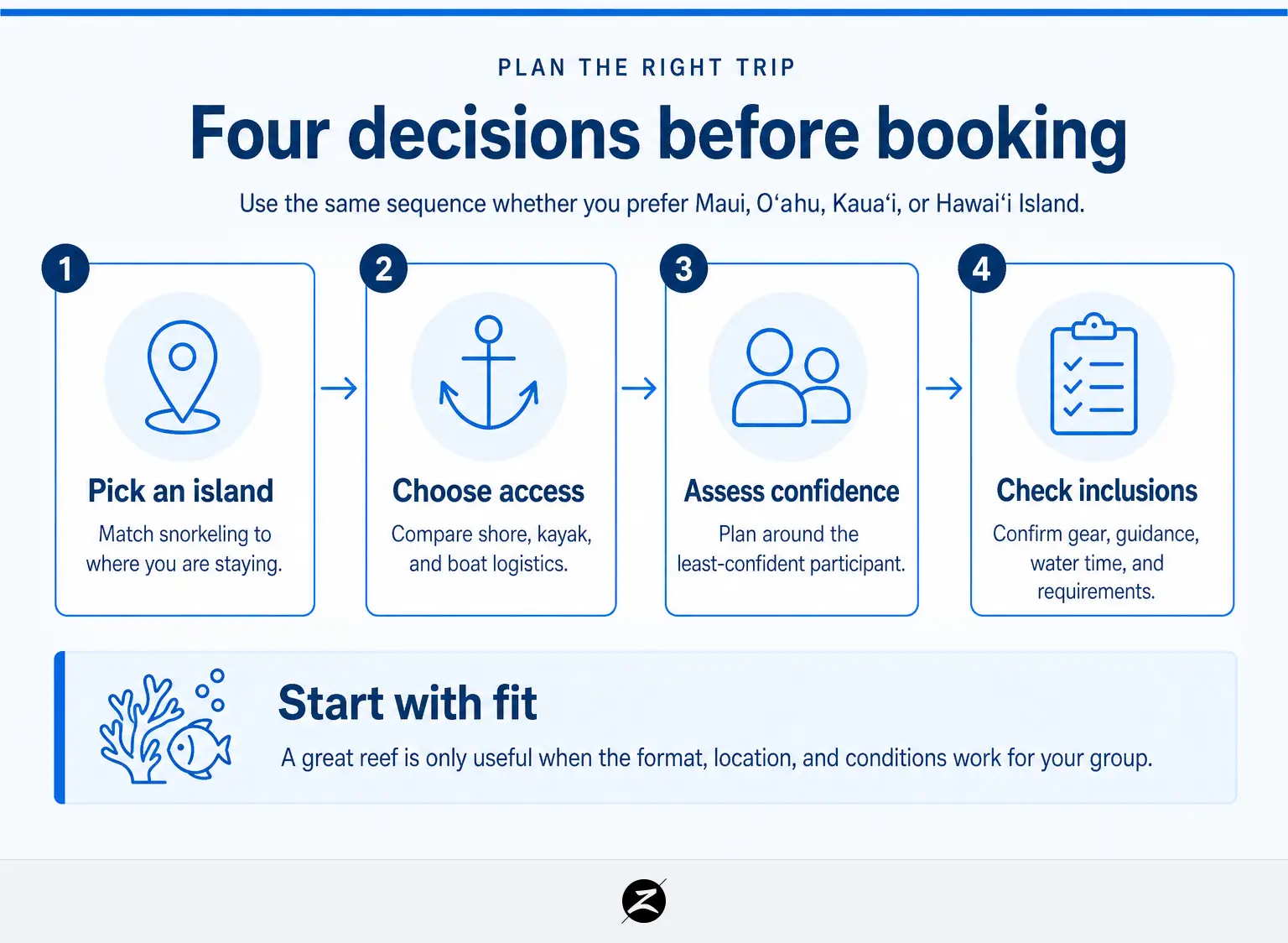
Choose a Hawaii snorkeling trip by making three decisions in order: island, water-access format, and support level. The best-looking reef is not automatically the best choice if it does not match your lodging, swimming ability, schedule, or comfort with boat travel.
Use this sequence before opening booking tabs:
- Choose the island that fits the rest of the vacation. A single snorkeling activity rarely justifies changing islands, particularly when interisland travel shortens the day.
- Choose the way you want to reach the reef. Shore entry, kayak, and boat experiences involve different logistics before you ever put on a mask.
- Match the trip to the least-confident participant. A family group should choose around the person who needs the most instruction, flotation support, or recovery time.
- Check the operator’s actual inclusions. Look for gear, instruction, group-size limits, water time, physical requirements, cancellation terms, and whether photos are included.
A useful planning example: two confident swimmers staying in Wailea for four nights may get more value from a guided shore snorkel than from spending a large part of one morning driving to a harbor, boarding a vessel, and traveling to a distant site. A group staying in Waikīkī, on the other hand, may prioritize Oʻahu access and a reservation-based snorkel plan over a Maui-specific experience.
The right snorkeling trip is the one that fits the whole vacation and the least-confident person in the group, not the one with the longest description.
Which Hawaiian island fits your snorkeling plan?
No Hawaiian island is objectively best for every snorkeler. Oʻahu is practical for visitors based near Honolulu, Hawaiʻi Island is a strong fit for Kona-focused reef and night-ocean itineraries, Kauaʻi has several protected shore options, and Maui works well for travelers who want South or West Maui snorkeling built into their stay.
| Island | A practical fit for | What to plan around | Evidence to check |
|---|---|---|---|
| Oʻahu | Visitors staying near Honolulu who want snorkeling alongside city, dining, and sightseeing plans | Hanauma Bay has controlled entry and online reservations; access details can change | Hanauma Bay guidance |
| Hawaiʻi Island | Travelers staying on the Kona side who want clear-water reef time and a night-focused ocean itinerary | Kealakekua Bay is a Marine Life Conservation District, and some access methods have rules or permits | Kealakekua Bay overview |
| Kauaʻi | Travelers looking for shore snorkeling that can pair with a slower beach-and-nature vacation | North Shore conditions can be affected by winter swell, so choose the coast and day carefully | Kauaʻi snorkeling guidance |
| Maui | Visitors staying in South or West Maui who want snorkeling as one part of a beach, scenic-drive, or paddle itinerary | Pick between shore, kayak, and boat access based on the day’s conditions and your group | Maui snorkeling overview |
For Maui visitors, South Maui is especially useful when you want to avoid treating snorkeling as an all-day boat commitment. Our guide to the best South Maui snorkeling areas can help you understand the regional options before choosing a guided format.
Zephyr Adventures Maui offers experiences on Maui only. The other islands belong in your vacation comparison, but they are not places where we operate tours.
Choose the island around where you are sleeping and what the rest of the trip needs to include, then choose the snorkeling format that suits that island.
Should you take a boat, paddle out, or enter from shore?
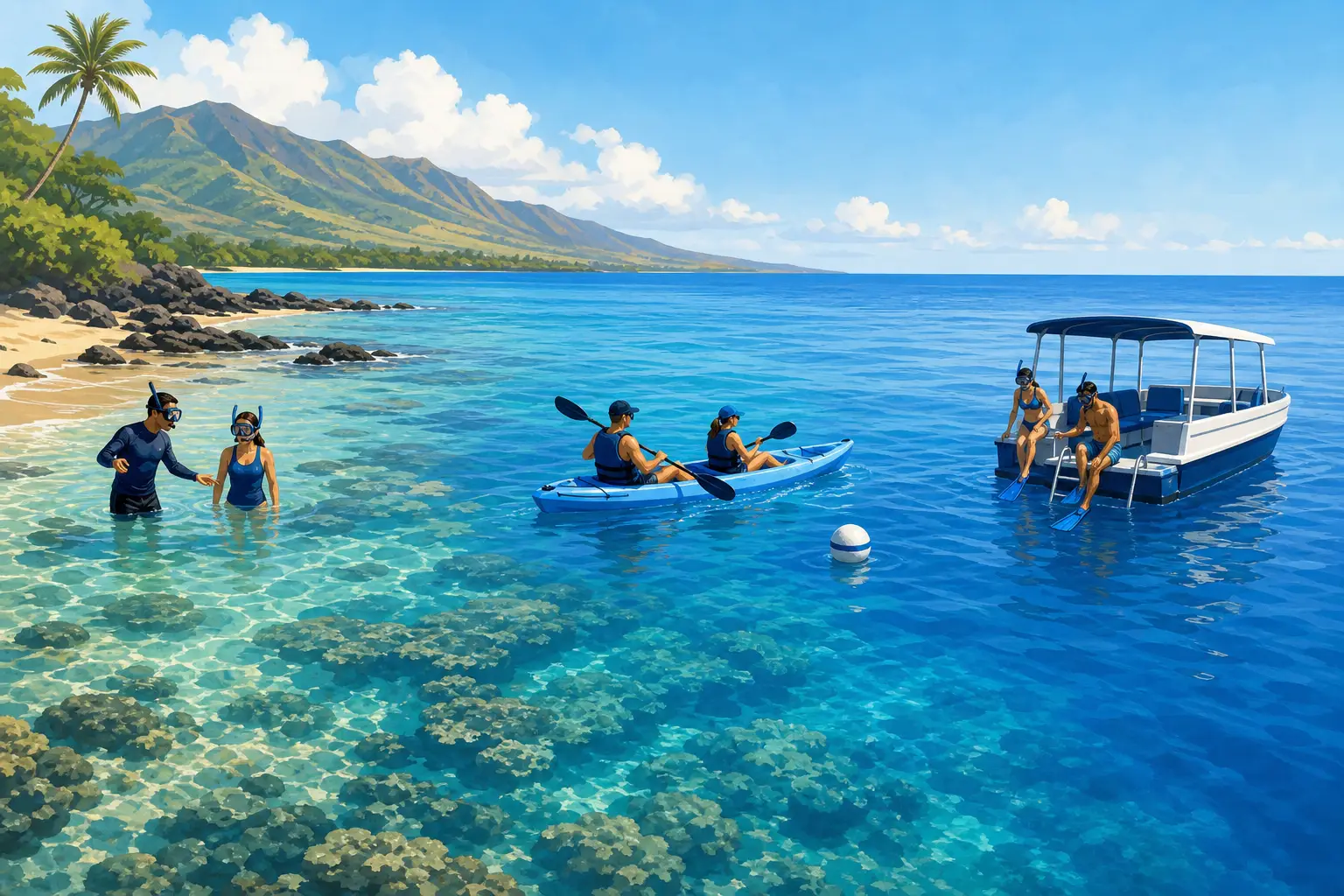
Boat, kayak, and shore snorkeling can all be worthwhile, but they solve different problems. Choose the format for the reef access and day you want, not because one format sounds more impressive on a booking page.
A boat excursion is the logical choice when the intended site is offshore or when the experience itself is about time on the vessel. It can suit travelers who want a cruise-style outing, onboard amenities, or access that cannot be reached reasonably from shore. It also adds harbor timing, boarding, transit, and a longer commitment to the day.
A kayak-and-snorkel trip suits guests who want the paddle to be part of the activity. It asks more of the group than simply walking into the water, but it can combine coastal views, movement, and a guided reef stop in one outing.
A guided shore snorkel is usually the cleanest option when the goal is focused time learning the gear, entering from a shoreline, and exploring a reef without boat transit. It is not automatically easier, because safe shore entry still depends on conditions, but it can be a more direct format for visitors staying close to the site.
Do not use a shore experience as a substitute for a boat-only destination, and do not book a boat trip when the group would rather spend its limited vacation time close to shore. Each format has a job.
The format should match the access you need, the time you have, and the participant who will find the experience most demanding.
When is a small guided shore snorkel the better fit?
A small guided shore snorkel is often the better fit when you are staying in South Maui, can swim, and want personal help with gear and water entry without adding boat transit. It is also a practical choice for people who want the main event to be time on the reef rather than time aboard a vessel.
At Zephyr Maui, our Turtle Town Signature Snorkel is a Maui shore-entry experience for swimmers. As listed in September 2026, it costs $139 per person, has a maximum of 10 guests, includes gear fitting and a safety briefing, provides shore-entry practice, and includes more than an hour of guided reef snorkeling plus complimentary photos and video.
That format is a good match when the following description sounds like your group:
- You are based in Wailea, Kihei, Makena, or elsewhere in South Maui.
- You want guided help fitting a mask, breathing through a snorkel, floating, and entering from shore.
- You would rather spend the outing close to the reef than commit to a harbor departure and vessel travel.
- You can swim and want a guided turtle-and-reef experience at a measured pace.
It is not the right match for every traveler. Guests who are not comfortable swimming should choose beginner-specific support instead of assuming a standard snorkel is appropriate. Our First Timers & Non-Swimmers Wailea experience begins with shallow-water confidence building, flotation, equipment setup, mask seal, body position, and basic ocean awareness before the guided reef portion.
We also do not offer boat-based Molokini or Turtle Town cruises, standalone scuba diving, SNUBA, surf lessons, equipment rentals, or dedicated whale-watching cruises. A clear boundary helps travelers book the format they actually want.
If a small-group, shore-entry experience is the match, check current Turtle Town Signature Snorkel availability before finalizing the rest of the Maui itinerary.
A small guided shore snorkel is strongest when proximity, instruction, and focused reef time matter more than a boat ride.
What should you check before getting in the water?
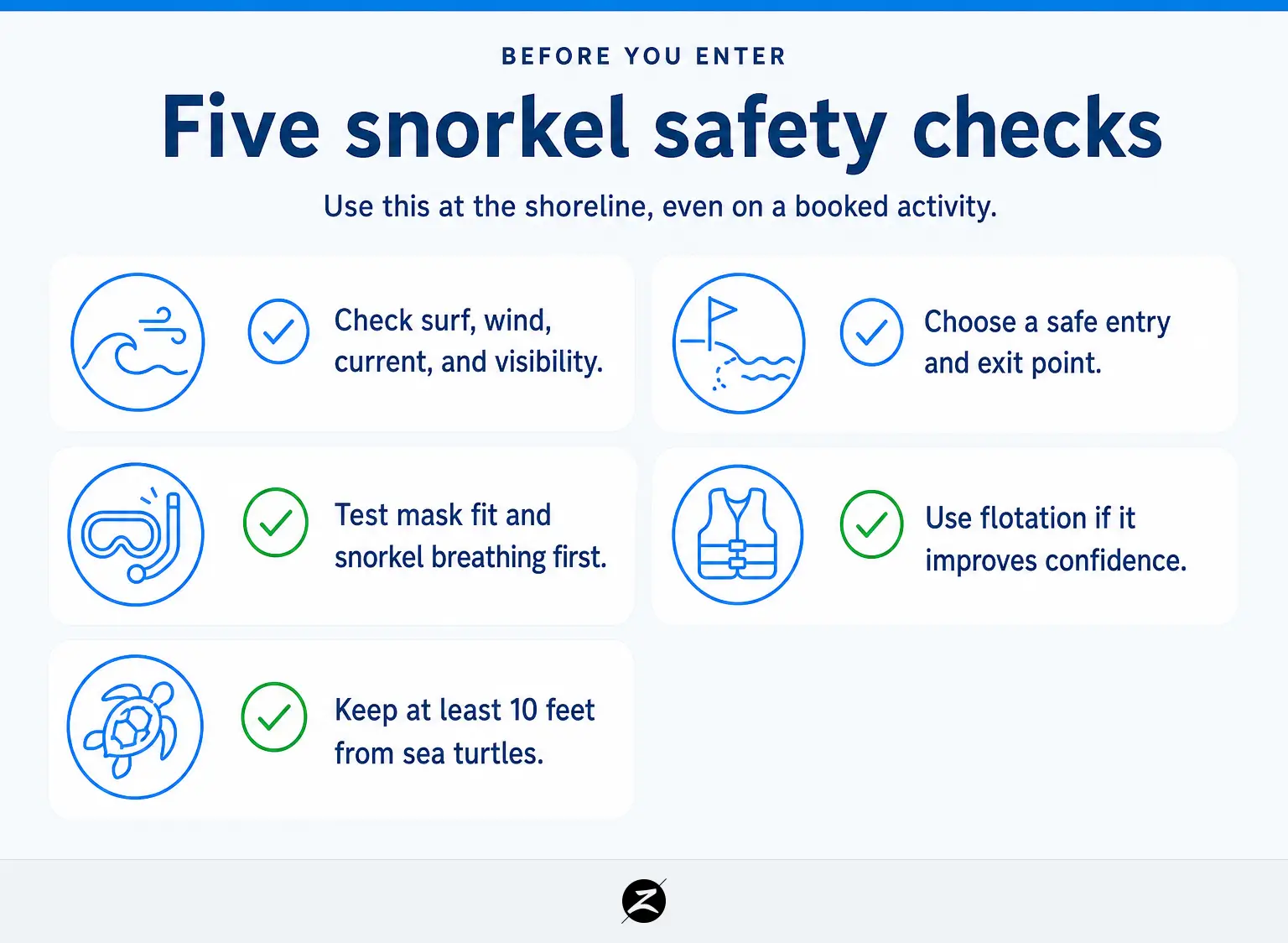
Check the ocean conditions, your equipment, and your own readiness before every snorkeling session. A booked activity does not remove the need to make a sensible call on the shoreline.
Hawaiʻi Ocean Safety advises snorkelers to avoid high surf, high winds, heavy shorebreak, and strong currents; to snorkel with a buddy; and to favor morning hours, which are often calmer with better visibility. The agency also advises visitors not to stand on coral or touch marine life. Read the state’s current snorkeling safety guidance before the trip, especially if it is your first time in Hawaiian waters.
Use this short check before entering:
- Look at the water, not just the forecast. Watch the shorebreak, current direction, wind, and visibility.
- Ask about the exit as well as the entry. A manageable walk in can become a difficult return if waves build.
- Check mask fit before deeper water. If you need a refresher, see our guide on how to use snorkeling equipment.
- Use flotation when it improves confidence. Conserving energy matters more than proving that you do not need help.
- Give wildlife room. Hawaiʻi DLNR recommends staying at least 10 feet from sea turtles in the water or on land, and never feeding or touching them. Review DLNR wildlife guidance before you go.
Conditions, not a reservation, decide whether getting in the water is a good idea that day.
Frequently asked questions about Hawaii snorkeling trips
What is the best month for snorkeling in Hawaii?
There is no single best month for snorkeling across every Hawaiian island. Hawaiʻi Ocean Safety says morning hours are usually better for snorkeling, while seasonal swell, wind, and rain can affect individual coasts differently. Choose the island and shore first, then check current conditions shortly before the activity.
What is the average cost of snorkeling in Hawaii?
There is no reliable statewide average because shore instruction, kayak trips, boat excursions, private outings, gear, and duration vary widely. For a concrete Maui example, Zephyr Maui listed its Turtle Town Signature Snorkel at $139 per person in September 2026. Compare inclusions and suitability, not price alone.
Which Hawaiian Island is best for snorkelling?
The best Hawaiian island for snorkeling depends on your trip base and preferred format. Oʻahu suits Honolulu itineraries and controlled-access sites, Hawaiʻi Island suits Kona reef planning, Kauaʻi has protected shore choices, and Maui suits visitors seeking South or West Maui shore, kayak, or boat-based options.
Is it worth it to bring your own snorkel gear to Hawaii?
Bring personal snorkel gear if you already know it fits well and expect to snorkel independently more than once. For a guided trip, provided equipment can simplify travel and ensure the gear suits the activity. Either way, test mask fit and practice clearing the snorkel before entering deeper water.
The useful next step is not finding the most famous Hawaii snorkel trip. It is choosing the island, access format, and support level that let your group enjoy the reef responsibly.