
In short
Turtle Town Maui is not one marked cove. It is a commonly used name for turtle-rich reef along South Maui’s Mākena coast, with Maluaka Beach as the clearest public shore-access starting point. Snorkel only in calm, clear conditions, stay with a buddy, and keep at least 10 feet from every sea turtle. (mauicounty.gov)
Key takeaways
- 📍 Turtle Town is an informal reef-area name, while Maluaka Beach and Mākena Landing are separate, formally mapped access points. (mauicounty.gov)
- 🌊 Morning often brings better snorkeling conditions, but the surf, wind, water quality and swimmer’s ability must decide whether anyone enters. (oceansafety.hawaii.gov)
- 🐢 NOAA Fisheries recommends staying at least 10 feet, or 3 meters, from sea turtles on land and in the water. (fisheries.noaa.gov)
- 🧴 Maui County has prohibited the use of non-mineral sunscreen without a prescription since October 1, 2022. (mauicounty.gov)
- 👥 The Turtle Town Signature Snorkel requires participants to swim; a separate beginner and non-swimmer experience is available for guests who need more support. (zephyrmaui.com)
On this page
- Where is Turtle Town in Maui exactly?
- Which Turtle Town shore access should you use?
- When is the best time to snorkel Turtle Town?
- How do you decide if Turtle Town is safe enough to snorkel?
- What can you see at Turtle Town?
- How close can you get to sea turtles?
- Should you snorkel on your own or with a guide?
- What does Turtle Town Maui snorkeling cost?
- What should you bring for a shore snorkel?
- Turtle Town Maui snorkeling FAQ
Where is Turtle Town in Maui exactly?
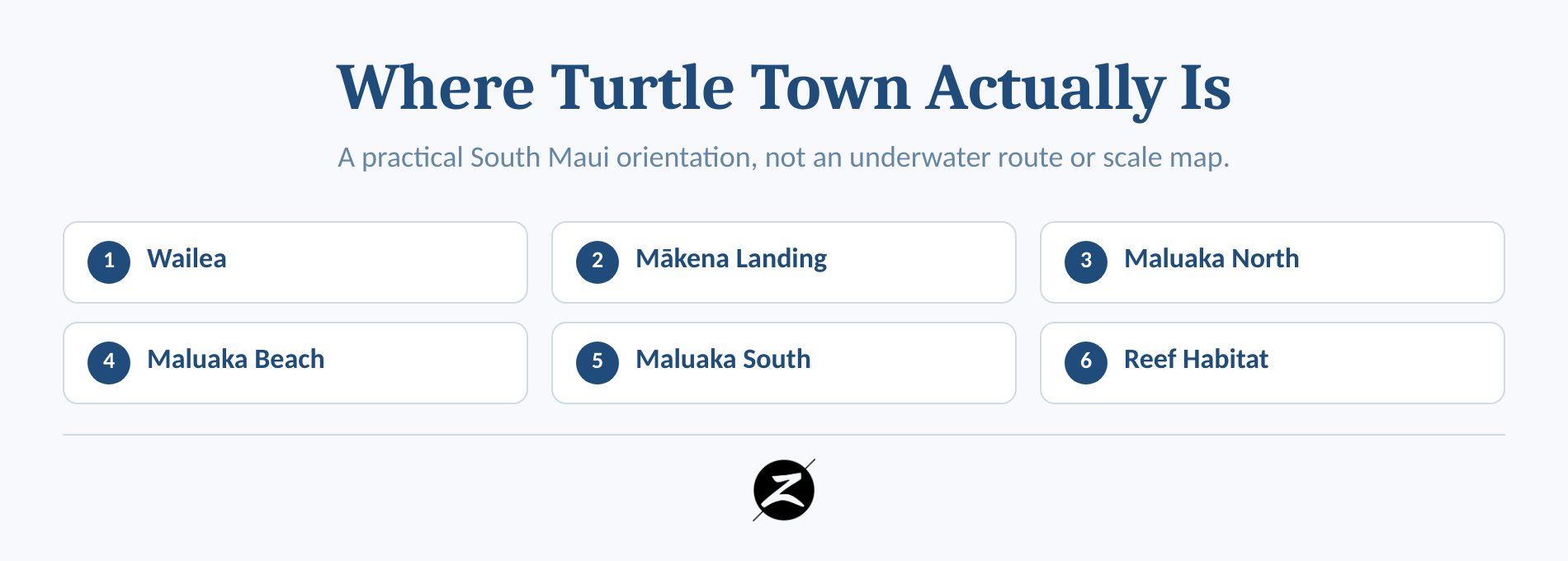
Turtle Town is a commonly used name for reef habitat along the South Maui coast near Mākena, rather than the formal name of one beach park. For straightforward public shore access, Maluaka Beach is the most useful place to begin planning.
The County of Maui parks map identifies the actual park and access names a visitor should use, including Maluaka Beach Park and Mākena Landing. County records treat them as separate places, not as one park officially named Turtle Town. (mauicounty.gov)
That distinction explains why a Turtle Town Maui map may show different pins. One map may point to Maluaka Beach, another may point toward Mākena Landing, and a tour confirmation may use a separate meeting location selected for the day’s conditions and permitted activity.
Maluaka Beach offers a sandy beach and public access at its north and south ends. Mākena Landing is a separate cove and park area north of Maluaka, with its own parking, shoreline access and signed boundaries around nearby private parcels. (makenainfo.com)
For visitors asking where Turtle Town is in Maui, the practical answer is the Mākena coast south of Wailea. The practical navigation answer is more specific: choose Maluaka north access, Maluaka south access or a confirmed guided meeting point before starting the drive.
For shore planning, Turtle Town means the Mākena reef area, with Maluaka Beach as the clearest public starting point rather than one official pin.
Which Turtle Town shore access should you use?
Maluaka’s south access is usually the simplest choice for a first visit because it leads to the beach by a defined public path. The north access and Mākena Landing can also be useful, but each has different parking, shoreline and boundary considerations.
| Access choice | Best fit | What to watch for |
|---|---|---|
| Maluaka south access | A straightforward beach day and sandy shore entry | Follow park-user signs, stay out of private lots and assess reef and rocks before swimming |
| Maluaka north access | Visitors approaching the beach near Keawalaʻi Church | Use the public park lot, keep loading areas clear and respect church traffic |
| Mākena Landing | A separate cove or a meeting point selected by an experienced guide | Do not treat it as the same beach as Maluaka; follow public-access and private-property signs |
County planning records describe public parking serving both ends of Maluaka Beach. The north parking area is across from Keawalaʻi Church, while the south side uses parking and a walkway serving the beach’s southern end. Current signs and any temporary restrictions take priority over old photos or saved pins. (mauicounty.gov)
For Turtle Town Maui directions to the south access, choose the formal Maluaka Beach south-access map result and follow signs for park users near the end of Mākena Keonoio Road. Do not enter a fenced or signed private lot simply because it appears closer to the water.
For the north access, use the public parking area opposite Keawalaʻi Church rather than occupying a turnaround or loading zone. Carry gear from the lot and leave the loading area open for legitimate loading and unloading.
Mākena Landing requires extra attention. The current Mākena Landing access FAQ distinguishes the public park and state shoreline access from adjacent private property, so follow on-site signs instead of tracing the shoreline through restricted land. (makenainfo.com)
Access does not determine water safety. A convenient parking space and an easy walk can lead to ocean conditions that are wrong for the day, while a familiar access point can still become unsuitable after wind, swell or heavy rain.
Choose a formal public access point before driving, and let current signs override any saved Turtle Town Maui map.
When is the best time to snorkel Turtle Town?
Morning is often the best time to check Turtle Town because wind and surface conditions may be more favorable, but morning is not a safety guarantee. The right time is any fully daylight hour when official alerts, water clarity, surf and the group’s ability all support entering.
Hawaiʻi Ocean Safety’s June 2026 snorkeling safety guidance recommends checking conditions before entering and identifies high surf, high winds, heavy shorebreak and strong currents as bad snorkeling conditions. The same guidance says morning hours are usually preferable, while dawn, dusk and murky water should be avoided. (oceansafety.hawaii.gov)
Check the National Weather Service surf-zone forecast on the day of the visit. Turtle Town faces South Maui waters, so a south swell can matter even when the air is sunny and the beach parking lot looks calm. (weather.gov)
Visibility and safety are not the same thing. Clear water can still contain current, and a quiet sandy entry can sit beside repeated whitewater over shallow reef. Watch the water long enough to see several wave sets before making a decision.
At Turtle Town, the safest schedule is the day and hour when conditions fit your group, not simply early morning.
How do you decide if Turtle Town is safe enough to snorkel?
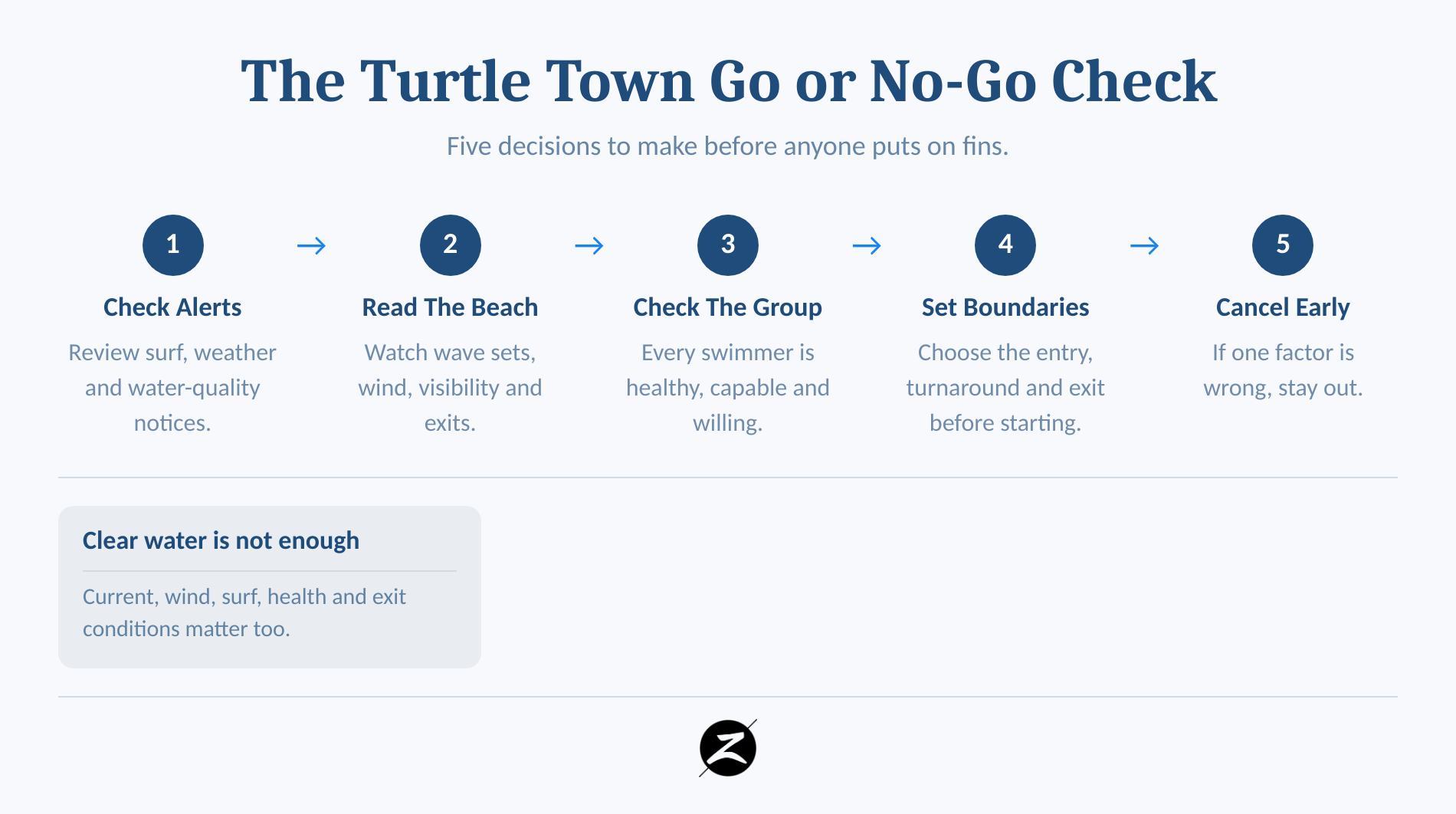
Make the decision on shore by checking official alerts, observing the water and honestly evaluating every swimmer. If any one factor is wrong, stay out rather than treating the first few minutes as a test.
Use this sequence:
- Check alerts. Review the surf forecast, weather and the Hawaiʻi Department of Health Clean Water Branch advisory map.
- Read the beach. Look for posted closures, repeated shorebreak, whitewater over the reef, poor visibility and wind pushing away from the exit.
- Check the group. Every participant should be healthy enough for the activity, able to swim in the ocean and willing to stop without pressure.
- Choose the exit. Identify the entry, exit and conservative turnaround point before putting on fins.
- Cancel early. If the water, equipment, health or confidence is wrong, make it a beach visit instead.
The Hawaiʻi Department of Health advises people to stay out of water that appears brown, cloudy or turbid, including after heavy rain, even when a formal Brown Water Advisory has not yet been issued. Storm runoff may carry pathogens and other pollutants into coastal water. (health.hawaii.gov)
Worked example: imagine arriving to find clear water at the sandy entry but repeated whitewater breaking over the reef, an offshore breeze and one swimmer who is already uneasy. The correct decision is not to try for five minutes. Stay on shore, choose a lifeguarded swimming area or reschedule the snorkel.
Do not assume Maluaka has a lifeguard. Hawaiʻi Ocean Safety’s 2026 list of lifeguarded beaches includes Mākena State Park but does not list Maluaka Beach; those are different locations. Call 911 in an emergency when no lifeguard is present. (oceansafety.hawaii.gov)
Hawaiʻi Ocean Safety says snorkelers should be experienced ocean swimmers and notes that snorkeling is associated with more visitor drownings than any other ocean activity in the state. It also says questions remain about full-face snorkel masks. Use equipment that fits correctly, that you can remove without help, and exit immediately if breathing feels difficult or you become dizzy, disoriented or unusually fatigued. (oceansafety.hawaii.gov)
A safe Turtle Town snorkel begins with a no-go decision made on shore, before excitement or sunk costs take over.
What can you see at Turtle Town?
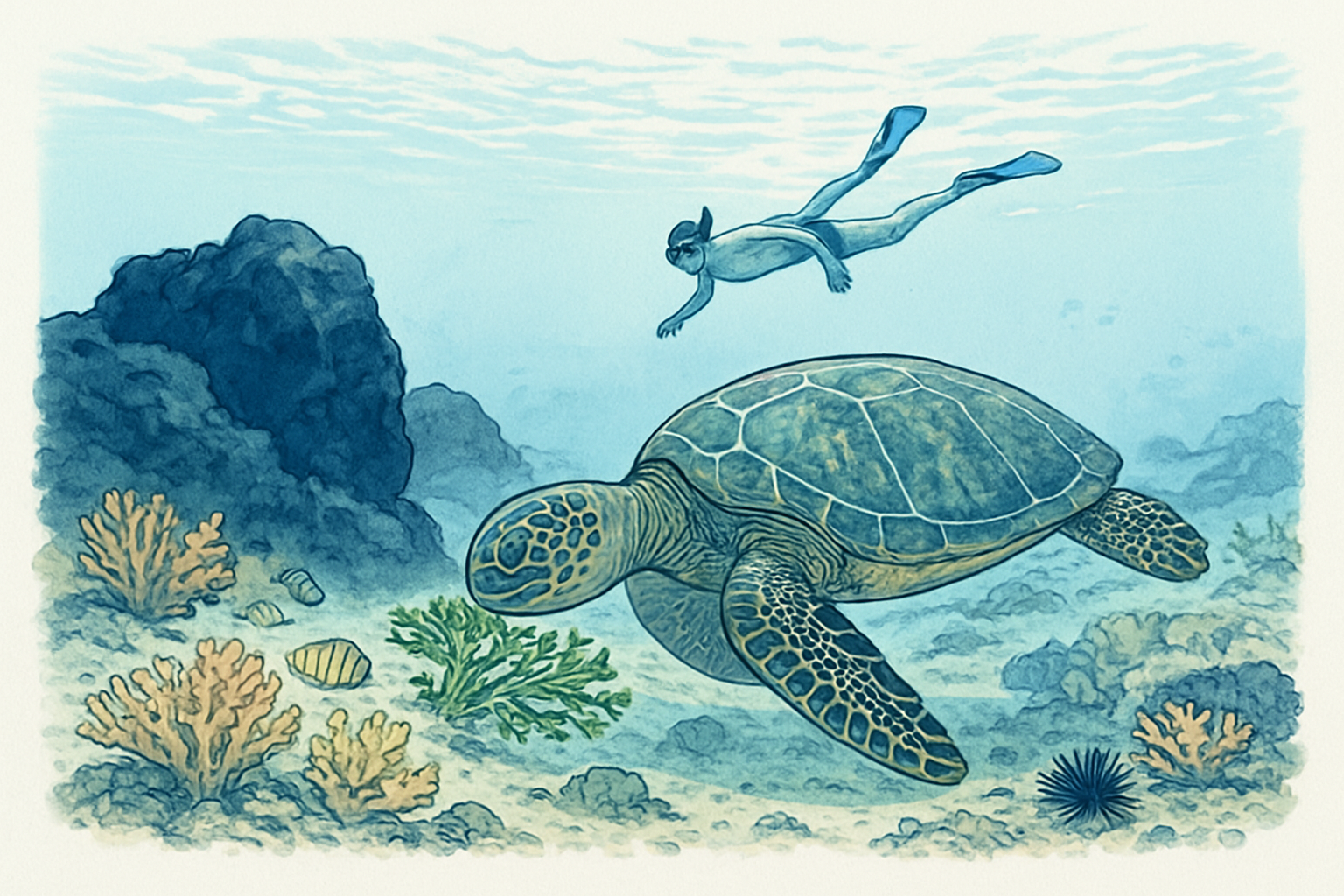
Hawaiian green sea turtles, reef fish, urchins and other marine life may be seen around the lava rock, reef and algae habitat off the Mākena coast. No animal encounter is guaranteed, and the reef should be observed without touching, standing or collecting.
The DLNR sea turtle guide identifies the green sea turtle, or honu, as the turtle most commonly encountered on Hawaiʻi reefs and beaches. Nearshore coral reefs, rocky outcrops and algae beds are important feeding habitat because adult honu primarily eat macroalgae, known locally as limu. (dlnr.hawaii.gov)
A turtle may be feeding close to the bottom, resting in a protected area or rising to breathe. Seeing one at the surface does not mean it is approaching for interaction, and a turtle on the beach should be allowed to rest without being pushed toward the water.
The larger experience is the reef itself. Slow down enough to notice fish moving along rock edges, sea urchins in crevices and the change from sand to reef habitat. An octopus or other less-visible animal may appear, but no guide or beach name can produce wildlife on demand.
Expect reef habitat and the possibility of honu, not a guaranteed turtle encounter.
How close can you get to sea turtles?
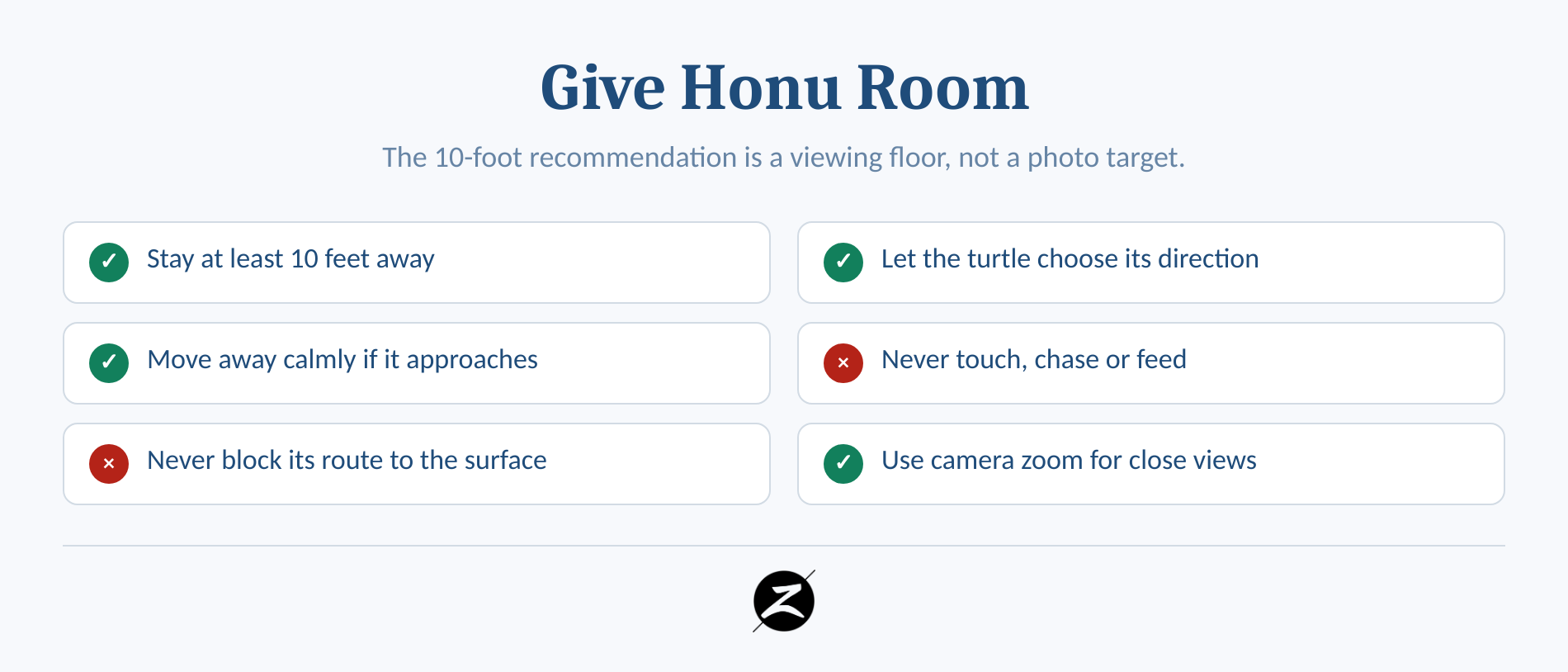
NOAA Fisheries recommends staying at least 10 feet, or 3 meters, from sea turtles both on land and in the water. Ten feet is a minimum viewing recommendation, not permission to follow, surround or block an animal that is changing direction.
NOAA Fisheries updated its Hawaiʻi viewing guidance in February 2026. The guidance says to stay at least 10 feet away, never touch, chase or feed turtles, limit viewing time and use a camera’s zoom rather than moving closer. (fisheries.noaa.gov)
The legal distinction matters. The state’s DLNR marine-protection guidance explains that no separate law creates a universal 10-foot statutory boundary for turtles, but getting close enough to disturb natural behavior can violate state or federal protection. Touching, feeding and pursuit are prohibited forms of disturbance. (dlnr.hawaii.gov)
If a turtle swims toward you, stop advancing, keep hands to yourself and move away calmly when space allows. Never trap a turtle between swimmers, the reef and the surface. A breathing turtle always needs a clear route to air.
Report a hooked, entangled, injured or stranded turtle to the statewide NOAA Marine Wildlife Hotline at 1-888-256-9840. Keep your distance while reporting because an injured animal can behave unpredictably. (dlnr.hawaii.gov)
Keep at least 10 feet away, never touch or pursue, and create more space whenever a turtle changes course toward you.
Should you snorkel Turtle Town on your own or with a guide?
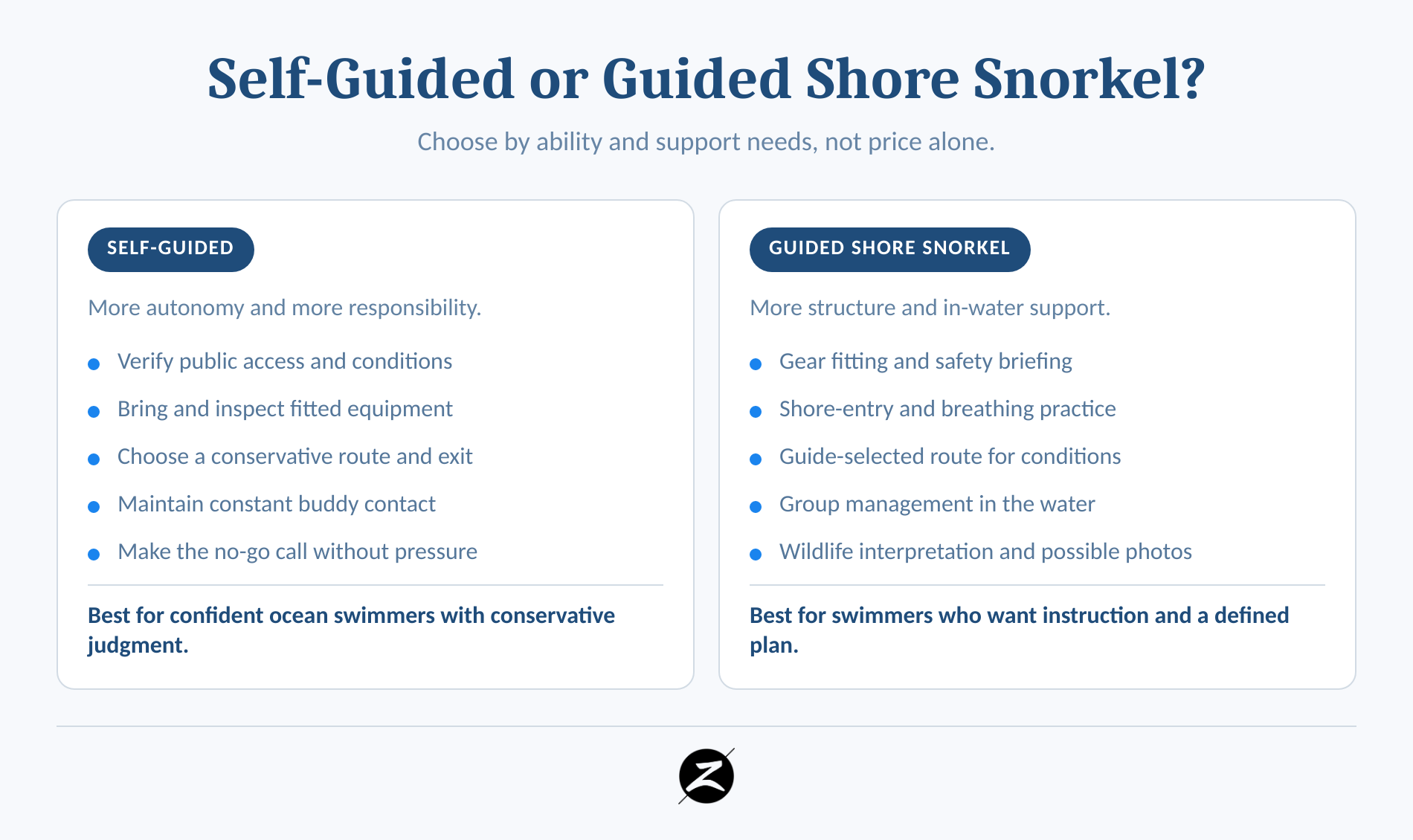
Self-guided snorkeling can suit confident ocean swimmers who have fitted equipment, a capable buddy and the judgment to cancel. A guided shore snorkel adds gear fitting, entry practice, route decisions and in-water support, but it still cannot guarantee wildlife or remove ocean risk.
A self-guided visit places every decision on the group. You select the access, inspect the gear, judge the current, choose the route, maintain buddy contact and decide when to turn around. That autonomy is useful only when the group has enough ocean experience to make conservative choices.
A guide can reduce the planning burden and help a swimmer correct mask fit, body position, breathing and fin technique before moving onto the reef. The guide can also keep the group together, select a route for the observed conditions and explain wildlife behavior without encouraging contact.
Swimming ability still determines which guided experience fits. The Turtle Town Signature Snorkel requires participants to swim and recommends ages 7 and older. The separate First Timers & Non-Swimmers Wailea experience begins with shallow-water instruction, flotation, breathing practice and mask-seal work; it is documented on the broader Maui ocean adventures page. (zephyrmaui.com)
This distinction should not be blurred. A flotation device does not turn an independent non-swimmer into an ocean snorkeler, and a standard swimmer-focused tour is not automatically the correct beginner product.
This guide covers shore entry and guided coastal snorkeling. We do not sell boat-based Molokini and Turtle Town snorkel cruises, so guests seeking that format should not expect a harbor departure or catamaran itinerary from Zephyr Adventures Maui.
Self-guided Turtle Town snorkeling suits capable ocean swimmers; guided shore snorkeling buys instruction, structure and in-water support.
What does Turtle Town Maui snorkeling cost?
A public beach visit does not require a tour ticket, although self-guided visitors still pay for transportation and any equipment they need. Guided pricing reflects instruction, equipment, group support and included services, and should be checked again before booking because rates and schedules can change.
As of August 20, 2026, the Turtle Town Signature Snorkel page lists:
- Price: $139 per person
- Listed start times: 8:30 AM, 9:30 AM, 10:30 AM, 11:30 AM and 12:30 PM
- Group size: Minimum 2 people and maximum 10 people
- Age guidance: Recommended for ages 7 and older
- Swimming requirement: Participants must be able to swim
- Included structure: Gear fitting, safety briefing, shore-entry practice, more than one hour of guided reef snorkeling, and complimentary photos and video
These are first-party product facts, not promises about water conditions or wildlife sightings. Weather, ocean safety and operational availability can affect a scheduled experience. (zephyrmaui.com)
If every participant meets the swimming requirement and wants a small-group shore experience, check current availability for our Turtle Town Signature Snorkel. Review the live price, requirements and cancellation terms before completing the reservation.
Compare the current price with the support included, then book only if every participant meets the swimming requirement.
What should you bring for a shore snorkel?
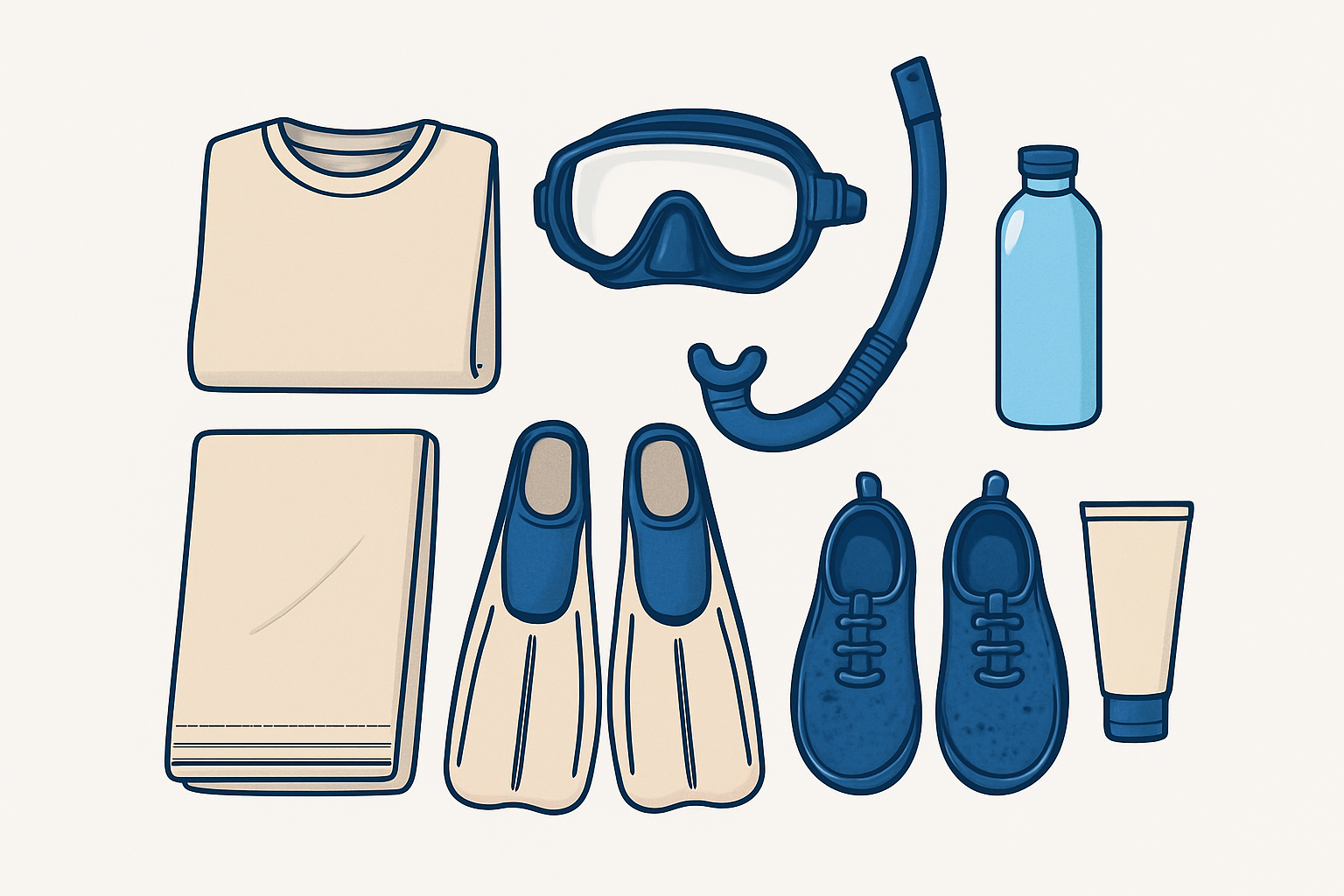
Bring fitted snorkeling equipment, sun protection, water and only the beach items you can manage without distracting from entry and exit. Guided guests should read their confirmation because supplied gear and meeting instructions vary by experience.
A practical packing list includes:
- A properly fitted mask, snorkel and fins if equipment is not supplied
- A swimsuit and rash guard or sun shirt
- A towel and change of dry clothing
- Drinking water
- Secure footwear for the walk to the beach
- Any personal medication needed for a normal outing
- Mineral sunscreen with zinc oxide or titanium dioxide as the active ingredient
Maui County’s mineral sunscreen guidance explains that Ordinance 5306 has banned the sale, distribution and use of non-mineral sunscreen without a prescription since October 1, 2022. The county recommends protective clothing and shade as the first line of sun protection because no sunscreen is completely waterproof. (mauicounty.gov)
Apply sunscreen before reaching the water so it is not being handled on the reef or at the entry. Do not stand on coral while adjusting fins, and keep loose plastic, wrappers and disposable items out of the shoreline area.
Guided participants can review the site’s snorkeling questions and preparation before the tour. The live confirmation remains the controlling source for the meeting point, supplied equipment and any tour-specific instructions. (zephyrmaui.com)
Bring less beach clutter and better-fitted gear, plus mineral sunscreen that complies with Maui County law.
What do visitors ask most about Turtle Town Maui snorkeling?
The most useful Turtle Town questions are about access, conditions and realistic expectations. The answers below apply to shore-oriented snorkeling and do not replace a same-day ocean assessment.
Can you snorkel in Turtle Town?
Yes. Turtle Town is a broad South Maui reef area with shore access commonly associated with Maluaka Beach and the nearby Mākena coastline. Snorkeling is appropriate only when the water is calm and clear, the swimmer is capable, and a buddy is present. Poor conditions can make a popular site unsafe. (oceansafety.hawaii.gov)
Is Turtle Town Maui worth it?
Turtle Town Maui can be worth it for visitors who want a shore-based reef snorkel and accept that wildlife is unpredictable. The experience is not worth forcing when wind, surf, visibility, health or confidence is wrong. A beach day or a rescheduled guided snorkel is the better decision under poor conditions.
Where is the best place in Maui to snorkel and see turtles?
There is no single best Maui turtle spot every day because ocean conditions change and sightings are never guaranteed. For a practical South Maui shore option, Maluaka Beach is closely associated with Turtle Town. The best choice is the suitable access point with calm conditions and a skill level that matches the swimmer.
Turtle Town is a South Maui reef area where the right conditions matter more than the name on the map.
Before heading south, save the official surf and water-quality pages, confirm the intended public access point and make the no-go decision before anyone puts on fins. Turtle Town is worth visiting only when the ocean, the group and the wildlife all get enough room.