
In short
Maui snorkeling conditions are not confirmed by one forecast or a single beach rating. Check the National Weather Service forecast, current beach hazards, water-quality advisories, and the beach itself before entering; do not snorkel in brown or turbid water, during posted hazardous conditions, or when the entry and exit look beyond your ability.
Key takeaways
- A Maui snorkel report is useful for planning, but it cannot certify that a specific beach is safe when you arrive.
- Check Hawaii Beach Safety for current beach hazards, then compare the National Weather Service surf and marine forecasts with your intended shoreline.
- Wind, swell, water clarity, shorebreak, currents, and recent rainfall can each change a snorkeling decision.
- Brown, cloudy, or runoff-affected water is a reason to stay out, even if the sky is sunny and surf looks small.
- Posted warnings, a lifeguard’s direction, or an uncomfortable entry are enough reason to choose another activity.
This is a guide to making a same-day snorkeling decision, not a live conditions feed. Maui’s ocean can look inviting from shore while wind, surge, runoff, shorebreak, or an awkward reef entry make snorkeling a poor choice for your experience level.
What are the current snorkel conditions in Maui?
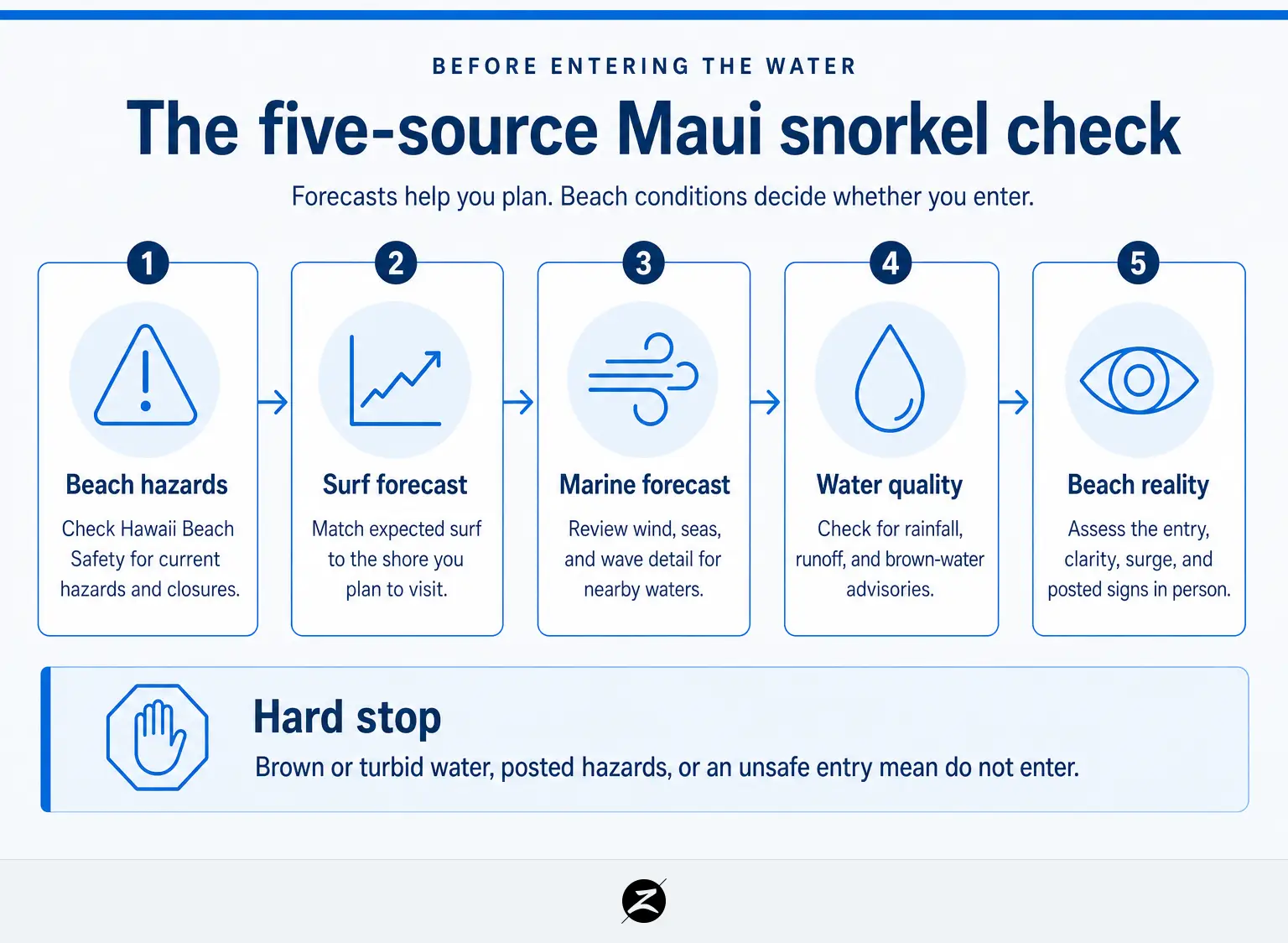
Current Maui snorkel conditions are the combination of beach hazards, surf and swell, wind, rainfall and runoff, water clarity, and conditions at the exact entry point. The most useful answer comes from checking official sources before leaving, then reassessing when you reach the beach.
Start with Hawaii Beach Safety, which Hawaii Ocean Safety identifies as its source for timely conditions at lifeguarded beaches. Its beach hazard information matters more than an island-wide weather description because conditions can differ sharply by shore exposure and individual beach. Hawaii Ocean Safety also advises beachgoers to speak with a lifeguard and obey posted warnings before entering the ocean.
Then read two National Weather Service products. The Hawaii surf forecast gives a shore-facing surf outlook for Maui, while the Maui County leeward waters forecast gives wind, sea, and wave detail for waters off the leeward side of the island. Neither source replaces a look at your actual beach, but together they explain whether incoming energy or wind may make the water rougher than it appears in a photo.
A useful Maui snorkel report is a decision process, not a promise that the water will be suitable when you arrive.
Is today a good day to go snorkeling in Maui?
Today may be a good day to snorkel only if the forecast, official beach information, and your own beach-level observation agree that the conditions fit your skills. A calm-looking horizon is not enough if the shorebreak is forceful, the water is murky, warnings are posted, or you cannot make a controlled entry and exit.
The National Weather Service warns that surf heights can vary substantially from beach to beach along the same coastline, and that larger sets can occur periodically. That is why an island-level surf range should be treated as planning information, not a clearance to enter the water. Hawaii Ocean Safety also states that the absence of a warning sign does not mean there is no hazard, because ocean conditions can change quickly.
Worked example: On October 1, 2026, the National Weather Service forecast Maui south-facing surf at 3 to 5 feet for the following day and cautioned that surf can vary considerably by beach. That forecast would be a reason to check the intended South Maui beach in person, read the current beach hazard status, and walk away if the entry had breaking waves, surge over shallow reef, or poor visibility. It would not justify saying that snorkeling was safe everywhere on Maui.
If you are not fully comfortable with the water, choose the conservative answer. Visit a lifeguarded beach, speak with the lifeguard if one is on duty, keep a buddy with you, and do not enter simply because snorkeling was on the day’s itinerary.
A good snorkeling day is one where the conditions, the specific beach, and your confidence level all line up.
How do wind, swell, and surf change snorkeling conditions?
Wind affects the water surface, while swell is wave energy moving in from distant weather systems. Both can reduce comfort and visibility, complicate a shore entry, and make it harder to stay clear of reef or return to shore without overexertion.
What does the National Weather Service forecast actually tell you?
The surf forecast helps you see which Maui shorelines may receive more wave energy. The marine forecast adds wind direction and speed, sea height, and wave detail, which are especially useful for understanding whether a beach may become choppy or exposed during your planned time in the water.
| What to check | What it can suggest | What it cannot tell you |
|---|---|---|
| Surf forecast | Which shore exposures may have larger breaking waves | Whether your exact entry is manageable |
| Marine wind forecast | Whether surface chop may build or persist | Whether the nearshore water is clear enough to snorkel |
| Swell direction and period | Whether wave energy may reach a particular-facing shore | Whether a protected cove has a safe exit route |
| Beach hazard status | Current known hazards at a monitored beach | Whether your personal skill level is appropriate |
| Your beach observation | Entry, exit, clarity, surge, and crowd conditions right now | What the ocean will do later in the day |
For snorkelers, the important question is practical: can you enter, float, look down, move away from reef, and exit without fighting waves or current? If the answer is uncertain from shore, do not use the water to find out.
Wind and swell are signals to investigate, not numbers that can decide for you whether to enter the ocean.
Which signs mean you should stay out of the water?
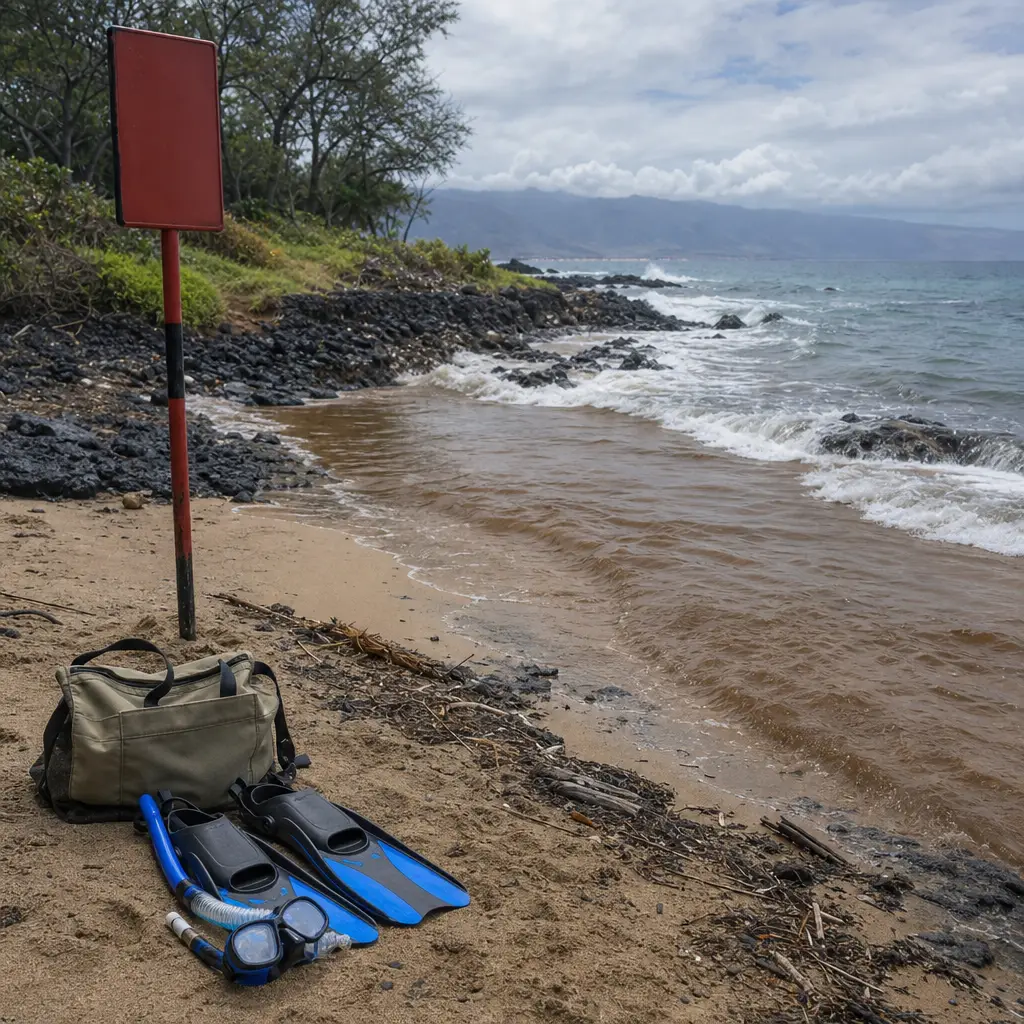
Stay out when you see posted no-swimming or high-hazard warnings, strong shorebreak, discolored water, debris, an unsafe entry, or conditions that feel beyond your ability. A change of plan is not a failed snorkel day; it is sound ocean judgment.
⚠️ Do not enter brown, gray, cloudy, or visibly turbid water. The Hawaii Department of Health explains that storm runoff can carry pollutants into coastal waters and advises people to avoid brown water, including water near streams, drainage pipes, canals, and storm drains. Rain can fall upslope or elsewhere on Maui and still affect a sunny shoreline later through runoff.
Also stay out if you see a red high-hazard sign, black extreme-hazard sign, beach closure, or a no-swimming sign. Hawaii Ocean Safety says a no-swimming sign indicates extreme, life-threatening conditions, while its beach hazard guidance advises swimmers to stay out of the ocean during high and extreme hazards.
Do not try to push through an uncomfortable entry over shallow rock or reef. Hawaii Ocean Safety advises snorkelers to avoid rocky areas and shallow reef when they make it difficult to stand, tread water, or take a break. It also advises against standing on coral or touching marine life.
Brown water, posted hazards, strong shorebreak, or an uncertain entry are all valid reasons to stay on shore.
How to check snorkel conditions
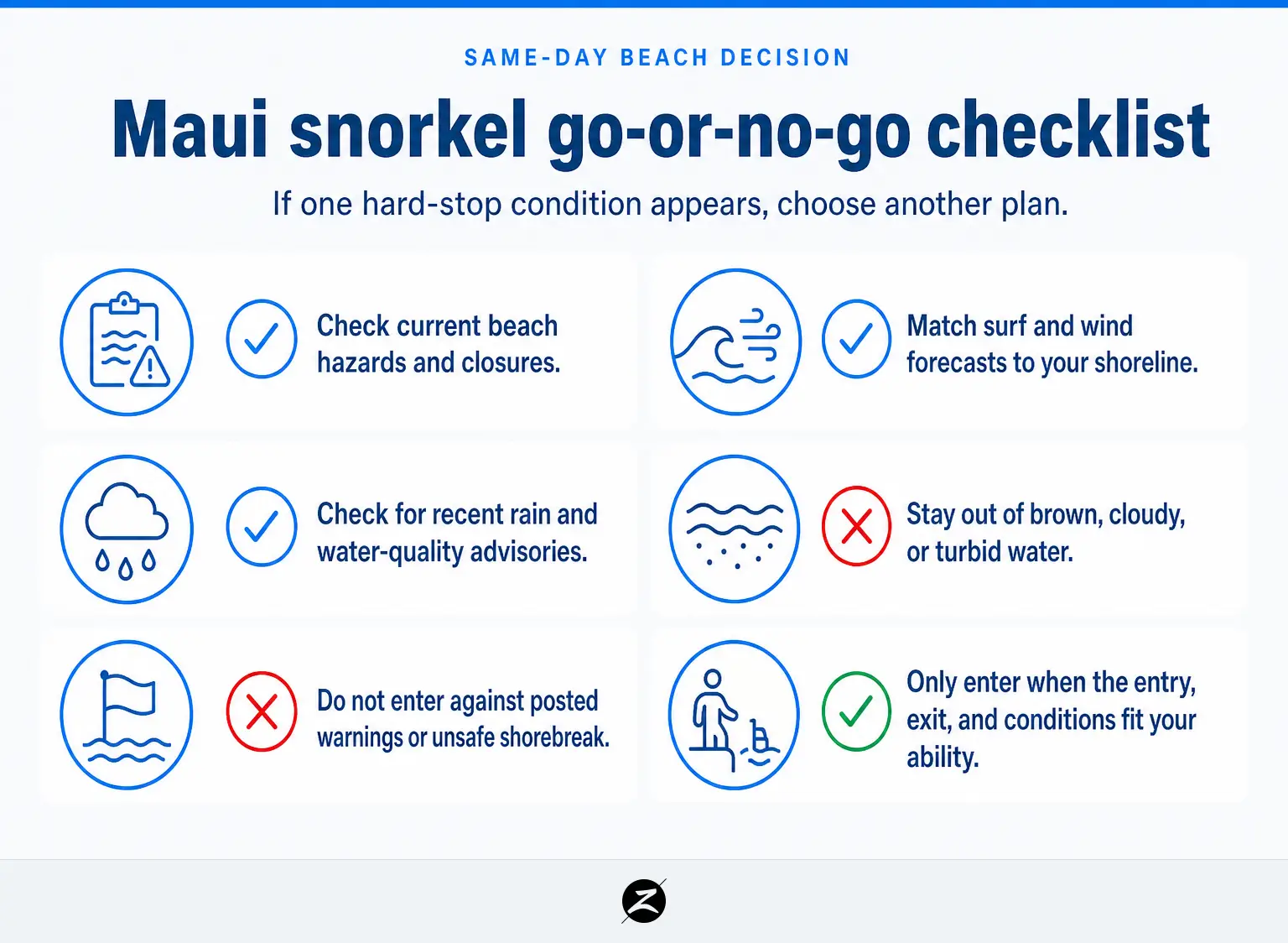
Check conditions in the same order every time: official beach hazards first, weather and surf forecasts second, water-quality advisories third, and your own observation last. This sequence prevents a pretty forecast or a social post from outweighing an official warning or a problem you can see at the waterline.
- Check Hawaii Beach Safety. Search the beach you are considering and look for current hazard information, lifeguard coverage, and closures.
- Read the Maui surf forecast. Compare the expected surf on the shore-facing side of the island where you plan to snorkel.
- Read the marine forecast. Check wind, seas, and wave detail, particularly if you are considering exposed water or a longer swim.
- Check Hawaii Department of Health advisories. Review the Clean Water Branch advisories and health guidance after rain, flooding, or any report of runoff.
- Inspect the beach before gearing up. Watch the water for several minutes. Look at the entry, wave sets, water color, currents, and the route you would use to get back out.
- Ask a lifeguard when available. A lifeguard can explain current hazards at that beach. Hawaii Ocean Safety specifically recommends asking a lifeguard about current conditions before entering.
If conditions are suitable and you are still learning, review how to use snorkeling equipment before you get in. Proper mask fit, snorkel use, flotation, and a calm practice session close to shore can make a major difference to comfort.
The right order is official hazards, forecast context, water quality, then the reality in front of you.
What is the best snorkeling place in Maui?
The best snorkeling place in Maui is not one fixed beach because exposure, surf, wind, runoff, and your experience level can change the answer each day. Choose a location only after checking which shore is less affected by the current conditions and whether you can enter and exit comfortably.
South Maui is popular for shore snorkeling, but a place that is pleasant on one morning may be rough, cloudy, or unsuitable later that day. A detailed guide to the best South Maui snorkeling locations can help you understand the types of settings visitors consider, but no location guide should override same-day beach hazards or what you observe at the shoreline.
Be equally cautious around wildlife and coral. Hawaii’s Department of Land and Natural Resources advises people not to touch, chase, feed, or interfere with sea turtles, and Hawaii Ocean Safety advises snorkelers never to stand on coral. Seeing a turtle is a privilege, not a reason to crowd an animal or drift into shallow reef.
The best Maui snorkeling place is the one that matches today’s conditions, your ability, and a low-impact way of enjoying the reef.
When does a guided snorkel make more sense than going alone?
A guided snorkel can make more sense when you are new to snorkeling, uncertain about shore entry, visiting Maui for the first time, or simply want support in the water. Guidance does not remove ocean risk, but a properly run small-group experience can provide equipment fitting, a safety briefing, local route knowledge, and help matching the plan to conditions.
At Zephyr Adventures Maui, our guided Turtle Town snorkeling includes gear fitting, a safety briefing, shore-entry practice, and more than an hour of guided reef snorkeling. It is designed for visitors who can swim and want a supported small-group shore experience, not as a promise of wildlife sightings or perfect conditions.
If your Maui plans are still taking shape, compare the day’s conditions with the type of experience you want. Our overview of Hawaii snorkeling trips can help you think through the broader choice before booking an activity.
A guide can add structure and support, but the ocean still sets the limits and conditions can still change.
Frequently asked questions
What are the current snorkel conditions in Maui?
Current snorkel conditions in Maui depend on the specific beach, not just the island forecast. Check Hawaii Beach Safety for beach hazards, the National Weather Service for surf and wind, and Hawaii Department of Health advisories after rainfall. At the beach, stay out if the water is brown, the entry is forceful, or warnings are posted.
Is today a good day to go snorkeling in Maui?
Today is a good day to snorkel in Maui only when the conditions at your chosen beach match your ability. Favor a lifeguarded beach when possible, check official hazard information, and observe the entry and water clarity before getting in. If waves, current, runoff, or visibility make you unsure, choose another activity.
How to check snorkel conditions?
To check snorkel conditions, review Hawaii Beach Safety first, then compare the National Weather Service surf forecast and marine forecast with your intended shoreline. Check Department of Health water-quality advisories after rain. Finally, assess the beach in person for water color, shorebreak, entry and exit, currents, and posted signs before snorkeling.
What is the best snorkeling place in Maui?
The best snorkeling place in Maui changes with wind, swell, surf, runoff, and your confidence in the ocean. A location that works well in calm, clear conditions may be unsuitable during surf or after rain. Choose the beach that has favorable same-day conditions and an entry and exit you can manage without touching reef or fighting waves.
The safest next move is simple: check the official sources, look at the beach for yourself, and only enter when the whole picture supports the decision.