
In short
Hawaii's most visible whales are North Pacific humpback whales, which generally appear from November through April and peak from January through March. Maui visitors may also be in waters used by false killer whales, sperm whales, and other cetaceans, but these are far less predictable sightings. Every whale encounter should be viewed from a legal, respectful distance.
Key takeaways
- Humpback whales are the whale species Maui visitors are most likely to notice in winter, especially from January through March.
- Hawaiian waters support other whale species, but most are offshore, uncommon, or difficult to identify from shore.
- False killer whales are not killer whales, despite the similar name, and the Main Hawaiian Islands population is endangered.
- Federal rules prohibit approaching a humpback whale within 100 yards, including by kayak, drone, boat, or while swimming.
- A seasonal whale sighting can be a bonus during a Maui ocean outing, but wildlife sightings cannot be guaranteed.
Table of contents
- Which whales are actually in Hawaii?
- What whales are in Maui?
- What month is best to see whales in Hawaii?
- Can you see whales from shore around Maui?
- What should you do if a whale appears near your kayak or snorkel group?
- Frequently asked questions
- How should you plan a Maui ocean day during whale season?
For most visitors, this is a humpback story. North Pacific humpback whales return to Hawaiʻi's warm, shallow waters to breed, give birth, and nurse calves, while a wider cast of toothed and baleen whale species occurs offshore or year-round. If you also want a broader look at turtles, reef fish, dolphins, and other ocean animals in Hawaii, start with that guide after this one.
Which whales are actually in Hawaii?
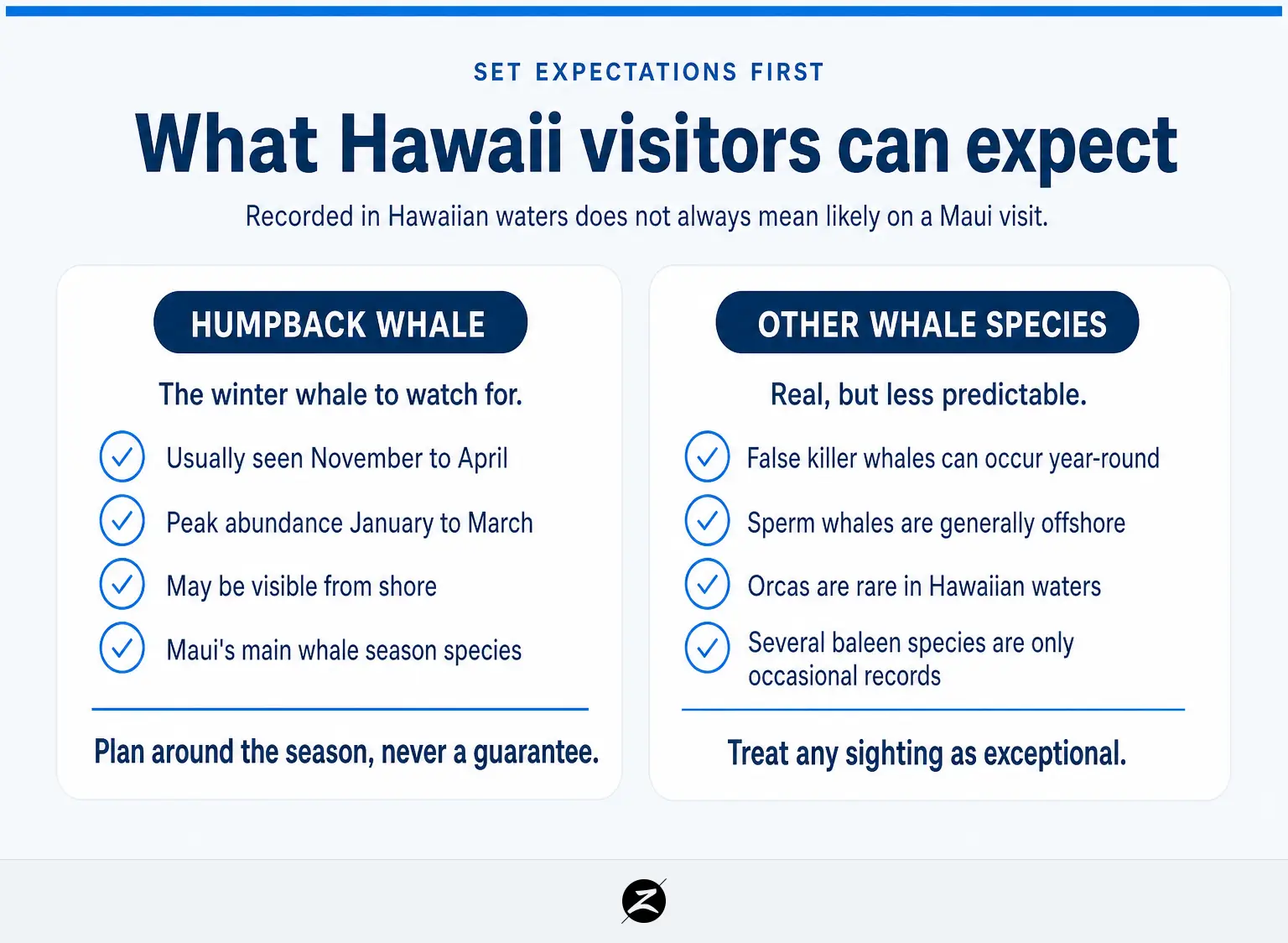
Humpback whales are the whale most visitors associate with Hawaiʻi because they are seasonally conspicuous near the main islands. Other whales occur in Hawaiian waters, but a species being recorded here does not mean it is a realistic sighting on a single Maui vacation.
The State of Hawaiʻi Department of Land and Natural Resources lists humpbacks as the best-known baleen whale in Hawaiian waters. The same state resource notes that eight baleen whale species have been observed in Hawaiʻi, including sei, fin, minke, blue, Bryde's, North Pacific right, and gray whales. These records show the diversity of Hawaiian waters, not a visitor checklist. DLNR's whale and dolphin guide is the best primary source for the full context.
The practical way to think about Hawaii's whales is this:
- Humpback whale, or koholā: The seasonal species most people may spot from shore or while on the water between late fall and spring.
- False killer whale: A large member of the dolphin family that occurs around Hawaiʻi. The endangered Main Hawaiian Islands insular population remains close to the islands, but it is rare and is not a species visitors should expect to see. NOAA Fisheries estimates that population at about 140 individuals as of 2026.
- Sperm whale: A deep-diving toothed whale that can occur in Hawaiian waters but is generally an offshore, uncommon encounter for visitors.
- Pilot whales, melon-headed whales, pygmy killer whales, and beaked whales: These toothed cetaceans may occur in Hawaiian waters, often farther offshore. Seeing one requires luck, suitable conditions, and an experienced observer.
- Blue whales and other large baleen whales: They have been observed in Hawaiʻi, but they are not the reason travelers plan a Maui whale season trip.
A species list is useful for context, but humpback whales are the only whale Maui visitors should reasonably plan around.
What whales are in Maui?
Maui's signature whale is the North Pacific humpback whale. The shallow waters around Maui County are important habitat for mating, calving, and nursing, which is why humpbacks dominate winter wildlife conversations on Maui.
The Hawaiian Islands Humpback Whale National Marine Sanctuary explains that Hawaiian waters are a principal winter breeding ground for North Pacific humpbacks. The sanctuary's protected habitat includes relatively shallow waters around the islands, generally less than about 600 feet deep. NOAA's sanctuary overview identifies November through April as the normal viewing window, with the strongest concentration from January through March.
False killer whales can also occur near the Main Hawaiian Islands, including around Maui, but they are not an alternative version of a humpback sighting. They are a different species, are not closely related to orcas, and are protected. Their presence is a reason to stay observant, not a promise of a second whale season.
Are there killer whales in Hawaii? Yes, true killer whales, also called orcas, have been documented in Hawaiian waters, but NOAA considers them rare there. A 2014 NOAA stock assessment reported scattered sightings and strandings rather than a predictable local population. Do not book a Maui trip expecting to see an orca.
Maui's reliable whale story is seasonal humpbacks. Every other whale species is an unusual bonus.
What month is best to see whales in Hawaii?
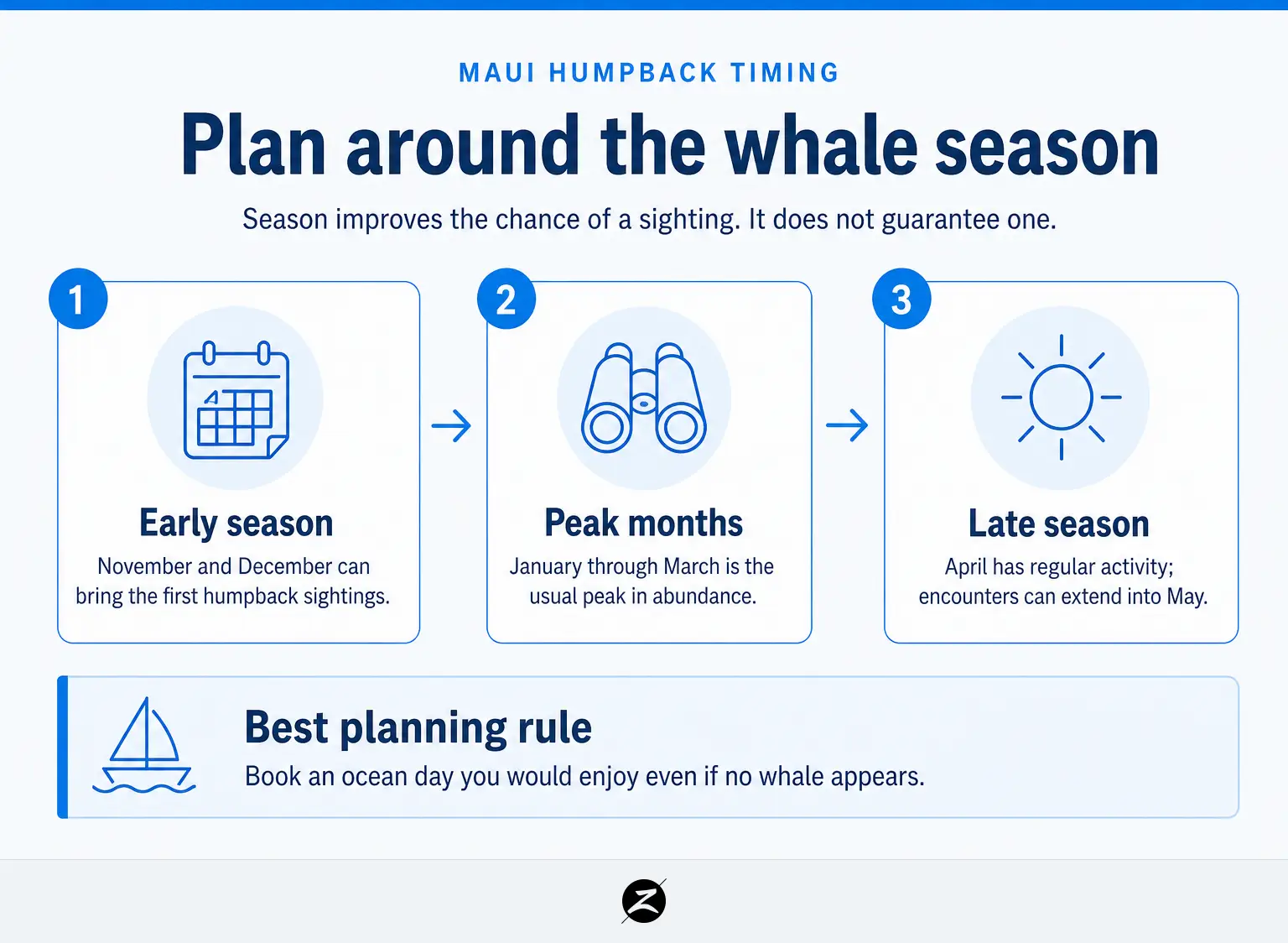
January through March is generally the best period for humpback whale viewing in Hawaiʻi. Whales are commonly seen from November through April, and NOAA's boating guidance notes that limited encounters may continue into May.
Here is a realistic seasonal guide:
- November and December: Early arrivals may be seen, but the number of whales varies from year to year.
- January through March: This is the usual peak period. If whales are a top priority, these are the months to target.
- April and May: Some humpbacks remain, but sightings become less consistent as the migration shifts northward.
- June through October: Do not plan a Maui vacation around humpback viewing, although other marine mammals may still be present.
A work example: a visitor staying in Wailea in February should plan a normal beach, snorkel, or kayak day and treat a distant blow, breach, or tail slap as wildlife viewing. The visitor should not arrange the whole day around getting close to a whale, because the law and the whale decide the distance.
The best month improves the odds of seeing humpbacks, not the certainty of an encounter.
Can you see whales from shore around Maui?
Yes, humpbacks can sometimes be viewed from shore around Maui during the winter season. Shore viewing is often the most responsible option because it lets you watch natural behavior without contributing to close approaches.
A humpback's blow, back, dorsal fin, breach, or tail can be visible at a distance. Conditions matter: calmer seas, daylight, patience, and binoculars can make a major difference. The Hawaiian Islands Humpback Whale National Marine Sanctuary states that people may see humpbacks from shore and at sea from November through April.
Keep the experience simple. Choose a safe public viewpoint, scan the horizon rather than the surf zone, and never enter the water to get closer. If you are already on the water for another activity, stop trying to turn the outing into a whale chase.
For guests whose plans center on reef life, sea turtles, and coastal scenery rather than a dedicated whale cruise, our Maui ocean adventures are designed around guided snorkeling, kayaking, and other small-group experiences. Seasonal whale activity is wildlife, not an included sighting.
Shore viewing gives whales room to behave naturally and gives people a better chance to observe without pressure.
What should you do if a whale appears near your kayak or snorkel group?
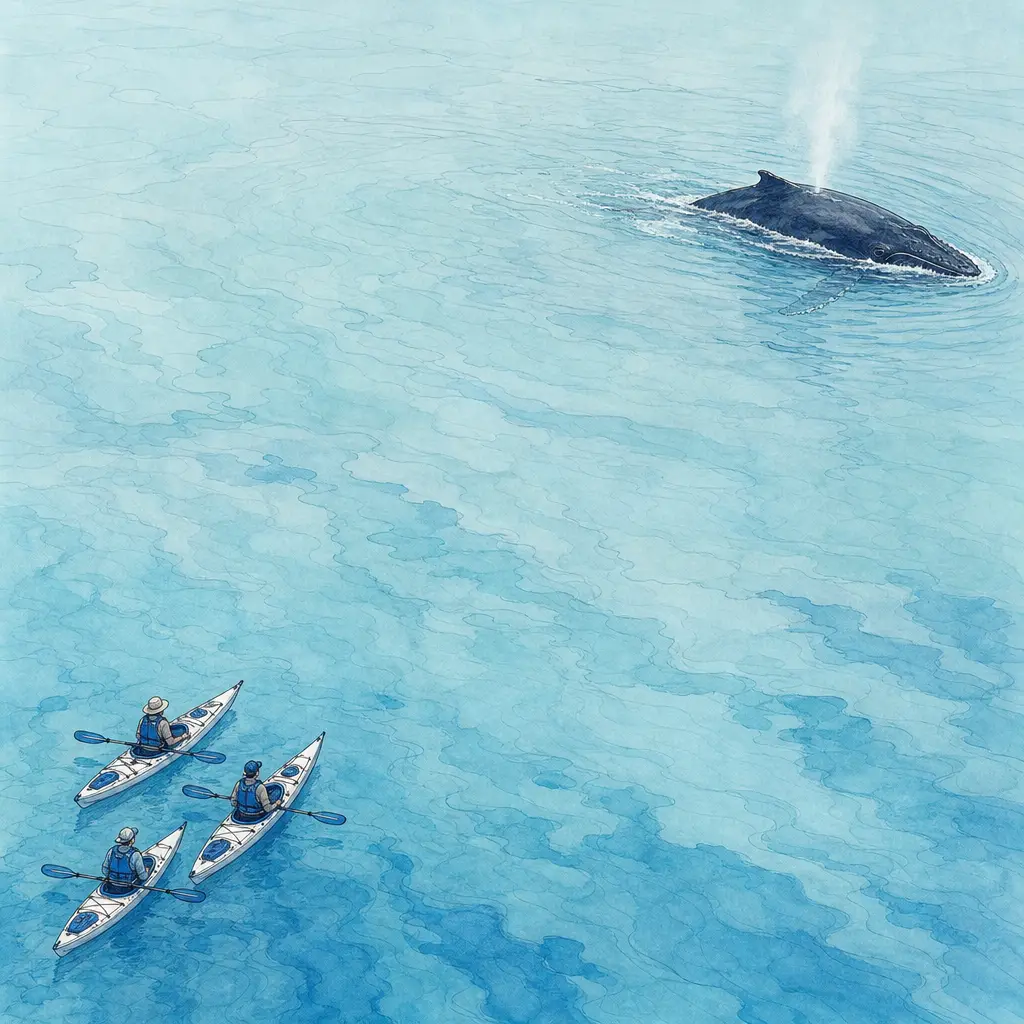
Keep your distance, reduce disturbance, and let the whale control the encounter. In Hawaiian waters, federal rules prohibit approaching a humpback whale within 100 yards, or 90 meters, by any means, including a boat, kayak, paddleboard, drone, or swimmer.
NOAA's sanctuary regulations apply the 100-yard rule year-round in the sanctuary and throughout Hawaiian waters out to 200 nautical miles. NOAA also advises people not to touch, chase, or feed marine wildlife.
If a whale surfaces unexpectedly near your group:
- Stop paddling or motoring toward the whale.
- Keep movements calm and avoid changing course to follow it.
- Give the whale a route away from your group.
- Do not swim toward it or put a drone overhead.
- Alert the guide or vessel operator, then watch quietly from the legal distance.
For example, if a whale surfaces ahead of a kayak group, the right response is to pause or slowly move away on the existing route. Turning toward the whale for a closer photo can create an illegal approach and increases the risk of disturbing an animal that may be resting, nursing, or traveling with a calf.
A memorable whale encounter is one where the whale is left undisturbed and every person stays safely outside the 100-yard buffer.
Frequently asked questions
Are there killer whales in Hawaii?
Killer whales, or orcas, have been documented in Hawaiian waters, but they are rare and should not be expected on a Maui visit. NOAA's Hawaiian stock assessment describes scattered sightings rather than a reliable viewing population. False killer whales are more closely associated with Hawaiian waters, but they are a separate species and are not true killer whales.
What to be careful of in Hawaii?
Around whales, be careful not to approach, chase, touch, feed, or crowd the animal. Federal law prohibits approaching humpback whales within 100 yards in Hawaiian waters, including by kayak, boat, drone, or while swimming. Ocean conditions can also change quickly, so follow local forecasts, lifeguard guidance, and instructions from qualified guides.
What month is best to see whales in Hawaii?
January through March is generally the best time to see humpback whales in Hawaiʻi because NOAA identifies those months as the usual peak in whale abundance. Humpbacks are commonly seen from November through April, with some limited encounters possible into May. Weather, ocean conditions, and animal movement still affect daily sightings.
What whales are in Maui?
Humpback whales are the most visible seasonal whales around Maui, particularly from November through April. False killer whales, sperm whales, pilot whales, and other toothed cetaceans can also occur in Hawaiian waters, but they are much less predictable for visitors. Maui's winter whale season is primarily about North Pacific humpback whales.
The useful distinction is simple: humpbacks are seasonal and visible, while most other Maui whale species are possible but unpredictable.
How should you plan a Maui ocean day during whale season?
Plan your activity around what it is designed to deliver, then welcome a whale sighting as a bonus. We do not operate a dedicated whale-watching cruise, and no Maui snorkeling, kayaking, or land-and-sea experience should promise a humpback encounter.
If a private reef snorkel, sea-scooter session, scenic coastal drive, and personal photography sound like the right fit, explore our Land to Sea Experience. Choose it for the guided South Maui experience, not as a substitute for a dedicated whale-watch trip.
The best approach is to give humpbacks space, keep expectations realistic, and let a sighting remain what it should be: a wild encounter on the whale's terms.